What Sets Us Apart
The Physics Department prides itself on innovative thinking to meet the teaching, research, and outreach responsibilities central to the university’s mission as a flagship land-grant university. Some of our creative approaches include:
Teaching
BA in Physics: While the traditional physics bachelor’s program was designed for students who plan to work in scientific fields or pursue graduate degrees, the department created a BA track for students with dual interests so they can combine a physics degree with another field (e.g., business, journalism, etc.). The physics foundation is the same, but an inherent flexibility in later courses allows students in the BA program to explore a broader range of career options.
Innovative Courses: The department is always looking for ways to deliver science education that both engages students and prepares them for the world they’ll join after graduation. A class merging science fiction and astrophysics lets students use their imagination to solve problems together using solid scientific principles. The “Picture a Physicist” seminar introduces our majors to physics graduates working in a broad range of careers, while courses like Introduction to Machine Learning equip them with background in technologies that will drive the future.
Research
Quantum Science Leadership: Sixteen physics faculty members are part of UT’s Quantum Materials for Future Technologies (QMFT) Research Cluster, which won an $18 million award from the National Science Foundation to establish a Materials Research and Engineering Center (MRSEC), one of only 20 such centers nationwide. Department faculty played crucial roles in bringing the Center for Advanced Materials and Manufacturing to fruition and now lead the center’s administration, as well as the artificial intelligence for quantum materials research team.
Collaboration: With expertise in theory and experiment, access to powerful scientific instruments at nearby Oak Ridge National Laboratory (including the Spallation Neutron Source and the Frontier supercomputer), and collaborative ties to premier experimental facilities like the Large Hadron Collider at CERN and the Facility for Rare Isotope Beams at Michigan State, our faculty helps shape the field and create an exceptional learning environment for young scientists.
Extraordinary Scholarship: The current faculty includes four fellows of the American Association for the Advancement of Science and 11 fellows of the American Physical Society. Since 2012 we’ve won eight National Science Foundation CAREER Awards, the foundation’s most prestigious award in support of young faculty; along with two Department of Energy Early Career Research awards (2022 and 2025); the American Physical Society’s Adler Award in Materials Physics (2023); the university’s first two Cottrell Scholar Awards (2024 and 2025); and a Sloan Research Fellowship (2025); as well as numerous elite UT faculty honors.
Outreach
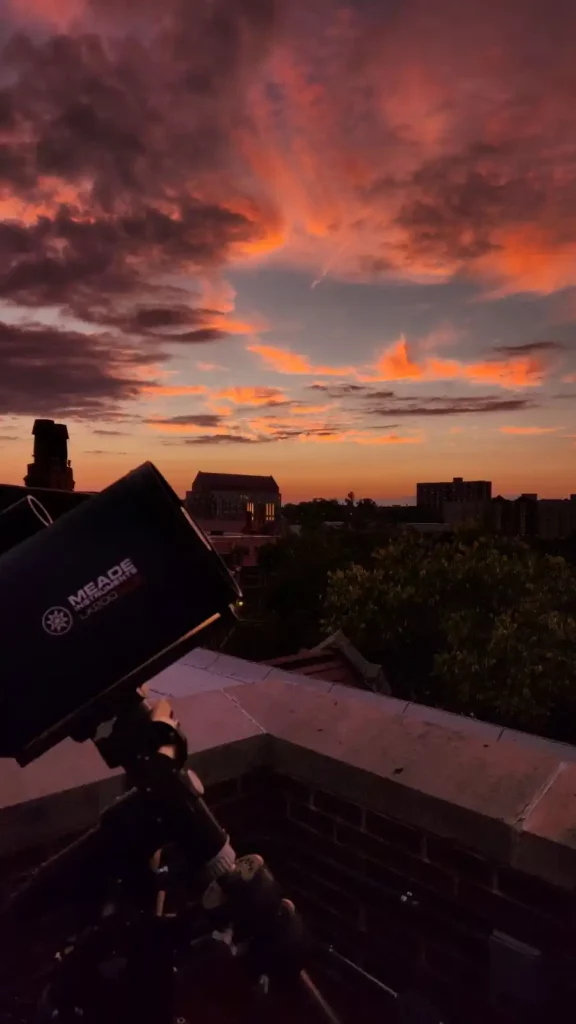
Astronomy Outreach: At our rooftop public viewing events staff and student volunteers guide visitors through solar and night sky observations. Our planetarium brings astronomy indoors, not only for UT students, but also for alumni, scouts, homeschoolers, church groups, or any group looking for an hour or so under the stars, rain or shine. Astronomy students and coordinators also take the show on the road to help with astronomy events at local parks and other sites around the area.
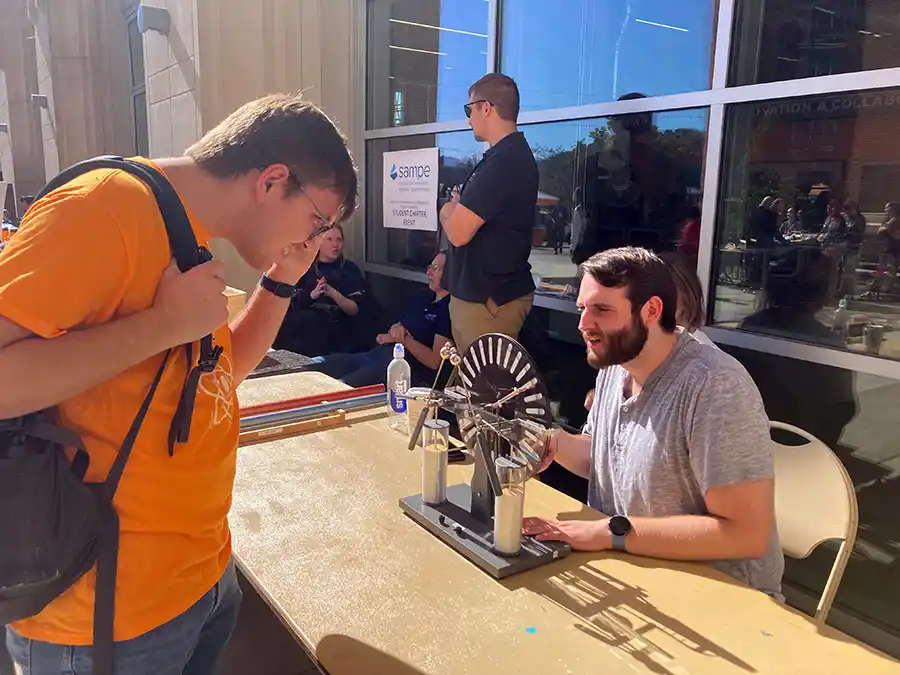
Physics Outreach: Our faculty and students go beyond the campus to share their enthusiasm with our community. They bring music to the dance floor through signal:noise. Student groups give physics demos at local schools and volunteer with the MUSE Knoxville. The West High School and L&N STEM Physics Academy puts physics faculty in front of local high school classes to present guest lectures and encourage students to ask questions and learn more about the role science plays in everyday life.