Department of Physics & Astronomy
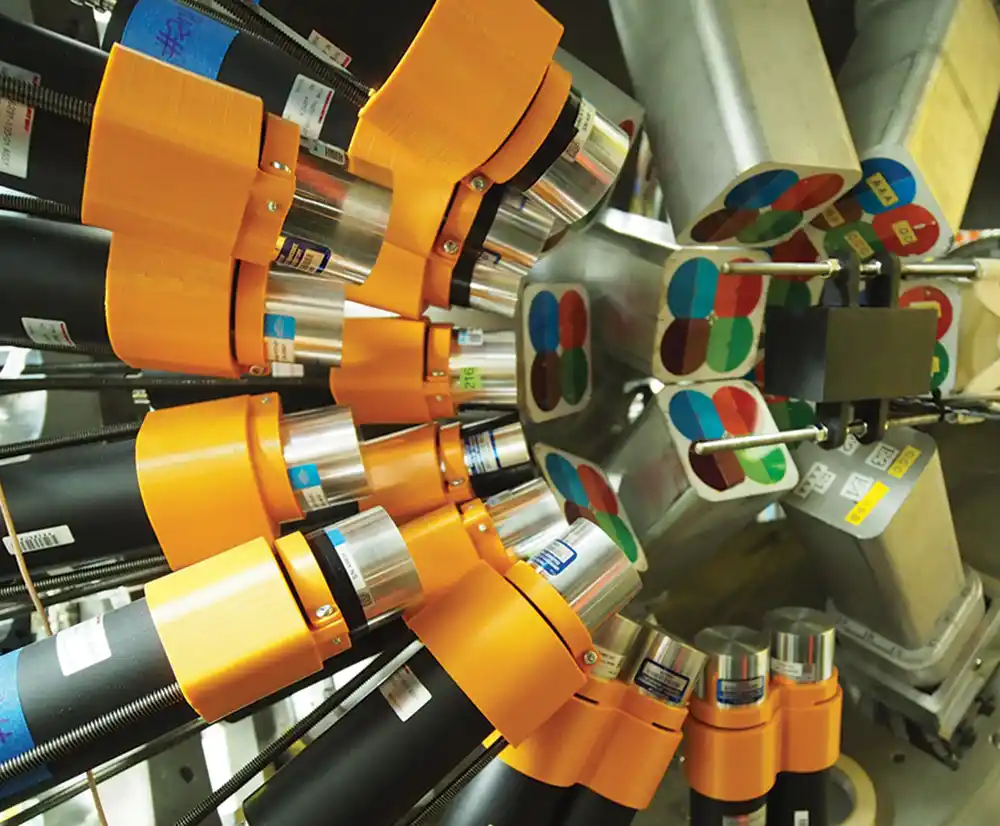
UT Physics and Astronomy is where fascination meets function. We explore the deep questions of the universe and provide the scientific foundation for discovery that yields the technologies in your pocket, and those of tomorrow.
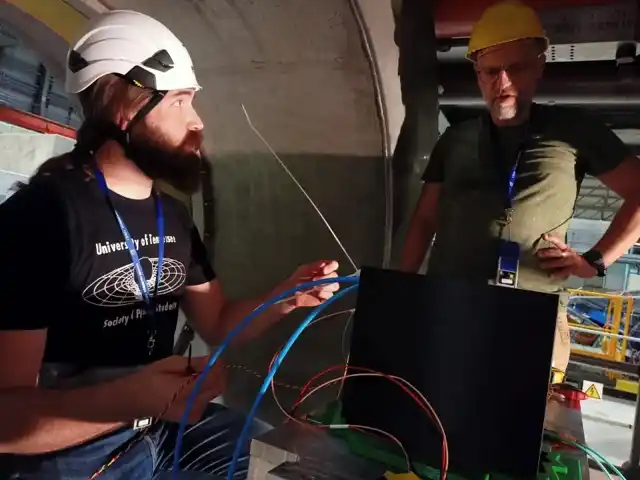
Our department is driven by an engaged faculty pursuing the fundamental research required for solving real-world problems. Our physicists helped put Tennessee on the periodic table. They tame the complexity of quantum materials with artificial intelligence. They study explosive stellar events and search for new physics beyond the Standard Model. They describe the properties of nuclei and neutrons and test the limits of superconductivity with novel materials. They merge physics and biology at the cellular level with lab-on-a-chip devices. And at every step, they are training the next generation of physicists, both in the classroom and in their research groups.
Colloquium Schedule
Controlling Topological Quantum Phases through Epitaxy
August 24, 2026
Speaker: Joon Sue Lee
Host: Adrian Del Maestro
Abstract
Topological quantum materials are characterized by nontrivial features in their electronic band structure that give rise to robust boundary states and unconventional quantum phenomena, offering opportunities for quantum information science and advanced electronics. Realizing and controlling these states requires precise tuning of crystal structure, strain, dimensionality, and interfaces. In this talk, I will discuss our efforts to use molecular beam epitaxy as a platform for controlling topological quantum phases, with a focus on elemental Sn and Bi–Sb materials.
Elemental Sn provides a unique system in which α-Sn hosts tunable topological phases, while β-Sn is superconducting. We demonstrate selective stabilization of these structural phases through epitaxial growth and lattice strain and investigate the strain-dependent electronic structure and quantum transport of α-Sn. Building on this capability, we are developing α-Sn/β-Sn heterostructures with atomically controlled interfaces as a platform for exploring the interplay between topology and superconductivity. I will also discuss dimensionality-driven topological transitions in Sb and Bi thin films, where quantum confinement provides another route to tuning electronic states. Finally, I will describe our efforts to integrate topological materials into nanoscale and hybrid device architectures through selective-area epitaxy and superconductor integration, and briefly discuss emerging freestanding quantum-material membrane platforms for strain control and heterogeneous integration.
Electron Pairing and Fractionalization in the Age of AI and Quantum Computing
August 31, 2026
Speaker: Yang Zhang
Host: Adrian Del Maestro
Abstract
Electrons in solids can do two remarkable things: they can pair up and flow without resistance, and they can collectively behave as fractionally charged particles. Predicting these phenomena remains a major challenge because the physics spans enormous spatial scales and exponentially large quantum state spaces. I will show how my group uses AI to understand electron pairing in realistic materials: machine-learned Hamiltonians reproduce moiré electronic structures with meV accuracy for systems of up to millions of atoms, enabling studies of superconductivity from weak to strong coupling in twisted semiconductors.
To understand fractionalization, we turn to quantum processors. Constant-depth circuits prepare 18 fractional quantum Hall states on up to 156 superconducting qubits; remarkably, some of the most exotic states are also the easiest to prepare. Together, these efforts show how AI can extend quantum-materials modeling to realistic scales, while quantum processors open access to highly entangled states beyond classical reach.
Labor Day 2026
September 7, 2026
Abstract
No colloquium: Labor Day Holiday.