
Work-Study Provides Early Research Advantages for Physics Undergraduates
Alex Berry and Amelia Sandoval learn about physics in the classroom, but that’s just the beginning. They are two of 15 undergraduate physics majors contributing to and gaining from departmental research this year through the Federal Work-Study (FWS) program. These students get an early start seeing science in action while gaining needed experience for life after college—be that a job or an advanced degree.
Books and Building
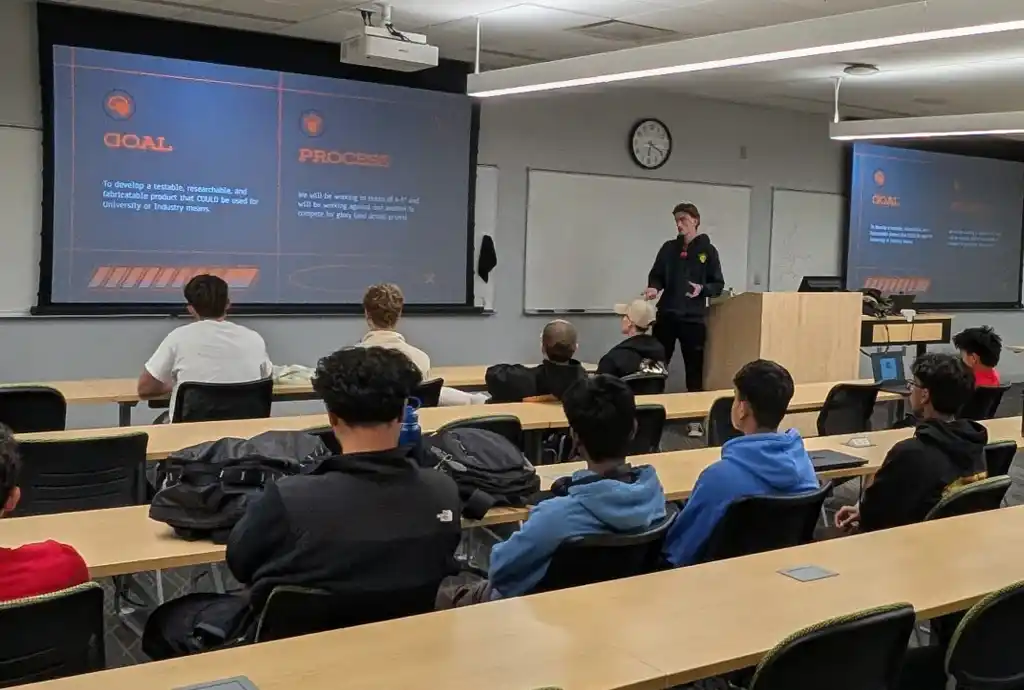
Berry is a junior double-majoring in physics (BA track) and electrical engineering. He spent the fall 2025 term working with Professor Christine Nattrass in nuclear physics. He organized and formatted archival data so that it could be published, building a foundation for further studies.
“Through such, I have been able to build my strengths in programming and data allotment, which directly coincides across my academics,” he explained.
He said the most valuable asset of the program for him is “exposure of environment.”
With work-study, “I can discuss and work on problems that in many ways complement both of my academic pursuits quite splendidly,” he said. “The opportunities provided are quite extensive, and I am more than grateful for the ability to collaborate over them.”
His physics research ties nicely with Berry’s work as founder and president of Book to Build, the largest interdisciplinary student-led engineering organization at the university. Through events like workshops, tutoring, and internship preparation, they take ideas and concepts learned from the classroom (the book) to create and foster new ideas (the build).
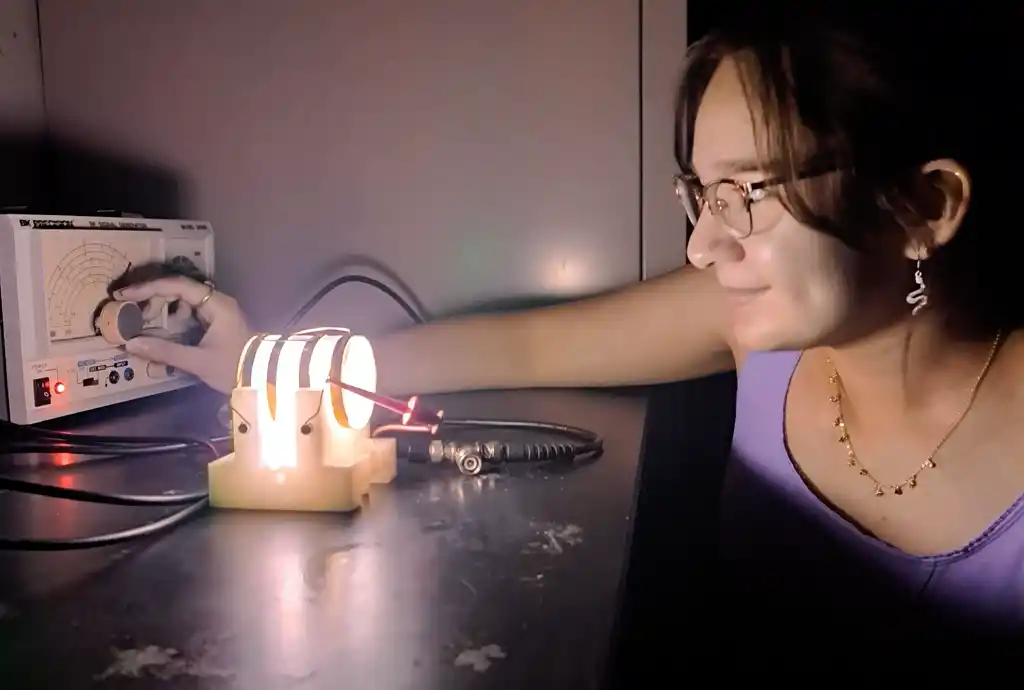
Sandoval has been building as well. She has worked with Professor Nadia Fomin and Assistant Professor Dien Nguyen since spring 2024, when she was a freshman. Her main responsibility has been the establishment of a Helium-3 Metastability Exchange Optical Pumping (MEOP) polarization lab on campus: helping build the apparatus, learning the optical system, training to use Class 4 lasers and wire circuits, and learning how to write Labview code.
“This project is primarily concerned with developing a polarization technique to support target development for scattering experiments at (Thomas Jefferson National Accelerator Facility),” she explained. “I am still working on that project, and have taken on a leadership role as well as presented my research at SESAPS 2025.”
While MEOP is her focus, she helps out with other experiments and has plans next summer to work on electron-ion collider detector testing with a collaboration including Los Alamos National Laboratory and CERN.
“This funding has allowed me to start undergraduate research early, and it has ensured that I have not had to take on a second job,” Sandoval explained. “I am so incredibly thankful for all of the opportunities that my incredible mentors have been able to give to me due to the funding that work-study provides. Without it, I do not believe that I would have been able to start research as early as I did. This work has been incredibly important to me, and I am excited for the future that it has opened up for me.”
Getting Everyone on Board
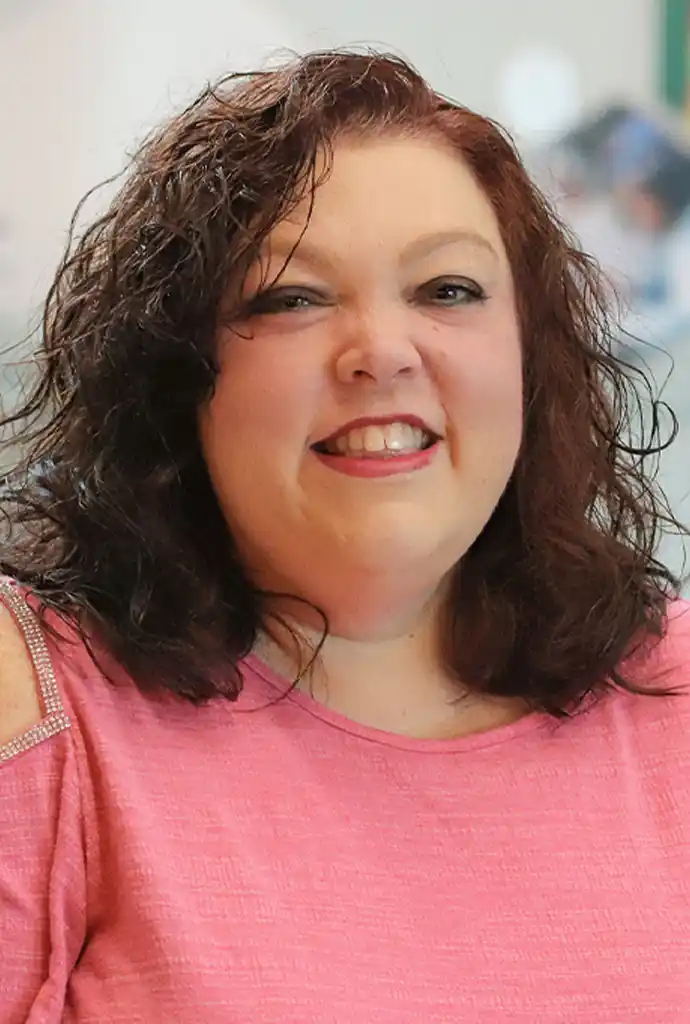
Cheryl Huskey is responsible for the department’s success in aligning students with work-study opportunities. As the Undergraduate Administrative Associate, she gets them on the right track to meaningful research experiences, including anticipating and answering their questions.
“Students often think work-study is automatically awarded or guaranteed, when in reality they must qualify through their FAFSA and have remaining financial need,” she explained. “Another common misconception is that work-study positions are assigned. Instead, students must actively apply and interview for available roles. (They) also sometimes think work-study funds are paid upfront, but the funds are earned through hours worked and received in regular paychecks.”
Huskey helps students navigate every step of the process, from understanding eligibility and connecting them with available positions to supporting them as they transition into their research roles.
“Throughout their employment, I help with onboarding tasks, timesheets, and any questions about expectations or scheduling,” she said. “We also collaborate closely with supervisors to ensure students have a positive, productive experience and gain practical skills.”
More than half of the undergraduates participating in physics research are supported by work-study funding. Huskey said there is no limit to how many work-study students the department can employ, as long as they are eligible for the program and there are appropriate roles available.
She also laid out a helpful checklist for interested students:
- First complete the FAFSA and qualify for federal work-study based on financial need.
- Search for open positions through the university’s student employment portal (Job X).
- Submit an application directly to the hiring department. (For physics, Huskey will help students set up interviews.)
- Once selected for a spot, complete onboarding documents and hiring requirements and then get started on research!