• Request Info
  • Visit
  • Apply
  • Give
  • Request Info
  • Visit
  • Apply
  • Give

Search

A-Z Index Map

Physics & Astronomy

  • About
    • Honors
    • Administration
    • Faculty Resources
    • Nielsen Spaces
  • Research
    • Research Partners & Facilities
    • Condensed Matter
    • Particle / HEP
    • Biophysics / Soft Matter
    • Nuclear / Astrophysics
    • Quantum Information
  • People
    • Faculty
    • Staff
    • Joint Research & Adjunct Faculty
    • Post Docs
    • Graduate Students
  • Undergraduate
    • Why Physics
    • What Our Grads Do
    • Career Resources
    • Degree Programs
    • Research
    • Scholarships
    • Student Organizations
  • Graduate
    • Join Our Program
    • FAQs
    • Fellowships & Assistantships
    • Bains Fellowship
    • Where Our Grads Go
    • Research
    • Resources
  • News & Events
    • Newsletters
    • News
    • Colloquia Series
    • Events
    • In the Media
  • Outreach
    • Astronomy Outreach
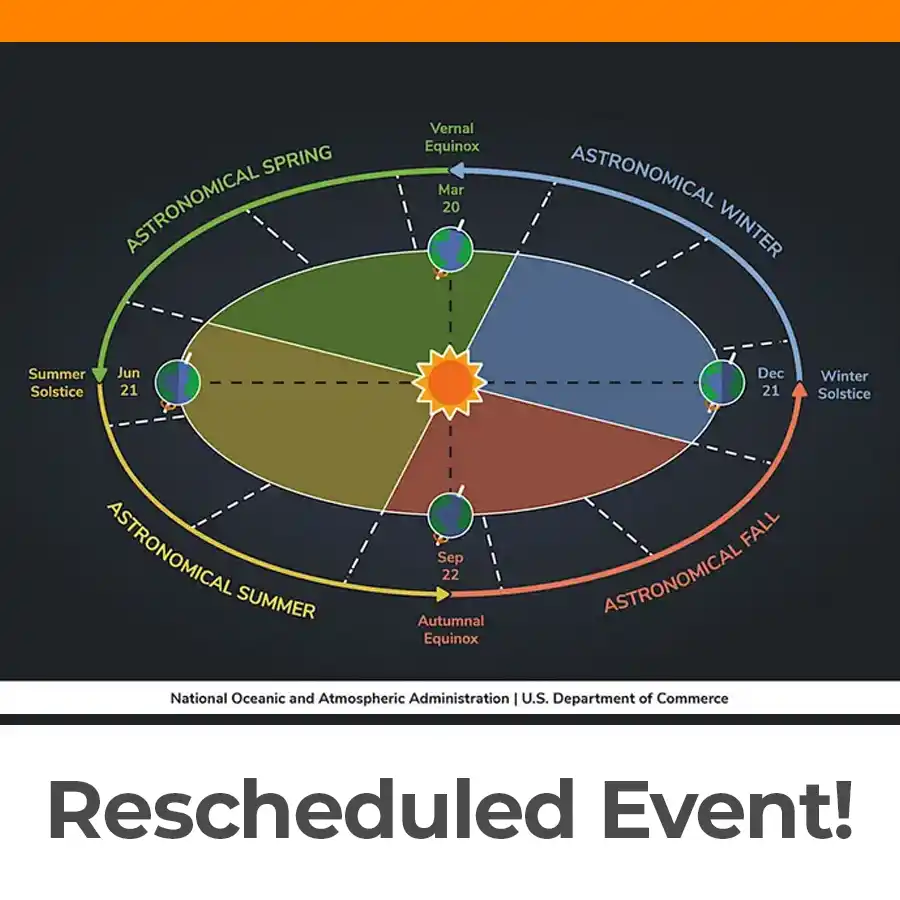
    • Cool Things in the Sky this Month
    • Physics Outreach & High School Lecture Series
  • Alumni
    • Distinguished Alumni Award
    • Giving Opportunities
    • Share Your News
A banner showing a model of an atom and elementary particles

News

News

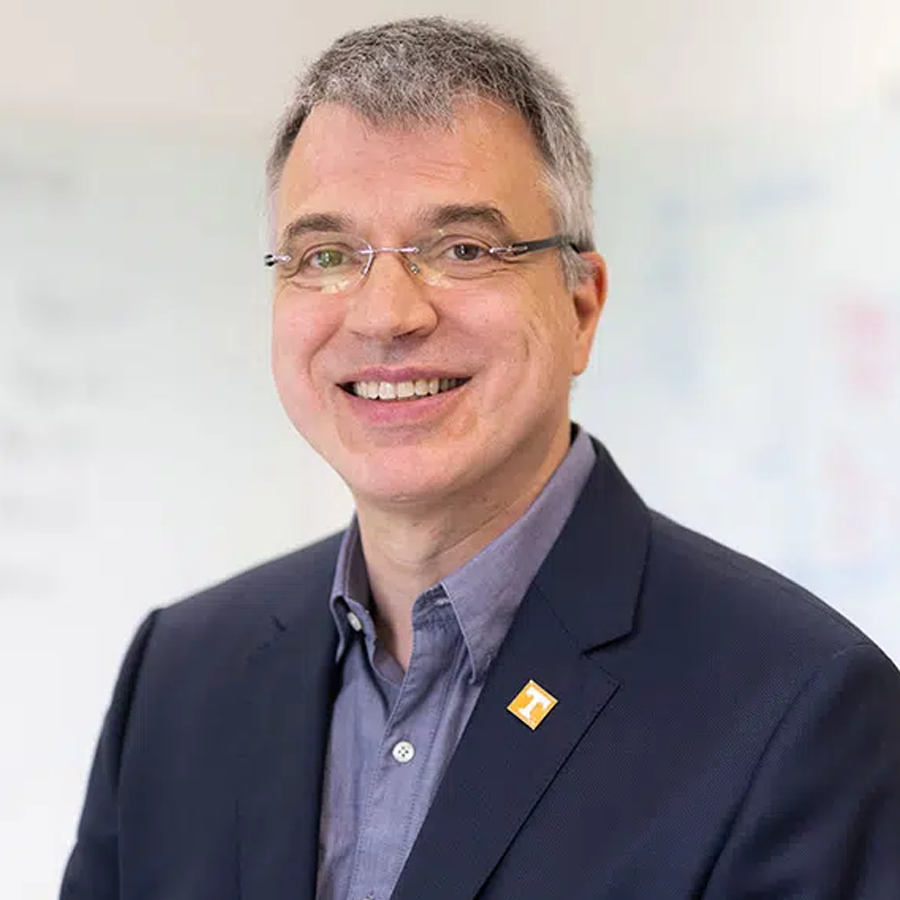
A photo of Deb Crawford and Hanno Weitering

Hanno Weitering Named 2026 Macebearer

April 8, 2026

A Photo of Hanno Weitering
Hanno Weitering learns he is the 2026 Macebearer

Chancellor’s Professor and Professor of Physics Hanno Weitering is the University of Tennessee, Knoxville, 2026 Macebearer. The honor is the highest bestowed on UT faculty members and recognizes outstanding service to the university, its students, and the greater society.

Keeping with tradition, the new Macebearer was surprised by an entourage, this year comprising Vice Chancellor for Research Deb Crawford, College of Arts and Sciences (CAS) Divisional Dean Kate Jones and Associate Dean Todd Moore, and Weitering’s wife Carol, who had been following his location on her phone to make sure he made it to the physics colloquium in time for the announcement.

Weitering said he was running a bit late and didn’t think much of the texts and calls checking that he was on his way.

“Then the deans and the vice chancellor suddenly came in with Carol, which felt completely bizarre,” he said. “Everything happened very quickly.”

As Professor and Head Adrian Del Maestro shared later in a departmental message: “For those of you who joined us for Colloquium today, you witnessed a truly surprised Hanno accepting the award from Vice Chancellor Crawford! Congratulations to a member of our faculty who truly embodies the volunteer spirit!”

Robert Hinde, Executive Dean and Herbert Family Dean’s Chair for the College of Arts and Sciences, added praise for Weitering’s selection.

“Hanno’s record of teaching, research, and service, combined with his personal dedication to the physics and university community, make him an ideal choice for Macebearer,” said Hinde.

On what being Macebearer means to him, Weitering said he “can only reflect with deep gratitude on the tremendous support I’ve had throughout my career. I’m fortunate to be part of a strong physics department with wonderful colleagues, and to have benefited from the guidance and support of mentors, colleagues, and department heads. As head, I had the privilege of serving under an inspirational dean during a period of significant progress for the university. It gave me the opportunity to give back by helping position the department for new challenges and opportunities. Now, I’m glad to be back focused on teaching and research—being an academic truly is a privilege.”

Small Systems with Big Potential

Weitering joined the university in 1993 as part of the physics department’s condensed matter research program. His work explores materials at the microscopic level, focusing on their structure and the behavior of conduction electrons, particularly at surfaces and interfaces. By scattering small numbers of tin atoms across a silicon substrate, he has created idealized material systems that revealed a novel form of superconductivity—the long-sought chiral superconducting state.

While many superconductors have historically been discovered through serendipity, Weitering takes a deliberate, theory-driven approach. Because theoretical models often simplify the complex physics of real materials, he creates precisely engineered material systems that faithfully represent those models. These nanoscale realizations allow him to directly test and validate their predictions. Each step in uncovering the subtle physics of these atomic-scale designs brings researchers closer to identifying and controlling phases with potential applications in quantum technologies.

Weitering has published more than 100 original research papers that have been cited nearly 7,800 times, and was recognized by the College of Arts and Sciences with the 2023 Distinguished Research Career Award.

A True Volunteer Family

Weitering’s contributions to the university go far beyond atomic creativity. In 2012 he began a decade of leadership as head of the physics department, a position that for several years overlapped with a 10-year position as deputy director of UT’s Joint Institute for Advanced Materials (JIAM) (now the Institute for Advanced Materials and Manufacturing, or IAMM). Among his proudest accomplishments is the number of scientists involved in quantum science who joined the university during that time (including Del Maestro). He has also supervised or co-supervised 15 PhD students (including four new PhD alumni in the past four years) and 13 postdocs. He’s taught courses including Thermal Physics, Structure of Matter, and Introduction to Quantum Mechanics, as well as a capstone course for physics majors. He and Carol are also parents of two UT CAS alumni: Bart, who graduated in 2013 with a double major in geological sciences and physics; and Hanneke, who graduated in 2014 with a physics degree.

Carrying the Mace, and a Legacy

Weitering earned both master’s and doctoral degrees in chemistry at the University of Groningen in his native Netherlands. He moved to physics when he accepted a Benjamin Franklin Postdoctoral Fellowship at the University of Pennsylvania. From there he joined the UT faculty. The Macebearer is one of many honors he’s won during his tenure. In addition to selection as a Chancellor’s Professor and the CAS Distinguished Research Career Award, he has been recognized with the JIAM Chair of Excellence, election as a Fellow of the American Physical Society, and election as a Fellow of the American Association for the Advancement of Science.

Weitering will be formally recognized as Macebearer at the Chancellor’s Honors Banquet later this month. He will carry the symbolic mace during the spring 2026 commencement ceremonies, following in the footsteps of former physics professors chosen for the honor: the late Bill Bugg, Lee Riedinger, and Soren Sorensen.

April 8, 2026  |  Filed Under: Condensed Matter, Featured News, News

A photo of Larry Lee and Tova Holmes

Tova Holmes and Larry Lee Selected as Fermilab Distinguished Researchers

March 9, 2026

A photo of Larry Lee and Tova Holmes

Not everyone would willingly head north in the middle of winter, but Associate Professor Tova Holmes and Assistant Professor Larry Lee were happy to go. In January they left Knoxville to spend the year as senior Distinguished Researchers at Fermilab, located about 40 miles west of Chicago.

One of the U.S. Department of Energy’s national laboratories, Fermilab is dedicated to accelerator and particle physics and runs experiments to explain what can’t be observed directly. Most of the matter and energy in the universe are still a mystery. Fermilab scientists build large, complex tools to detect subatomic particles that hold clues about this dark matter and dark energy. Studying the smallest components of the universe also helps physicists understand what holds it together, as well as its history and what its future might be.

This is the sort of physics that intrigues Holmes and Lee. Both are part of the Compact Muon Solenoid (CMS) experiment, which searches for new particles (and new physics) at CERN’s Large Hadron Collider (LHC). Fermilab is home to the LHC Physics Center (LPC), whose Distinguished Researcher program chose them for its 2026 cohort of three senior scientists.

There are 700 U.S. physicists in the CMS collaboration. To support their research, the LPC develops analyses looking for new physics, runs working groups on various technical challenges, develops core software, and hosts seminar series and workshops.

“The LPC serves as a collaboration hub for all of the U.S. members of the CMS experiment,” Holmes explained. “It also helps bring people physically together to do hardware work centered at Fermilab.”

For her and Lee, that includes work on the CMS outer tracker upgrade. Combined with an inner tracker, the outer tracker recreates the paths of charged particles as they travel through the detector. The LHC will upgrade to high-luminosity by 2030, ratcheting up the number of collisions and data it can produce. The upgrade will put more strain on the detector, so improving the trackers’ capabilities will ensure the CMS can keep up with the demand.

“In addition to that, I’m excited to start thinking concretely not just about how to build this upgraded detector, but how we can fully take advantage of its new capabilities,” Holmes said. “I’d like to bring people together at Fermilab to work on developing a trigger menu (a list of signatures that will be used to select the ~.03% of collisions stored for analysis) that will enable us to target new physics in the coming years.”

In their Distinguished Researcher roles, she and Lee will work on the CMS upgrade, as well as search for new particles and plan for future colliders. Fermilab is the top candidate for a muon collider and Holmes and Lee help lead that effort. Holmes said the laboratory is a great environment for the project, with leadership and a critical mass of talent already in place.

The pair is actively encouraging more interest in this work, especially among up-and-coming physicists. Lee was chosen to give an inspirational talk as part of the Distinguished Researcher program, with an April workshop scheduled on machine learning for muon colliders. UT Physics Graduate Student Adam Vendrasco is working with him at Fermilab, and Postdoctoral Associate Daisy Kalra is there full-time to work with him and Holmes. They plan to host more students this summer for hands-on learning opportunities.

While Holmes and Lee will be at Fermilab 75 percent of the time this year, the balance will be spent with their campus research group to strengthen connections between the university and the national lab, a goal Holmes described as essential.

“Our job will be to help make the LPC the hub that it’s intended to be by bringing our students and postdocs with us and drawing in other users with exciting programming,” she said.

March 9, 2026  |  Filed Under: Featured News, News, Particle

A black and white image of John T. Humphreys and Daniel Bochsler courtesy of NASA

Humphreys Bequest Supports Physics Undergraduates

February 27, 2026

John T. Humphreys helped build some of the country’s most sophisticated scientific instruments, giving us glimpses of far-away galaxies and supernova remnants. With a generous bequest to the UT Department of Physics and Astronomy, his legacy will extend to the tools and discoveries made by a new generation of physicists.

Humphreys was a two-time UT graduate, earning a bachelor’s degree in physics in 1965 and a master’s degree in 1968. Jim Lents (BS, ’66; MS, ’67, PhD, ’70) and Phil King (BS, ’66; MS, ’68) were part of Humphreys’ enterprising cohort.

Lents recalled that during that period, then-Professor Bill Bugg was accumulating and analyzing cloud chamber data.

“To make extra money for college, physics students often helped the professors in this data analysis,” King said. He explained that he and Lents analyzed film to choose worthy candidates for the atomic interactions of interest. Humphreys would then do the actual measurements on the cloud chamber bubble tracks at Oak Ridge National Laboratory.

After graduation Humphreys went on to a successful career with NASA’s Marshall Space Flight Center, contributing to ground-breaking initiatives that deepen our understanding of the universe. He was a project development manager and optics manager for the Hubble Space Telescope Project. Launched in 1990, Hubble has provided 35 years of images from the universe, including photos of nebulae, galaxies, and star clusters.

A black and white photo of John Humphreys and Daniel Bochsler
John Humphreys (left) with student Daniel C. Bochsler, one of his advisees working on Skylab projects. (Courtesy of NASA, Skylab, Classroom in Space)

He was part of the Skylab team, the country’s first experimental space station, where he pitched in as a science advisor to students working on projects like “Objects Within Mercury’s Orbit” and “Quasars.” Humphreys was also a telescope project manager for the Advanced X-ray Astrophysics Facility (AXAF) Telescope Project (now the Chandra X-ray Observatory), which is the world’s most powerful X-ray telescope. In 2000 he was awarded the Outstanding Leadership Medal, which is bestowed on “individuals for notably outstanding leadership that has a pronounced effect on NASA’s technical or administrative programs.” 

Humphreys passed away in 2023 and in a bequest granted $4 million to the physics department. The funds are to establish the John T. Humphreys Scholarship Endowment in support of undergraduates. This academic year the department’s existing scholarship funds are supporting 20 physics majors. Among them is Samantha Wilder, a first-year student from Johnson City, Tennessee, and a graduate of Science Hill High School.

“Without scholarships,” she said, “I would not have been able to afford to attend college as someone putting myself through school. Thanks to the generosity of those who understand the value of education, I am now able to achieve my dream of studying physics!”

In addition to scholarships for students like Wilder, the Humphreys bequest includes an additional $240,000 in unrestricted physics support to help wherever needed, be that equipment upgrades, conference travel for students, etc.

“Gifts like this are catalytic for our mission,” said Professor and Department Head Adrian Del Maestro. “They support our students and give us the flexibility to pursue bold work at the knowledge frontier, where fundamental discovery incubates solutions with real impact.”

February 27, 2026  |  Filed Under: Featured News, News, Uncategorized

A photo of Sherwood Richers

Scholar Spotlight: Sherwood Richers

February 18, 2026

February 18, 2026  |  Filed Under: Featured News, News

signal:noise advertisement for February 19 DJ and VJ show at Fly by Night

Physics After Dark

January 30, 2026

signal:noise DJ and VJ show announcement for February 19 at 9 pm at Fly By Night in Knoxville

Signal:Noise welcomes a new DJ for their February 19 show!

Here’s the lineup:

  • Science & Reason (DJ set): a mix of techno, dance, and house music (Bains Professor Steve Johnston)
  • ColliderScope (VJ set): audio waveform-created images from CERN + sound waves across oscilloscope screens (Assistant Professor Larry Lee)
  • Oskar (DJ set): Tennessee debut of Particle Physicist/DJ Oskar Hartbrich

Show begins at 9 p.m. (21+; No Cover) at Fly by Night

January 30, 2026  |  Filed Under: Featured News, News, Uncategorized

A photo of Dien Nguyen

How Spin Shapes the World

January 15, 2026

A photo of Dien Nguyen

Assistant Professor Dien Nguyen has won an Early Career Award from the U.S. Department of Energy (DOE) Office of Science, an $875,000 investment in understanding how materials are arranged at the fundamental level.

Giving Order to the Universe

While a touchdown pass or a Smoky Mountain waterfall is a big (and splashy) display of physics in action, Nguyen’s work gets down to the microscopic scale—the nuts and bolts of matter. This is quantum physics, where predictions are difficult to make and events are hard to explain.

An atom is pretty complicated on its own, but its smaller components are even more complex. Inside there’s a nucleus comprising protons and neutrons (known together as nucleons). Nucleons are made up of still smaller particles called quarks, bound together by gluons. Then there’s spin, a fundamental property of nucleons. That’s what Nguyen studies, going a step beyond the basic building blocks of matter.

“It’s not just the building,” she said. “It’s fundamental structure. Spin is responsible for shaping the world—a provider of order and structure to the universe.”

Spin determines, for example, how materials are arranged, down to their most basic level. The more clearly scientists understand how that works, Nguyen said there’s greater potential to apply those findings to fields like materials science, medicine, and quantum computing. Despite its promise, identifying the origin of nucleon spin has been a longstanding challenge in nuclear physics. While physicists have studied both proton and neutron spin, the latter has gotten far less attention.

“Experimentally, neutron spin is way harder to study compared to proton spin,” Nguyen explained, adding that scientists need to understand both to get a clear picture of how matter is ordered. Her work is helping fill the gap by focusing on the neutron at the quark level.

By scattering electrons from a polarized Helium-3 target, Nguyen can provide high-precision data that helps her understand the quark’s internal structure and dynamics (including spin of its own) and how those influence what happens with nucleons. That information helps her map quark spin and how it in turn affects neutron spin.

“I’m bringing missing pieces,” she said. Once all is done, “we should have a much better understanding of the fundamental structure of matter.”

The DOE award will support this work, which includes collaborations with Thomas Jefferson National Accelerator Facility (JLab) and the Massachusetts Institute of Technology (MIT). It will also help Nguyen bring her campus lab up to speed and hire a postdoc and a graduate student so that she can train young scientists in experimental nuclear physics.

A Grateful Vol

Mentoring is a skill Nguyen developed from her own experience. It’s also how she got interested in neutron spin studies.

“I was always interested in this challenging spin study, but did not get a chance to touch it until I went to MIT after my PhD,” she said.

When she was a postdoctoral fellow at MIT’s Laboratory for Nuclear Science, her office was next door to that of Richard Milner, who co-authored a book about physicists’ quest to understand spin and the structure of matter. She began asking him questions about the research and eventually he asked if she wanted to work on a project with him.

“I’m on board,” she told him.

A self-described “hands-on person,” Nguyen said when Milner explained this kind of physics would require a target, she dove in. That was part of her work as a Nathan Isgur Fellow at JLab, where she began working with the Target Group. From there she accepted a bridge position between UT Physics and Jefferson Lab, becoming part of the university’s faculty in 2024.

Nguyen said she’s grateful for the guidance that’s helped define her path. She’s quick to name her advisors: Donal Day, Or Hen, Douglas Higinbotham, and many others, all of whom had different approaches. Some offered unconditional support while others pushed her by setting high standards and tight deadlines. She explained how James Maxwell welcomed her at Jefferson Lab and taught her “everything from the first step about target polarization,” while Milner opened “the bigger view and let you decide what you want to do.”

Taken together, she said, “it’s kind of a mix and really impacted my style of mentoring. I take pieces of that.”

That method has worked well for Nguyen. The UT Graduate Physics Society selected her as their Research Advisor of the Year for 2025.

“This is one of the more important awards for me because it makes me feel like I’m doing things right,” she said. “One of the reasons I wanted to be a professor is that I like to work with students and I like teaching. I put a lot of effort into that. When the students recognize that I care about them, that makes me really happy.”

She’s also not through learning herself. When she first arrived at UT in 2024, Professor Nadia Fomin showed her the ropes of faculty life.

“Nadia taught me a lot,” she said. “She’s a great mentor and I’m thankful to have her here. She took a lot of time on my (DOE Early Career Award proposal) draft and gave me feedback, and I really appreciate that. That was definitely an important piece for this award. I tell her that we won it, not that I won it.”

Nguyen’s success continues an upward trajectory for UT physics in bringing outstanding scientific talent to campus. This is the second DOE Early Career award for the department since 2022, when Associate Professor Tova Holmes won support for her research in elementary particle physics. The program supports outstanding scientists early in their careers whose work furthers DOE Office of Science research priorities.

Professor and Department Head Adrian Del Maestro explained that “Early Career Awards recognize only the brightest and most innovative junior faculty in the United States. Assistant Professor Nguyen is exemplary in terms of both her vision and the impact she has already had on our nuclear physics program. As a bridge faculty, she is representing UT at one of the country’s most elite scientific laboratories. We are excited to see what she will accomplish with this well-deserved award right at the beginning of her career in Knoxville!”

Nguyen said the physics faculty and staff have created a friendly atmosphere that makes coming to work a pleasure.

“I feel welcome when I’m here,” she said. “They make my life here much more beautiful.”

January 15, 2026  |  Filed Under: Featured News, News, Nuclear

An etched translucent sign in green reading cosmicrayn, seeing the unseen

Cosmic Collaboration: Students Join Forces to Bring the Invisible to Life

December 16, 2025

Every moment of every day, invisible particles from space pass silently through your body. Traveling to Earth at nearly the speed of light, cosmic rays are everywhere but detectable only through specialized tools. But now—thanks to a partnership that blends science with design—the public can see, hear, and feel the celestial phenomenon firsthand through an immersive exhibit created by interior architecture and physics students. 

The multisensory installation—Cosmic Rayn: Seeing the Unseen—is the culmination of a yearlong project led by Assistant Professor of Physics Lawrence Lee and Professor David Matthews from the School of Interior Architecture. Funded by a $1 million National Science Foundation CAREER Award granted to Lee, the project reflects the university’s increasing emphasis on experiential learning, giving students the chance to turn classroom theory into real-world applications.

Read the rest of the story at the College of Architecture and Design website.

December 16, 2025  |  Filed Under: Featured News, News, Particle

A graphic showing the evolution of chromosome separation in E. coli.

UT’s Biophysics Group Investigates How Chromosomes Separate

December 16, 2025

Biologically speaking, family stories are written in chromosomes. For the story to continue, those chromosomes have to be copied and passed on to the next generation. In recently published findings, UT’s biophysicists took a deeper look at how this works in Escherichia coli (E. coli) to better understand the process.

A Simple System with a Multi-Step Process

Chromosomes are long strands of DNA that wrap around proteins. A key part of a cell’s life cycle is chromosome replication and the transfer of genetic material to daughter cells. Professor Jaan Mannik’s and Adjunct Assistant Professor Max Lavrentovich’s groups wanted to understand how that mechanism is organized and carried out in bacteria (specifically E. coli).

“Chromosomes must be equally divided between the two daughter cells during cell division, otherwise the cell that lacks a full genome will die,” Mannik explained. “In human cells, the mitotic spindle is responsible for separating the chromosomes before cell division starts. However, bacteria lack a mitotic spindle. The question arises how the bacteria separate their chromosomes.”

He explained that “it is expected, based on polymer physics models, that two new DNA strands forming during replication in cylindrical confined conditions repel from each other due to an entropic force (entropic segregation mechanism).”

The Upside of Unmet Expectations

Graduate student Chathuddasie I. Amarasinghe (a first-time first author) took on the challenge to test this mechanism experimentally. She was joined by Graduate Student Mu-Hung Chang, who tackled the same question via modeling.

A photo of Jaan Mannik
Jaan Mannik
A photo of Mu-Hung Chang
Mu-Hung Chang
A photo of Chathuddasie I. Amarasinghe
Chathuddasie I. Amarasinghe

Using high-throughput fluorescence microscopy, Amarasinghe said the group imaged thousands of cells using microfluidic devices (also called lab-on-a-chip) in a single experiment.

“We take time-lapse images of our cells and then use MATLAB and Python functions to analyze the data in different ways, both quantitatively and qualitatively, including still images and movies,” she explained.

Amarasinghe said when she first created this new strain of cells with a fluorescent tag on ribosomes, she “expected it to produce very straightforward results that would match theoretical predictions from the entropic mechanism perfectly.”

That wasn’t exactly what happened.

Working on the experiment she learned of another model proposing how the dynamics of mRNA–ribosome complexes could affect DNA segregation. Messenger RNA copies genetic material from a DNA strand and carries that information to the ribosome, which makes proteins. Amarasinghe et al. found that once the replication process is roughly at the halfway point, the accumulation of messenger RNA and ribosomes in the middle of E. coli chromosomes becomes strong enough to start driving the two daughter DNA strands away from each other. This process continues past the point when the two chromosomes lose contact with each other and separate.

In parallel to this process, Amarasinghe and co-workers found that the daughter chromosomes are also separated by the closing constriction, a final “pinching” of the cell. During constriction the cell envelope bends inward and physically pushes the chromosomes apart.

The evolution of chromosome separation in E. coli. Top left: Diagram of an E. coli cell showing polysomes pushing sister chromosomes apart.  Bottom: Heatmaps show cell-cycle-dependent changes in DNA and ribosome density distributions, and constriction formation. The top right corner shows normalized mid cell amounts from these heatmaps (integrated between the dashed horizontal lines).

Chang led development of the model, which used partial differential equations to describe the evolution of DNA, polyribosomes, and ribosomal subunits in E. coli cells.

“The model correctly predicts a local maximum in ribosome density at the cell middle in the early stages, which gives a good qualitative explanation to the DNA and ribosome correlation patterns observed in experiment,” he explained. “However, it failed to capture the exact time-scale of the accumulation of ribosomes in the cell middle in the later stages of the cell cycle. We expect this discrepancy could be potentially reduced if we extend the model to 3D in future work.” 

The results of the experiment are published in the Proceedings of the National Academy of Sciences. PNAS is a peer-reviewed journal of the National Academy of Sciences covering the biological, physical, and social sciences. In addition to Amarasinghe (first author), Chang, Lavrentovich, and Mannik, other contributors are Jaana Mannik (a research scientist with UT Physics) and Scott T. Retterer of Oak Ridge National Laboratory.

Diving into Deep Questions

Biophysics captured Chang’s attention during his first year in the physics graduate program. Lavrentovich (then on UT’s faculty) introduced his work to new students, and Chang said “the mysterious phase transition patterns occurring in living beings attracted me.”

Within a couple of years, he joined the biophysics group.

“I started studying the organization pattern of E. coli DNA, which shows phase separation behavior between different species similar to some phase transition patterns Max showed before,” he said.

Chang defended his PhD dissertation this fall and will continue working with the Mannik group while applying for postdoctoral positions.

Amarasinghe came to biophysics a little earlier, taking a biophysics course as an undergraduate.

“For my undergraduate research, I developed antimicrobial packaging materials, which gave me hands-on experience with microbiology techniques that confirmed my interest in microbial research,” she said.

When she came to UT for graduate studies and learned of Mannik’s research, she was immediately interested in becoming part of the work.

“His research focuses on understanding how life self-organizes from seemingly simple components using the model organism E. coli, which is one of the deepest open questions in biology,” she said.

December 16, 2025  |  Filed Under: Featured News, News, Soft Matter

A group of people seated along three long tables having lunch.

WiP Closes Fall Term with Lunch & Networking

December 9, 2025

Women in Physics finished the semester December 3 with their fall WiP lunch. The goal of these meetings is to allow all interested physics undergraduate and graduate students, as well as post-docs and faculty, to exchange experiences and advice while enjoying great food.

The lunches have had departmental support for 20 years and keep breaking attendance records, with almost 50 participants for this latest event. The next meeting will be on May 7, 2026, with the aim to set a new record and keep building a strong physics community for anyone who wants to participate.

December 9, 2025  |  Filed Under: Featured News, News

A group of three photos showing students in a physics lab and giving a presentation and an image of a program coordinator

Work-Study Provides Early Research Advantages for Physics Undergraduates

December 5, 2025

A photo of a presenter and an audience seven people
Alex Berry (Standing)
A photo of a student in a physics lab
Amelia Sandoval
A portrait photo of a woman in a pink top
Cheryl Huskey

Alex Berry and Amelia Sandoval learn about physics in the classroom, but that’s just the beginning. They are two of 15 undergraduate physics majors contributing to and gaining from departmental research this year through the Federal Work-Study (FWS) program. These students get an early start seeing science in action while gaining needed experience for life after college—be that a job or an advanced degree.

Books and Building

Berry is a junior double-majoring in physics (BA track) and electrical engineering. He spent the fall 2025 term working with Professor Christine Nattrass in nuclear physics. He organized and formatted archival data so that it could be published, building a foundation for further studies.

“Through such, I have been able to build my strengths in programming and data allotment, which directly coincides across my academics,” he explained.

He said the most valuable asset of the program for him is “exposure of environment.”

With work-study, “I can discuss and work on problems that in many ways complement both of my academic pursuits quite splendidly,” he said. “The opportunities provided are quite extensive, and I am more than grateful for the ability to collaborate over them.”

His physics research ties nicely with Berry’s work as founder and president of Book to Build, the largest interdisciplinary student-led engineering organization at the university. Through events like workshops, tutoring, and internship preparation, they take ideas and concepts learned from the classroom (the book) to create and foster new ideas (the build).

Sandoval has been building as well. She has worked with Professor Nadia Fomin and Assistant Professor Dien Nguyen since spring 2024, when she was a freshman. Her main responsibility has been the establishment of a Helium-3 Metastability Exchange Optical Pumping (MEOP) polarization lab on campus: helping build the apparatus, learning the optical system, training to use Class 4 lasers and wire circuits, and learning how to write Labview code.

“This project is primarily concerned with developing a polarization technique to support target development for scattering experiments at (Thomas Jefferson National Accelerator Facility),” she explained. “I am still working on that project, and have taken on a leadership role as well as presented my research at SESAPS 2025.”

While MEOP is her focus, she helps out with other experiments and has plans next summer to work on electron-ion collider detector testing with a collaboration including Los Alamos National Laboratory and CERN.

“This funding has allowed me to start undergraduate research early, and it has ensured that I have not had to take on a second job,” Sandoval explained. “I am so incredibly thankful for all of the opportunities that my incredible mentors have been able to give to me due to the funding that work-study provides. Without it, I do not believe that I would have been able to start research as early as I did. This work has been incredibly important to me, and I am excited for the future that it has opened up for me.”

Getting Everyone on Board

Cheryl Huskey is responsible for the department’s success in aligning students with work-study opportunities. As the Undergraduate Administrative Associate, she gets them on the right track to meaningful research experiences, including anticipating and answering their questions. 

“Students often think work-study is automatically awarded or guaranteed, when in reality they must qualify through their FAFSA and have remaining financial need,” she explained. “Another common misconception is that work-study positions are assigned. Instead, students must actively apply and interview for available roles. (They) also sometimes think work-study funds are paid upfront, but the funds are earned through hours worked and received in regular paychecks.”

Huskey helps students navigate every step of the process, from understanding eligibility and connecting them with available positions to supporting them as they transition into their research roles.

“Throughout their employment, I help with onboarding tasks, timesheets, and any questions about expectations or scheduling,” she said. “We also collaborate closely with supervisors to ensure students have a positive, productive experience and gain practical skills.”

More than half of the undergraduates participating in physics research are supported by work-study funding. Huskey said there is no limit to how many work-study students the department can employ, as long as they are eligible for the program and there are appropriate roles available.

She also laid out a helpful checklist for interested students:

  • First complete the FAFSA and qualify for federal work-study based on financial need.
  • Search for open positions through the university’s student employment portal (Job X).
  • Submit an application directly to the hiring department. (For physics, Huskey will help students set up interviews.)
  • Once selected for a spot, complete onboarding documents and hiring requirements and then get started on research!
Learn more about the Federal Work–Study (FWS) program at UT

December 5, 2025  |  Filed Under: Featured News, News

  • 1
  • 2
  • 3
  • …
  • 10
  • Next Page »

Recent Posts

  • Hanno Weitering Named 2026 Macebearer
  • Tova Holmes and Larry Lee Selected as Fermilab Distinguished Researchers
  • Humphreys Bequest Supports Physics Undergraduates
  • Scholar Spotlight: Sherwood Richers
  • Physics After Dark

Physics & Astronomy

College of Arts and Sciences

401 Nielsen Physics Building
1408 Circle Drive
Knoxville TN 37996-1200
Phone: 865-974-3342
Email: physics@utk.edu

Facebook Icon    X Icon

The University of Tennessee, Knoxville
Knoxville, Tennessee 37996
865-974-1000

The flagship campus of the University of Tennessee System and partner in the Tennessee Transfer Pathway.

ADA Privacy Safety Title IX