
Public Lecture on Quantum Mechanics
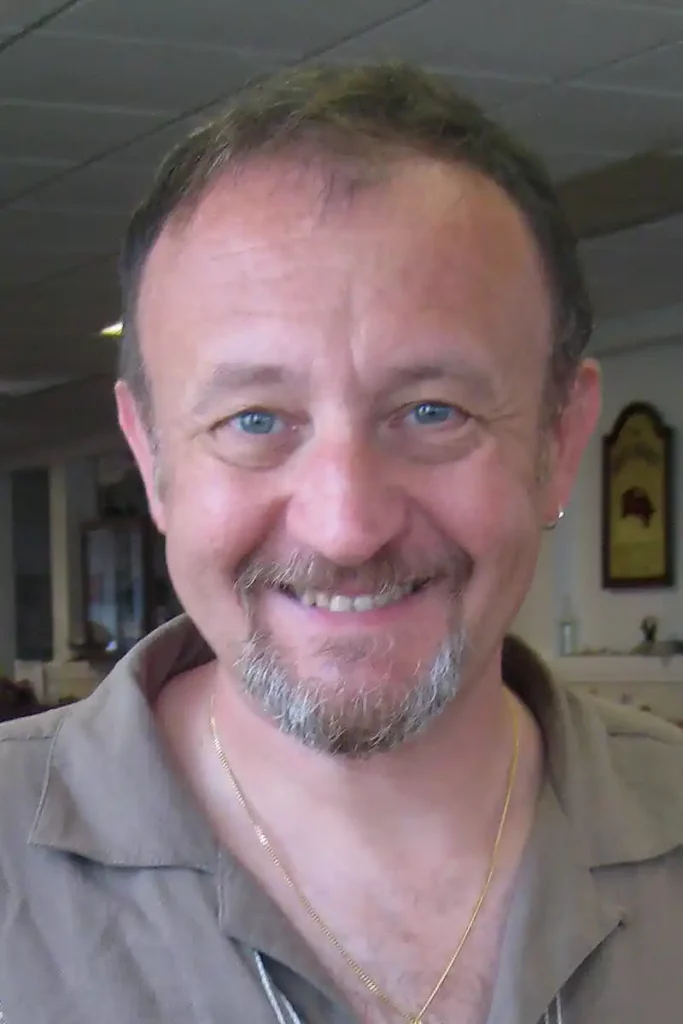
Everyone is welcome to a public lecture presented by Professor Norman Mannella on Saturday, August 22, from 10:30 a.m. to 12 p.m.
What’s this talk about?
Quantum Mechanics: A Centennial Story (1925-2025)
The year 2025 marked 100 years since the birth of quantum mechanics, one of the most profound intellectual achievements in human history. This talk will retrace the extraordinary first 30 years of the quantum revolution, following the discoveries that revealed the strange and fascinating behavior of atoms, electrons, and light, and through the stories of scientists who challenged conventional wisdom and transformed our understanding of reality.
Where is it?
Institute of Advanced Materials and Manufacturing (IAMM)
Room 147
2641 Osprey Vista Way
Knoxville, TN 37920
When is it?
Saturday, August 22, 2026, from 10:30 a.m. to 12 p.m.
How do I sign up?
Space is limited, and registration is required. We strongly encourage you to register early to secure your spot.
For any questions, please contact Chodge8@utk.edu.
Reconciling Fundamental Physics

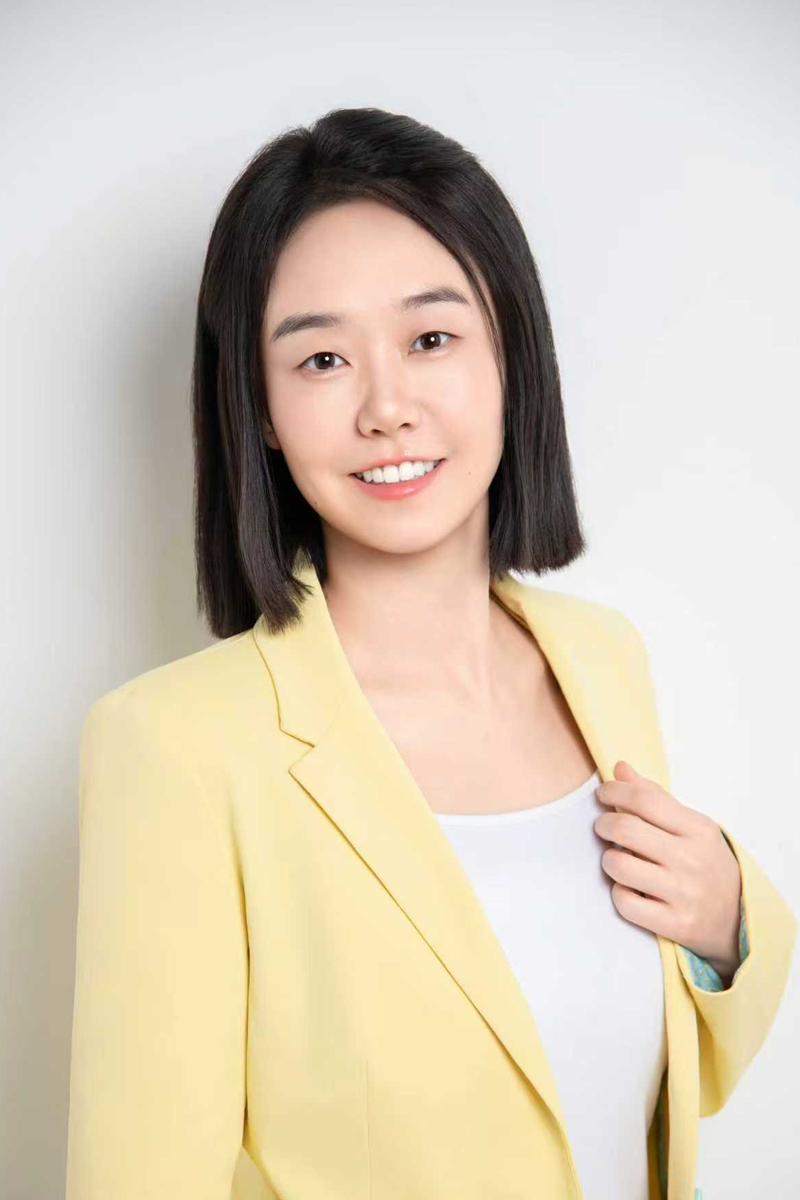
Assistant Professor Haocun Yu is something of a scientific diplomat. In a recent Physical Review Letters (PRL) publication, she and colleagues show how a tabletop experiment can bring together two bedrock physics theories that have never been fully reconciled.
Subatomic Gravity?
More than a century ago Albert Einstein gave us the theory of general relativity, describing gravity in relation to space and time on large scales. Within a decade, physicists were developing a deeper knowledge of quantum mechanics: the laws that govern the subatomic world, including atoms, photons, and other microscopic systems.
“Quantum mechanics and general relativity are two of the most successful theories in physics, but they describe nature in very different ways,” Yu explained. “To understand nature at its deepest level, we need experiments that probe where these two frameworks overlap. Studying gravitational effects in genuinely quantum systems can help reveal whether the two theories remain fully compatible in that regime, and it may point the way toward new physics.”
She said the challenge in those studies is that compared to other physical effects, gravity is “extraordinarily weak” at the scale of single quantum particles. This gives it an extremely small signature that’s difficult to gauge. To overcome that obstacle, she and colleagues built a highly-stable 50-kilometer optical interferometer using compact fiber coils and tested it with single photons. The entire apparatus can fit on a tabletop.
An optical interferometer splits a beam of light, then recombines the resulting beams to create an interference pattern that makes precision measurements. Most lab-based interferometers lack the sensitivity required to pick up the elusive signal of gravity in a quantum system. In this experiment, the team’s unique design successfully detected a gravitationally-induced phase signal small enough to reach the regime needed for laboratory-scale measurements of gravitational redshift (a prediction of general relativity) with quantum light.
“Experiments involving both general relativity and quantum mechanics are necessarily at the cutting edge of precision measurement,” Yu explained. “Experiments simply did not have the stability, size, and phase sensitivity needed to reach that regime. Our work helps bring these tests closer to experimental reach.”
Quantum Phenomena on a Human Scale
Yu is a PhD graduate of the Massachusetts Institute of Technology (MIT) and the PRL research comes from her work as a Marie-Curie Postdoctoral Fellow at the University of Vienna. She joined the UT Physics faculty in January 2026 and is drawing on her experience to create new research opportunities.
“I am building a quantum optics and sensing research program with broad applications, where advancing and developing new quantum tools for fundamental science is a central part of that vision,” she said.
Her work complements the department’s strong quantum science program. Physics faculty played key roles in the university’s quantum cluster hiring initiative and in securing National Science Foundation funding for the Center for Advanced Materials and Manufacturing, where they’re taming the complexity of quantum materials with artificial intelligence.
Yu is actively looking for students and postdocs to join her research group and contribute to work she said has long fascinated her.
“What especially drew me in is that fragile quantum effects can be harnessed as practical tools for precision measurement,” she said. “In return, these enhanced experiments can reveal mesoscopic and macroscopic quantum behavior in measurement devices — bringing quantum phenomena closer to human scales and advancing quantum science itself.”

Excellence Across the Board
From undergraduates to distinguished faculty, the Department of Physics and Astronomy has enjoyed a strong showing as the university bestows spring 2026 honors.
At the College of Arts and Sciences annual awards ceremony the department claimed four faculty honors, including research awards at every level.


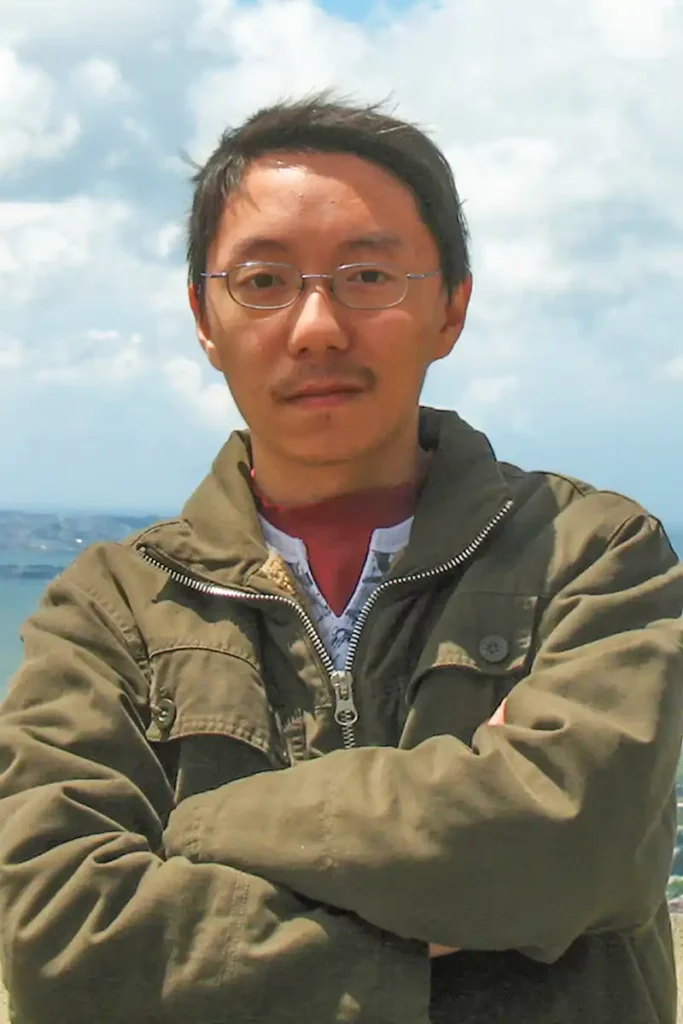
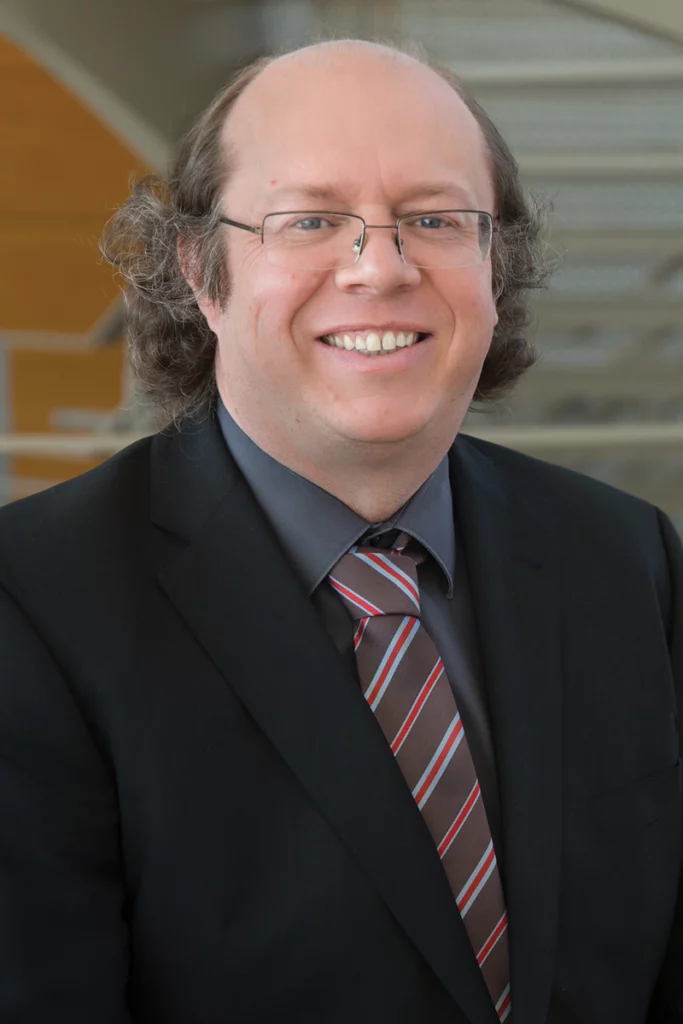
Professor Christine Nattrass won an Excellence in Teaching Award for Senior Level faculty. Her innovation and leadership in physics education have set her apart as she connects students with research opportunities, internships, and career resources. As director of the undergraduate program, she strives to make sure all students find a place in the department so they can succeed.
Physics faculty members also won three Excellence in Research and Creative Achievement Awards.
A rising star in experimental nuclear physics, Assistant Professor Dien Nguyen was recognized at the Early Career level for her growing list of achievements, including two DOE awards, national laboratory partnerships, and exceptional mentoring.
Professor Jian Liu was honored in the Mid-Career category. A Humboldt Fellow, he has helped burnish the university’s reputation through his work investigating quantum materials for innovative technologies.
Professor Alan Tennant added a Senior Level research and creative achievement award to his long list of distinguished honors. His pioneering research on quantum magnetism and neutron scattering has profoundly advanced our understanding of strongly correlated electron systems. Tennant played a key role in securing National Science Foundation funding for the university’s Center for Advanced Materials and Manufacturing, a Materials Research Science and Engineering Center (MRSEC) where he serves as director.
Earlier this semester Chancellor’s Professor Hanno Weitering was named the 2026 Macebearer, the university’s highest faculty honor.
Outstanding Student Research
While the department celebrated students at the annual Honors Day ceremony, many physics majors also won recognition at the university’s undergraduate research events.
At the Arts and Sciences Undergraduate Research Symposium (ASUReS):
- Jullian Watts, First Place Award (Mentor: Associate Professor Tova Holmes) for “Optimizing Electron Reconstruction for a 10 TeV Muon Collider”
- Jack Peltier, Second Place Award (Mentor: Math Professor Tuoc Phan) for “On ABP Estimates for a Class of Quasi-linear Elliptic Equations in Divergence Form and Applications”
- Dinesh Gangavarapu, Second Place Award (Mentor: Professor Yuri Efremenko) for “Additive Manufacturing and Geant4 Simulations for Background Reduction in LEGEND-1000”
At the 2026 Exhibition of Undergraduate Research and Creative Achievement (EURēCA), three physics majors won achievement awards for their posters:
- Cassidy Fleenor (Mentor: Thomas Chair/CAS Excellence Professor Anthony Mezzacappa) for “Searching for Instability in Core-Collapse Supernovae”
- Amelia Sandoval (Mentor: Assistant Professor Dien Nguyen) for “Polarized 3He via Metastability Exchange Optical Pumping Development”
- Madeleine Sorrell (Mentor: Professor William R. Hix) for “Studying Nucleosynthesis in Three-Dimensional Models of Core-Collapse Supernovae”
Adapted in part from original text by Randall Brown

Finding Chiral Superconductivity’s Fingerprint
With a carefully-designed experiment and a handful of tin atoms, UT’s physicists have found a long-sought form of superconductivity, taking one more step toward creating custom quantum materials.
Twists and Turns
Scientists have known about superconductivity for more than a century. At low temperatures, resistance in certain materials vanishes and they carry electrical current without losing any energy. Superconductors are part of particle accelerators and magnetic resonance imaging machines. While they need extremely cool environments to work, the mechanism that drives them is quite well-understood: electrons, which normally repel each other, form pairs and carry the current.
Chiral superconductivity is another story. Here, electron pairs reject the typical symmetry and twist into a signature left or right “handedness.” Scientists have searched for this phase for decades because it has promise for quantum technologies.
In 2023 Chancellor’s Professor Hanno Weitering and Bains Professor Steve Johnston published findings in Nature Physics reporting that strategically scattering tin atoms across a silicon base could give rise to a superconductor. They proposed the system could also be a potential chiral superconductor. This latest work, outlined in Physical Review X, provides the evidence.
The research team carefully deposited one-third layer of tin atoms on a silicon substrate, then used sophisticated imaging to pick up distinctive chiral superconductivity patterns.
The top two panels are experimental data; the lower two panels are theoretical simulations.
DOI: https://doi.org/10.1103/jmmf-mpr8
Simply Beautiful Interference
Weitering said the structural and electronic simplicity of the tin-silicon material is the key to seeing chirality. More complex materials have overlapping states and multiple interactions that can mask the telltale patterns.
In this system, one-third layer of tin means a controlled deposition of atoms placed relatively far apart on a silicon layer. Those atoms spontaneously organize into a nicely ordered triangular lattice. The geometry is important.
“Chirality is non-existent in high-temperature cuprate superconductors because they have a square lattice,” Weitering said, which gives you a different phase. “But in the tin layer, it exists because the lattice isn’t square. It’s a triangle.”
To see chiral superconductivity’s distinctive fingerprint he and his colleagues turned to quasiparticle interference imaging, or QPI.
“In condensed matter these particles always are moving in a surrounding that effects their behavior, so they’re not really a single entity anymore,” Weitering said. “They’re all under the influence of their surroundings. That’s why we call them quasiparticles.”
If you picture electrons behaving like waves, he explained, and think about throwing stones in a pond, one after another in different spots, you’ll see waves start to run into each other.
“We call those interference patterns, he said. “This is where the interference comes from: quasiparticle interference. With the scanning tunneling microscope (STM) we can see those waves. Quasiparticles interfere and give these beautiful patterns.”
The calling card for chirality is encoded in these patterns surrounding a point defect; a single atom defect to be precise.
“That could be a missing tin atom; it could a tin atom that has been replaced by a silicon atom because there’s a big reservoir of silicon underneath and sometimes atoms do that,” Weitering said. “You can never get a crystal perfect. There are always some defects in there. One crucial point in this system is that with the STM we can see each and every point defect in the tin layer.”
This research could serve as a template for using QPI to find other forms of unconventional superconductivity.
“Most superconductors are discovered through serendipity,” Weitering said. “This was all by design.”
Customizing materials is an important step on the long journey to possible applications.
“Quantum materials are usually not very useful unless you can make devices out of them,” he explained. “To make devices you usually need to make thin films and interfaces.”
He said that chiral superconductors are topological, and “people are excited about topological systems because we could use topological superconductors to build, for instance, qubits for quantum computing.”
Qubits store or process information that’s highly sensitive to outside influences like temperature, everyday radiation, etc.
“Topological systems are interesting in a sense that topological property is not something that’s local,” Weitering said. “It’s global. By making it global it’s much less sensitive to perturbations.”
Showing Off for Friends
Though the tin-silicon system was designed with intention, recognizing the chirality pattern actually did involve a little bit of serendipity.
Weitering’s former postdoctoral research associate, Fangfei Ming, is now a professor in China. He sent QPI images of the material taken by his group, showing how the detail has improved over time—specifically patterns that resemble flowers.
Weitering was impressed and showed the results to Assistant Professor Ruixing Zhang.
“Ruixing looked at this pattern and saw something very striking that was at the center of the page,” he said.
Zhang went back to his office and had his graduate students (Zhuo Chen and Yuchang Cai) do some numerical and analytical calculations, proving that only chiral superconductivity will result in the flower-like QPI pattern with an atomic-size hole at the center—chiral fingerprints.
“Ruixing saw that and his intuition was right,” Weitering said, admitting that, at first, he was more focused on the sharpness of the images when he shared them with Zhang.
“I was just showing off,” he joked.
Having friends to work with (and impress) is a critical element to moving fundamental research forward.
“If you do science by yourself, you’re never going to get there,” Weitering said.
He, Zhang, Johnston, Chen, and Cai all contributed to the PRX research, along with colleagues from China. He and Zhang are also reviewing patterns from QPI images and plan to create a database. They hope to train a machine learning program to recognize the intricate details of those patterns.
“It’s really part of the MRSEC (the university’s Materials Research Science and Engineering Center, funded by the National Science Foundation),” Weitering said. “It’s using AI to analyze data. It’s curating data. You need to train AI with data. It’s not just theory; it’s also experimental data. Then there’s the validation component of theory predictions.”
Verifying where the theory leads next is a big part of his work. First there was the Nature Physics research; now the PRX findings.
“We found superconductivity,” Weitering said. “Then we found chiral superconductivity. Every time we get a step further.”

Hanno Weitering Named 2026 Macebearer

Chancellor’s Professor and Professor of Physics Hanno Weitering is the University of Tennessee, Knoxville, 2026 Macebearer. The honor is the highest bestowed on UT faculty members and recognizes outstanding service to the university, its students, and the greater society.
Keeping with tradition, the new Macebearer was surprised by an entourage, this year comprising Vice Chancellor for Research Deb Crawford, College of Arts and Sciences (CAS) Divisional Dean Kate Jones and Associate Dean Todd Moore, and Weitering’s wife Carol, who had been following his location on her phone to make sure he made it to the physics colloquium in time for the announcement.
Weitering said he was running a bit late and didn’t think much of the texts and calls checking that he was on his way.
“Then the deans and the vice chancellor suddenly came in with Carol, which felt completely bizarre,” he said. “Everything happened very quickly.”
As Professor and Head Adrian Del Maestro shared later in a departmental message: “For those of you who joined us for Colloquium today, you witnessed a truly surprised Hanno accepting the award from Vice Chancellor Crawford! Congratulations to a member of our faculty who truly embodies the volunteer spirit!”
Robert Hinde, Executive Dean and Herbert Family Dean’s Chair for the College of Arts and Sciences, added praise for Weitering’s selection.
“Hanno’s record of teaching, research, and service, combined with his personal dedication to the physics and university community, make him an ideal choice for Macebearer,” said Hinde.
On what being Macebearer means to him, Weitering said he “can only reflect with deep gratitude on the tremendous support I’ve had throughout my career. I’m fortunate to be part of a strong physics department with wonderful colleagues, and to have benefited from the guidance and support of mentors, colleagues, and department heads. As head, I had the privilege of serving under an inspirational dean during a period of significant progress for the university. It gave me the opportunity to give back by helping position the department for new challenges and opportunities. Now, I’m glad to be back focused on teaching and research—being an academic truly is a privilege.”
Small Systems with Big Potential
Weitering joined the university in 1993 as part of the physics department’s condensed matter research program. His work explores materials at the microscopic level, focusing on their structure and the behavior of conduction electrons, particularly at surfaces and interfaces. By scattering small numbers of tin atoms across a silicon substrate, he has created idealized material systems that revealed a novel form of superconductivity—the long-sought chiral superconducting state.
While many superconductors have historically been discovered through serendipity, Weitering takes a deliberate, theory-driven approach. Because theoretical models often simplify the complex physics of real materials, he creates precisely engineered material systems that faithfully represent those models. These nanoscale realizations allow him to directly test and validate their predictions. Each step in uncovering the subtle physics of these atomic-scale designs brings researchers closer to identifying and controlling phases with potential applications in quantum technologies.
Weitering has published more than 100 original research papers that have been cited nearly 7,800 times, and was recognized by the College of Arts and Sciences with the 2023 Distinguished Research Career Award.
A True Volunteer Family
Weitering’s contributions to the university go far beyond atomic creativity. In 2012 he began a decade of leadership as head of the physics department, a position that for several years overlapped with a 10-year position as deputy director of UT’s Joint Institute for Advanced Materials (JIAM) (now the Institute for Advanced Materials and Manufacturing, or IAMM). Among his proudest accomplishments is the number of scientists involved in quantum science who joined the university during that time (including Del Maestro). He has also supervised or co-supervised 15 PhD students (including four new PhD alumni in the past four years) and 13 postdocs. He’s taught courses including Thermal Physics, Structure of Matter, and Introduction to Quantum Mechanics, as well as a capstone course for physics majors. He and Carol are also parents of two UT CAS alumni: Bart, who graduated in 2013 with a double major in geological sciences and physics; and Hanneke, who graduated in 2014 with a physics degree.
Carrying the Mace, and a Legacy
Weitering earned both master’s and doctoral degrees in chemistry at the University of Groningen in his native Netherlands. He moved to physics when he accepted a Benjamin Franklin Postdoctoral Fellowship at the University of Pennsylvania. From there he joined the UT faculty. The Macebearer is one of many honors he’s won during his tenure. In addition to selection as a Chancellor’s Professor and the CAS Distinguished Research Career Award, he has been recognized with the JIAM Chair of Excellence, election as a Fellow of the American Physical Society, and election as a Fellow of the American Association for the Advancement of Science.
Weitering will be formally recognized as Macebearer at the Chancellor’s Honors Banquet later this month. He will carry the symbolic mace during the spring 2026 commencement ceremonies, following in the footsteps of former physics professors chosen for the honor: Alvin Nielsen, Bill Bugg, Lee Riedinger, and Soren Sorensen.

First Haslam Family Professorships for Physics
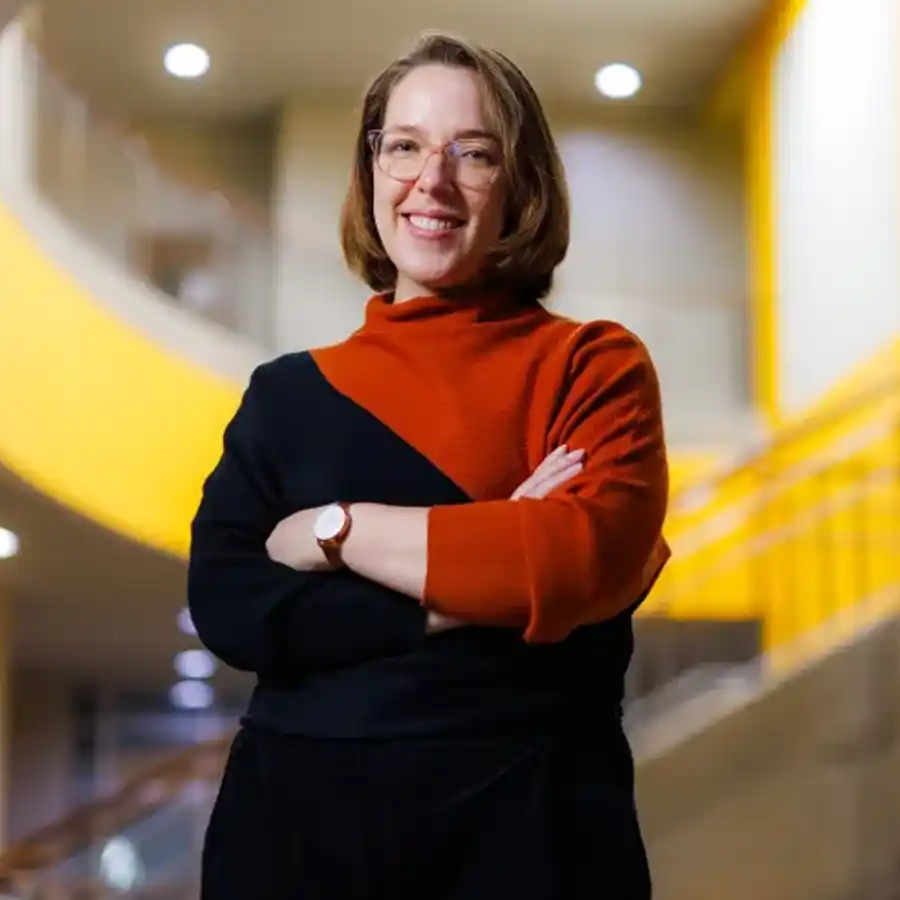

Tova Holmes and Yang Zhang have won the department’s first-ever Haslam Family Professorships, an investment that recognizes their past successes and deepens the impact of their future research and teaching.
The university’s Office of the Provost awards these honors in recognition of the recipients’ achievements in research, scholarship, and creative activity. Currently seven faculty members across the Knoxville campus hold these professorships. For both Holmes and Zhang, the five-year appointment began August 1, with the possibility of continuation past 2030.
Holmes is an associate professor who joined the department in 2020. She’s an experimentalist working in elementary particle (high energy) physics and has won a U.S. Department of Energy (DOE) Early Career Research Award, the university’s first-ever Cottrell Scholar Award, and a Sloan Research Fellowship, among other honors.
Zhang joined the department in 2023. An assistant professor, he’s a theorist in condensed matter physics focusing on quantum materials and artificial intelligence (AI). In 2024 he won the International Union of Pure and Applied Physics (IUPAP) Early Career Scientist Prize in Computational Physics.
“This marks the first time (the Haslam Professorships) have been bestowed within our department, an exciting and well-deserved recognition of Tova’s and Yang’s remarkable accomplishments in high energy physics and quantum materials, respectively,” said Professor and Department Head Adrian Del Maestro. “These awards reflect the strong advocacy of Divisional Dean Kate Jones and Executive Dean R.J. Hinde, who worked with the Provost’s Office to implement a key recommendation from our recent Academic Program Review: that we do more to celebrate the outstanding contributions of our junior faculty.”
Small Things with Big Impact
Holmes is particularly gratified about the options the Haslam Professorship provides.
“Having a named professorship is a great honor just on its face, but it comes with extremely flexible funds that I can spend how I think will most benefit my program,” she said. “If a student has an amazing result that I want to make sure they can show off, I can send them to a conference. I can buy new equipment. I can do whatever I think is most useful to my group at the time and that is such a rarity. It lets you do these smaller things that can really have a big impact. It has an impact on your impact.”
Holmes’s research is firmly rooted in established science with an eye on the horizon. Her group works with the Compact Muon Solenoid detector program at CERN, a longstanding experiment that’s a DOE priority. They’re building a new hardware system that will reconstruct, in real time, every track from every particle that comes flying out of the particle collisions at the upgraded High-Luminosity Large Hadron Collider, which will turn on in 2029. She’s also collaborating with scientists at Fermilab to study dark matter signatures and has become a leader in the effort to build a muon collider, part of the nation’s particle physics roadmap for the future.
While Holmes’s work dives into the particles and forces that compose and corral matter, Zhang looks at the complexities and promise of new materials, building a broad program across departments.
“Right now, I am most enthusiastic about the rapidly advancing intersection of quantum materials and artificial intelligence,” he said. “My group is developing new computational methods to understand and predict the behavior of complex quantum systems at a scale that was previously impossible.”
His team is particularly focused on moiré materials, which have atomically thin layers that are arranged slightly askew. The interactions between those layers give rise to new properties.
“We’ve discovered that you can create entirely new electronic properties just by twisting two-dimensional semiconductors,” Zhang explained. “This research is fundamentally interdisciplinary and (is) creating a new synergy between computational physics, computer science, and materials science. As I discussed at the Symposium on Machine Learning in Quantum Chemistry held in Knoxville, my work is a perfect example of this. We use high-level physics principles and data from smaller, exact calculations to train advanced machine learning models. These models then learn the complex quantum rules and interactions that govern materials.”
Outpacing the Textbooks
For Holmes and Zhang, thriving research spills over into their classrooms.
“I’m teaching particle physics right now, which is an utter delight,” Holmes said.
When she first joined the faculty, getting back to the classroom helped reacquaint her with concepts she learned as an undergraduate and tie them to her current elementary particle pursuits.
“I am so glad to be at a university where I’m teaching, because it’s my job to constantly refresh and expand my understanding of the underlying elegance of particle physics and the fundamental principles underpinning it,” she said. “I’ve been able to make more connections between my work and other fields in particle physics. I love being able to incorporate ideas from research into classes.”
Zhang’s research also heavily influences what and how his students learn.
“My research and teaching are deeply intertwined,” he said. “This field is moving so quickly that the most exciting topics, whether it’s AI in physics or the discovery of new quantum materials, are not in the standard textbooks yet. I bring these frontier problems directly into the classroom. When my research group develops a new computational tool, I often turn that into a lab module or a final project for my students. This gives them hands-on experience with the exact methods that are driving discovery today. My goal is to not just teach them established physics but to train them as the next generation of computational scientists who are fluent in physics, math, and AI.”
Long before winning a Haslam Professorship, Holmes was aware of what the name meant for education.
“I understand that as governor Bill Haslam did a lot to increase access to the University of Tennessee for the students of the state,” she said. “I really respect that effort and it was something I was impressed by when I arrived in Tennessee; what an incredible set of programs there were to give access to the university to everybody in the state. That’s a thing I’m very pleased to have attached to the name of this.”
For Zhang, the honor is inspiration to keep doing good work.
“This kind of support from the Haslam family is truly transformative,” he said. “A named professorship like this feels like a holistic recognition of one’s overall contributions; not just a single project, but the entirety of my research, teaching, and service to the department and the university. It is less about what you will do and more about an investment in how you work and your potential as a faculty member. That is incredibly meaningful and encouraging.”
Zhang also sees these named professorships as a reflection of the department’s upward trajectory and its collaborative culture.
“I want to thank Adrian Del Maestro and all my colleagues for making this department such an innovative place to be,” he said. “Most of all, this honor is a credit to the brilliant students and postdocs I am lucky to work with every day.”
With ORNL, UT Works Toward a Quantum Future
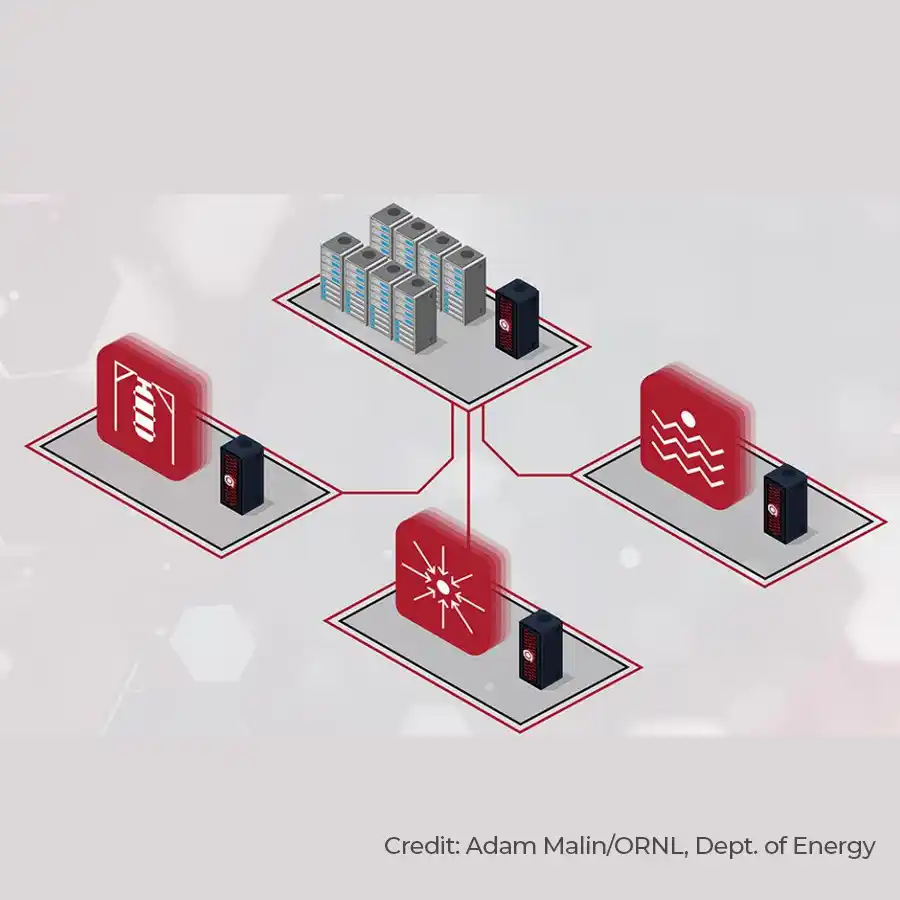
The University of Tennessee, Knoxville, expects to receive $2.3 million to play a key role in the nation’s quantum future, thanks to renewed funding for the Quantum Science Center (QSC) at Oak Ridge National Laboratory (ORNL).
The U.S. Department of Energy is investing $125 million in QSC over the next five years to pioneer quantum-accelerated high-performance computing (QHPC), developing open-source software for quantum-classical workflows that accelerate scientific advancements across multiple disciplines. Since its founding in 2018 as part of the National Quantum Initiative Act, the QSC has pooled the unique strengths of national laboratories, industry partners, and academia to build a combined research program in quantum science. UT is part of that collaboration and will receive $2.3 million to lead work in materials and models and to train early-career scientists.
With its commitment to innovation gateways in Advanced Materials and Manufacturing and Artificial Intelligence, the university is well-positioned for this assignment. In 2023, UT launched the Center for Advanced Materials and Manufacturing (CAMM), a premier Materials Research Science and Engineering Center funded by the National Science Foundation. Through experiment, synthesis, and modeling, CAMM is dedicated to discovering advanced materials for new quantum technologies and giving students the opportunity to learn in a world-class environment.
UT is a world leader in quantum spin systems and brings its unique expertise to the validation of quantum-classical computations, which are beyond the reach of conventional computation.
Physics Professor Alan Tennant is the CAMM Director.
“UT is a key part in this,” he said of QSC research. He explained that “machine learning to extract models from quantum magnets has been an important innovation from UT and CAMM, allowing parameters to be determined from materials with neutron scattering which are essential for validating quantum computations. QSC will continue to strengthen its collaboration with CAMM.”
He added that this new funding will also support UT students who will make materials, conduct neutron experiments, and undertake quantum computations.
Tennant said the QSC is building the country’s foundation for a new quantum age and that the university’s involvement puts UT at the center of that work.
“This is actually right in the heart of where tech starts connecting,” he said. “We are integral to the American road map.”
The QSC is headquartered at the Department of Energy’s Oak Ridge National Laboratory, which is managed by UT-Battelle for the DOE Office of Science. By uniting national laboratories, academic institutions and industry partners, the QSC endeavors to advance American innovation and global leadership by enhancing the computational robustness, algorithmic scalability and simulation accuracy of quantum computing systems. For more information, visit qscience.org.

NSF CAREER Award for Joon Sue Lee

Assistant Professor Joon Sue Lee has won a prestigious CAREER award from the National Science Foundation (NSF) to advance the creation of quantum materials for new quantum devices. He is the ninth member of the current physics faculty to win this award and one of three recent UT recipients.
Atomic-Scale Engineering
The NSF CAREER program supports early-career faculty with the potential to be academic role models in research and education. Since joining the department in 2020, Lee has won back-to-back teaching awards and built a research group that specializes in developing quantum materials, especially those with potential applications in quantum technologies.
The transistors and semiconductors that power smartphones and biosensors were built on understanding electrical properties. Future quantum technologies rely on the fascinating but atypical workings of quantum mechanics. In systems so small they’re measured in atoms, the physics tends to go off script. Particles can be in multiple states at the same time or they may be entangled. Properties don’t exist until they’re measured. Lee’s work navigates through this landscape to make new materials and devices for a modern world. With this NSF support, he’ll focus on a single-element material—tin (Sn)—because it has a dramatically different personality.
“Tin has two different structures,” he said. “Alpha phase is topological. Beta phase is superconducting. If you can control the growth of each phase, then you can control the electrical properties.”
Superconductivity allows electrical current to flow with no resistance. Topological phases, on the other hand, are defined by the global arrangement of a material’s electronic wavefunctions—its band topology. In conventional materials, the conduction and valence bands remain distinct. However, in topological materials, these bands can invert due to strong spin-orbit coupling.
“This inversion changes the material’s topological order, creating protected surface or edge states that allow electrons to travel without scattering,” Lee explained.
Such states are remarkably robust against defects and impurities, giving rise to exotic behaviors that bridge fundamental quantum physics and potential device applications. Combining superconductivity and topology gives scientists exciting opportunities for new technologies.
“Topological superconductivity, for example, is one of the most promising routes toward quantum computing,” Lee said. “That’s one of the big motivations.”
Using the Molecular Beam Epitaxy resources at UT’s Institute for Advanced Materials, Lee grows thin films, one layer of atoms at a time, on crystalline substrates. His goal is to selectively grow pure superconducting and topological phases of tin and put them together into structures with “atomically precise” interfaces.
“If we can achieve that, then we will be able to design materials where one area has one structure and the adjacent area has the second structure,” he said.
By adjusting the lattice parameters of underlying buffer layers of those areas, he can tune the tin phases and control their electrical properties.
“We want to explore the basic physics in these electrical states,” he said, “and also develop devices that could lead to future quantum applications.”
Professor and Department Head Adrian Del Maestro said that “Lee’s work harnesses the quantum behavior of materials for new technologies, including novel superconductors that can be used for sensing and energy applications. His lab is always bustling with undergraduate and graduate students, where he is training the workforce of tomorrow.”
The work aligns well with the university’s strategic focus on advanced materials and manufacturing innovation gateway, part of a concentrated effort to make the most of UT’s expertise to tackle grand challenges. Lee, who has won teaching awards from the College of Arts and Sciences and the UT Alumni Association, also plans to share this research with undergraduates to inspire a new generation of scientists.
“I plan to use the data from our samples to explain or demonstrate superconductivity or topological properties in class,” he said. He added that he can also use semiconductors and insulators in his lab and “those can help students understand electrical properties of different materials.”
Lee’s five-year project began in August and includes $749,441 to support his work. He is the ninth member* of the current physics faculty to win an NSF CAREER award. The program has supported the department’s wide range of expertise, including research in condensed matter, elementary particles, biophysics, and nuclear theory.
*Adrian Del Maestro, Steven Johnston, Larry Lee, Jian Liu, Norman Mannella, Jaan Mannik, Lucas Platter, and Haidong Zhou have all won NSF CAREER Awards.
TRAINING THE NEXT GENERATION

Graduate Student Pradip Adhikari joined Joon Sue Lee’s research group in the fall of 2020 and is one of 11 graduate students to win a Graduate Advancement, Training, and Education (GATE) Award for the 2025-2026 academic year. These awards from the UT-Oak Ridge Innovation Institute’s Science Alliance support collaborative research between the university and Oak Ridge National Laboratory, providing outstanding graduate students with a 12-month appointment including a stipend, tuition, and benefits.
While he isn’t working directly on the NSF CAREER research, Lee explained that “in Pradip’s case, he’s using a different material system (but) it’s the same motivation; the same big idea about topological materials and superconductivity.”
Adhikari’s project is the device-scale interplay of unconventional superconductivity and magnetism. While they typically have an adversarial relationship (usually leading to the suppression of one state by the other) he is working with a combination of iron, tellurium, and selenium, or FeTeSe, which is a notable example of an unconventional superconductor with co-existing superconductivity and magnetism.
“The interplay of topology, magnetism, and superconductivity gives rise to exotic and robust quantum states, making such materials a fertile ground for discovering new physics,” Adhikari said. “My research interest lies in the synthesis of high-quality topological materials, fabricating devices from them, and studying their properties at the device scale. I am particularly excited by how the unique electronic behaviors of these materials can be explored and harnessed for next-generation quantum technologies.”

Enhancing Thermoelectric Effects
UT’s physicists have helped develop a new approach to enhancing thermoelectric materials, energy converters that can turn waste heat into electricity or electricity into cooling and heating.
Thermoelectric materials use heat to create electricity by one of two avenues. The Seebeck effect moves current from the hot side to the cold side of a material. The temperature difference generates electricity. The lesser-studied Nernst effect creates voltage in a transverse direction but requires an external magnetic field. While this complicates its possible uses, this effect intrigues researchers because its geometry provides greater efficiency.
In this study, Dongliang Gong, Junyi Yang, Shashi Pandey, Dapeng Cui, Yang Zhang, and Jian Liu* were part of the team that synthesized an antiferromagnetic oxide material that could generate transverse voltage without the need for an external magnetic field. This anomalous Nernst effect (ANE) is the largest among the known magnetic oxides because of the magnetically broken symmetry. This opens a path to looking at other materials with similar symmetry configuration as candidates for greater thermoelectric efficiency.
Read the full research highlight from Argonne National Laboratory, or the original paper in Nature Communications.
*Dongliang Gong is a former postdoctoral research associate.
Junyi Yang completed his PhD in 2022 and is now working at Argonne National Laboratory.
Shashi Pandey graduated with a PhD in 2024 and is currently a postdoc at the University of Michigan.
Dapeng Cui is a postdoctoral research associate.
Yang Zhang is an assistant professor of physics. Jian Liu is a professor of physics.