
• Request Info
  • Visit
  • Apply
  • Give
  • Request Info
  • Visit
  • Apply
  • Give

Search

  • A-Z Index
  • Map

Physics & Astronomy

  • About
    • Honors
    • Administration
    • Faculty Resources
    • Nielsen Spaces
  • Research
    • Research Partners & Facilities
    • Condensed Matter
    • Particle / HEP
    • Biophysics / Soft Matter
    • Nuclear / Astrophysics
    • Quantum Information
  • People
    • Faculty
    • Staff
    • Joint Research & Adjunct Faculty
    • Post Docs
    • Graduate Students
  • Undergraduate
    • Why Physics
    • What Our Grads Do
    • Career Resources
    • Degree Programs
    • Research
    • Scholarships
    • Student Organizations
  • Graduate
    • Join Our Program
    • FAQs
    • Fellowships & Assistantships
    • Bains Fellowship
    • Where Our Grads Go
    • Research
    • Resources
  • News & Events
    • Newsletters
    • News
    • Colloquia Series
    • Events
    • In the Media
  • Outreach
    • Astronomy Outreach
    • Cool Things in the Sky this Month
    • Physics Outreach & High School Lecture Series
  • Alumni
    • Distinguished Alumni Award
    • Giving Opportunities
    • Share Your News
A banner showing a model of an atom and elementary particles

News

News

CMS Detector diagram

Finding Hidden Physics

June 7, 2022

Image of Tova Holmes
Holmes

Tova Holmes awarded DOE Early Career Research award to break the Standard Model

Tova Holmes has a challenging but welcome task: looking for hidden physics with particles no human can see. She’ll pursue this aim with an Early Career Research award from the US Department of Energy Office of Science. The grant begins July 1 and includes $750,000 of support over the next five years.

Breaking the Standard Model

Particle physics helps drive not only discoveries about our universe but also innovative tools that improve our lives here on earth. As a field it describes the stuff of matter but it’s also the foundation for practical spinoffs like Wi-Fi and magnetic resonance imaging (MRIs). Holmes joined the department as an assistant professor in 2020 and is part of the CMS group, which uses the Compact Muon Solenoid detector to study high-energy particle collisions in the search for new particles, and new physics, at the Large Hadron Collider (LHC) in Geneva.

The LHC is where scientists discovered the Higgs boson, a feat that led to a Nobel Prize and completed the Standard Model of physics. All matter in the universe is made of fundamental particles and forces and the Standard Model explains how they relate to one another. The Higgs has a crucial role in this framework.

“When we designed the LHC, we wanted to find the Higgs,” Holmes explained. “There’s a Higgs field everywhere and it contains energy everywhere. All of our other particles are basically continuously interacting with this Higgs field as they move through space. That mechanism is exactly what gives most of the particles in the Standard Model mass.”

The Higgs may be a giver, but it’s also a taker.

“There’s a key problem that only gets worse when you find the Higgs, which is that the Higgs mass itself doesn’t make any sense,” Holmes said. “(It) not only gives mass to those other particles, it’s going to collect additional mass from the interactions. That means that its mass should blow up. You’re solving one mass problem by introducing the Higgs, but you’re creating a new one.”

This problem fuels the idea that there’s something else that so far has escaped detection.

“We can tell that we’re missing things,” Holmes said. “There’s direct evidence that we have missed something that could be as big as the Standard Model itself. We might be looking at a tiny corner of what actually exists out there.”

Finding something new would in effect break the Standard Model, and that’s where Holmes’ research comes in.

“I am studying things that would couple to the Higgs and solve this mass problem,” she said.

Her proposal will upgrade detector capabilities and take new data that can identify phenomena the LHC might have previously missed, including long-lived particles.

Chasing the Unconventional, and Why It Matters

These particles Holmes hopes to find have unconventional signatures, which she describes as “things that our detectors weren’t designed to look for.”

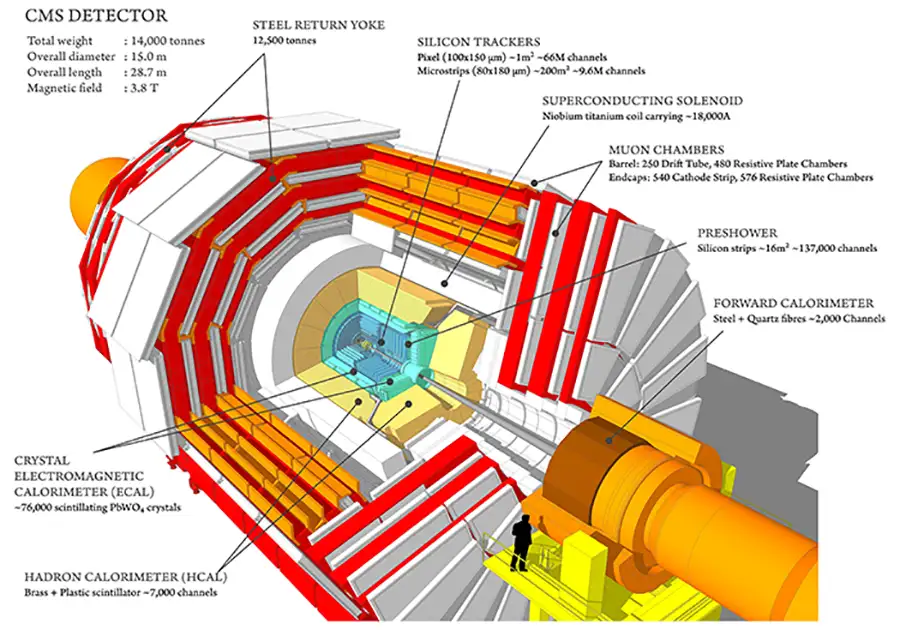
The CMS detector sits on one of four collision points on the LHC ring, the most powerful particle accelerator ever built. Though CMS is described as a giant, high-speed camera, “we never directly see any of the particles that we study,” Holmes said. “That’s the inherent challenge.”

The detector does the looking instead.

The CMS detector resembles a giant cylinder with several layers wrapped around it. Collisions occur in the center. Exotic, unstable particles like the Higgs decay almost immediately, while more commonplace particles like electrons and muons have longer trajectories and filter through more layers. As they travel, the detector measures what they leave behind (electric charge, energy, etc.) as a way to identify them. The detector’s design limits what it can measure, but it’s not the only restriction.

“Not only our detector, but also our trigger system,” Holmes said, “which is how we decide while we’re running our experiment which of the data to keep. We collide 40 million times a second and we keep about a thousand of those collisions per second. If our trigger isn’t designed for a signature, then it’s something we would have missed.”

CMS Detector diagram
CMS Detector, courtesy of CERN

Longer-lived particles—the ones that make it through more layers before they decay—leave the unconventional signatures she wants to find. They can show up in supersymmetry (SUSY), which Holmes described as “a whole zoo of particles that exist, one for each of the Standard Model particles.” Every particle would have a partner that’s its opposite, balancing things out. Finding SUSY, she said, “magically solves all your problems.”

With the DOE grant her group will expand the detector’s triggering capabilities to record new data that she hopes will reveal a wider variety of long-lived particles, including those that might show up in SUSY. Students and postdocs will play a key role, Holmes said, as “every major physics output will be driven by a graduate student.”

Beyond the research and educational aspects, why does this research matter? It has to do both with the fate of our planet and how well we live on it.

“We might find as we understand the Higgs better that we’re actually in an unstable point of the Higgs vacuum, which is to say at any point our universe could tunnel to a new state and explode, or collapse into a tiny nothing,” Holmes explained. “We don’t fundamentally understand where our universe is going. Understanding the Higgs is really key to that.”

(She emphasizes she doesn’t expect this to happen anytime soon.)

“From a much more practical point of view, we have a long history of finding fundamental particles and not knowing why anyone would care, and then finding out there are really good reasons,” she said.

When electromagnetic radiation was discovered people thought it was a nice, if useless, idea. Now we know it’s the foundation of Wi-Fi, infrared and X-rays, among other applications. The same goes for MRIs. To build the former Tevatron particle accelerator at Fermilab required bending beams with magnets.

“In developing that magnet technology, they made the first large-scale production of these really high-field magnets that are now the magnets that are used in MRIs,” Holmes explained. “It was particle physics that created that technology. That’s the nature of trying to do technical accomplishments that have never been achieved before: you build technology that gets used by everybody else. Basically everything that we have technology-wise today was built on fundamental discoveries.”

“That’s the nature of trying to do technical accomplishments that have never been achieved before: you build technology that gets used by everybody else. Basically everything that we have technology-wise today was built on fundamental discoveries.”

Tova Holmes

Challenges, Not Impossibilities

Pursuing these fundamental discoveries is a good fit for the Early Career Research Program, which made 83 awards this cycle (Livia Casali of the UT Department of Nuclear Engineering was also among the awardees). The initiative supports outstanding scientists early in their careers whose research reinforces the DOE Office of Science mission to deliver scientific discoveries and tools to transform our understanding of nature and advance the energy, economic, and national security of the United States.

For Holmes that means keeping an eye on where particle physics should go next. While the LHC has been wildly successful, she believes future particle accelerators will require some new thinking.

“We went from tiny, tabletop rings to bigger ones that are the size of a building,” she said. “Then we went to where it fits, just barely, in the laboratory site. Now we’re at the LHC where it literally goes across countries’ borders.”

Building bigger rings can only take you so far, she said, adding that “if we want our field to continue, we need alternative paths.”

Her team has been working on a muon collider to solve some of these problems. It’s a circular collider where the ring size is related to the mass of the particle you’re accelerating. There are some hurdles, like trying to get a beam out of unstable particles, but Holmes is undeterred by those obstacles.

“That creates some interesting experimental challenges,” she said. “But those are problems you can solve—not impossibilities.”

June 7, 2022  |  Filed Under: Featured News, News, Particle

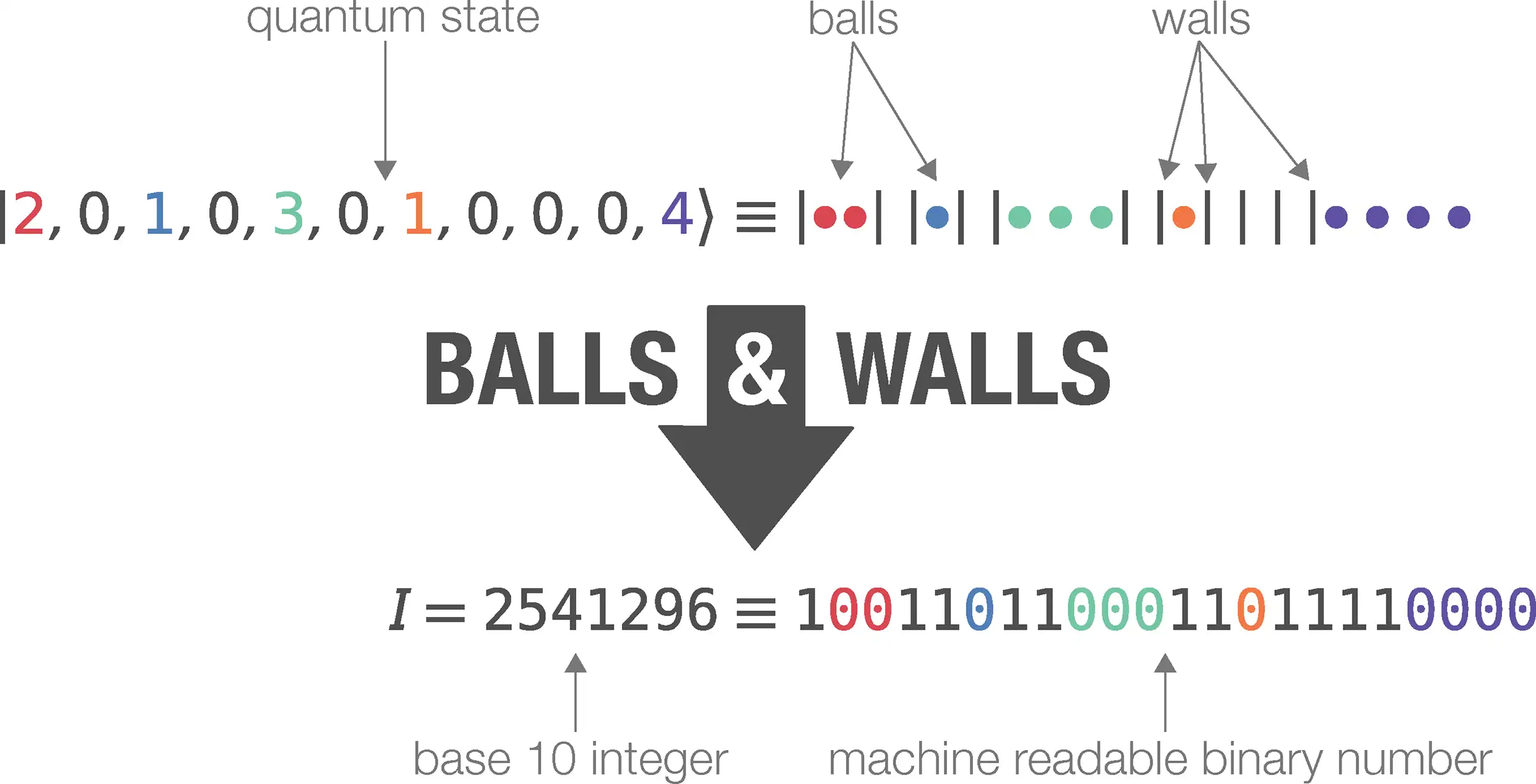
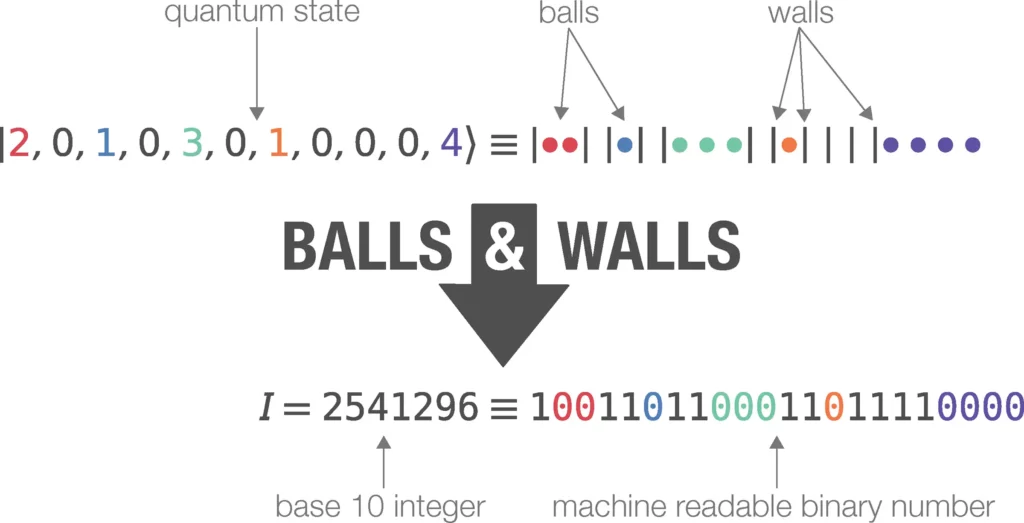
A diagram illustration Adrian Del Maestro's and Hatem Barghathi's counting tool "Balls and Walls."

Building Bridges for the Quantum Era

May 31, 2022

Del Maestro
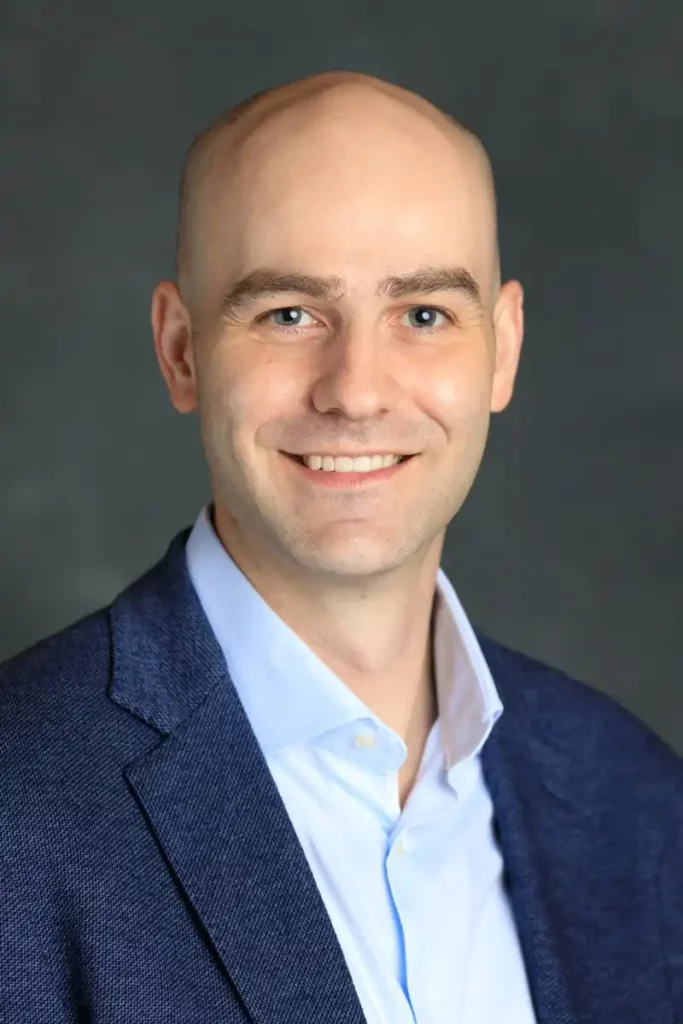
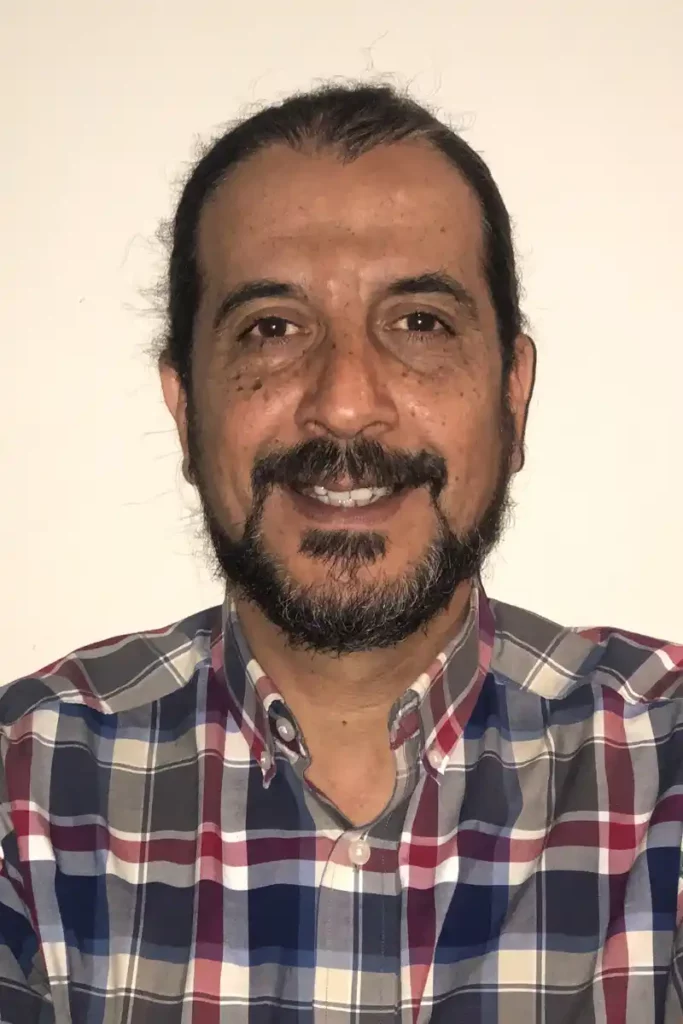
Photo of Hatem Barghathi
Barghathi

Speed.

Adrian Del Maestro and Hatem Barghathi are talking about speed, and memory, and how many bytes you need to type a single letter. In classical computers those workings are neatly spelled out: things are either on or off. But Del Maestro and Barghathi think in quantum scales, the tiny systems where classical mechanics doesn’t hold up and the multitude of particle configurations is so large, it seems impossible to count and store.

With colleagues from the Tickle College of Engineering, they’ve devised a shorthand to describe these configurations, dramatically speeding up calculations and with them scientists’ ability to predict how quantum systems behave. This kind of innovative thinking sets the stage for quantum materials to take the baton from silicon as new technologies emerge. With investment in the Quantum Materials for Future Technologies cluster, UT is well situated to be a scientific leader in this new era.

The Foundation for a Post-Silicon World

Del Maestro, a professor in both the Department of Physics and Astronomy and the Min H. Kao Department of Electrical Engineering and Computer Science, has been intrigued by quantum science since graduate school. The cluster opportunity brought him to UT from the University of Vermont. Barghathi, a postdoctoral researcher in his group, came along. Counting six new hires and current faculty in physics and engineering, by next year the cluster will have 15 or so active researchers mining the depths of quantum materials. Daunting as they may seem with their rebellion against classical physics and their maddeningly small architecture, leaving that territory unexplored would be both a scientific and economic mistake.

“Fundamental advances in materials led to our current ability to harness technology and that has given us the modern age,” Del Maestro said. “The fact that we have billions of transistors in our pockets in our iPhones is because of that foundational work.

“At the time, people weren’t trying to build iPhones,” he continued. “They were trying to understand the properties of materials. And so what we’re trying to do right now is understand and harness the properties of a new class of quantum materials that can exhibit dizzying non-classical behavior.”

Technology often follows a long path that’s not always obvious. A physicist came up with the principle for a transistor in 1925, engineers developed it in 1947, and in 1961 we had the first silicon chip. Quantum materials could be the next chapter.

“We’re really at the start of that,” Del Maestro said. “The hope is that if we can learn to understand how to first describe, quantify, characterize, and then harness these things we don’t have classical analogs for, then almost by necessity they’ll lead to what we call post-silicon quantum technologies. That’s really the purpose of the cluster. UT was already a leader in this area. We want to move from being a regional leader to being a national or global leader.”

Twenty Times Faster

Leading means solving problems, and quantum materials present plenty. One is that it’s hard to predict what atoms (and their electrons) are going to do in a quantum system. Scientists and engineers know how to control electronic current in an iPhone’s transistors, but that’s classical, not quantum physics.

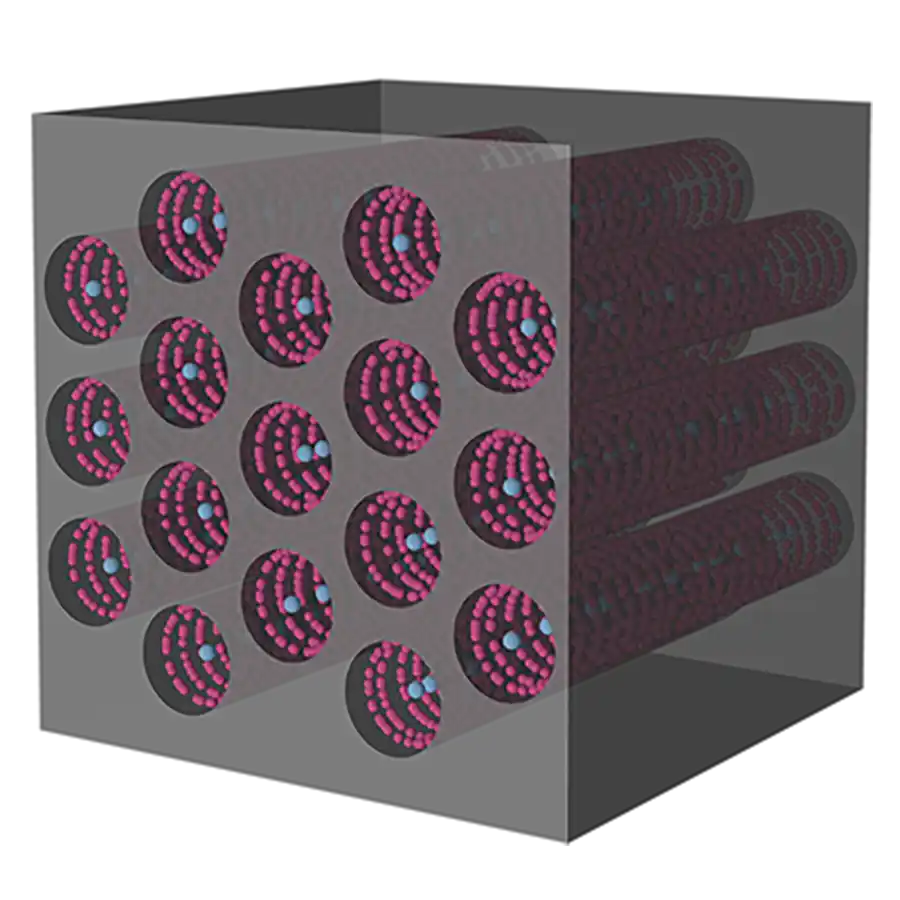
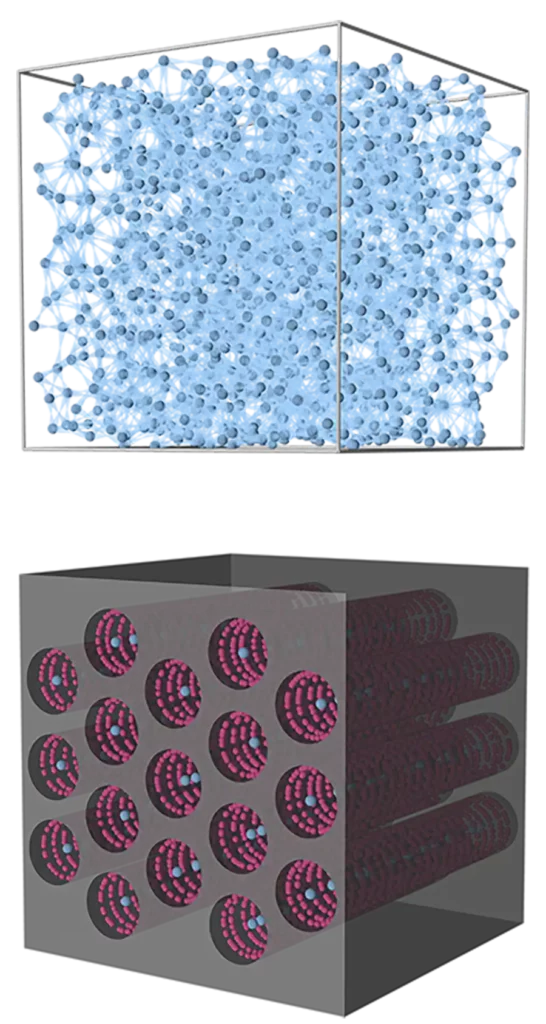
A diagram illustration Adrian Del Maestro's and Hatem Barghathi's counting tool "Balls and Walls."

“Say you have 10 blue balls,” Del Maestro explained. “Classically, you can always tell the difference between macroscopic objects, like two baseballs or billiard balls. If you look hard enough you can tell them apart. One of the absolutely amazing things about quantum mechanics is that if I give you two electrons or two rubidium atoms, there is no experiment that you can do to distinguish them.”

Those atoms are situated on lattice sites—corners, if you will, of the jungle gym-like structure of quantum materials. Complicating matters is that they’re made up of particles that can be fermions or bosons. Fermions sit one to a seat. Bosons can pile on top of each other, causing another headache, especially when you can’t tell them apart. It’s like putting together a football playbook when all the players in front of you have different abilities but look exactly alike, wear identical jerseys, and in some cases hide behind each other.

“I have these atoms and I ask how many different ways can I distribute them. But the atoms are truly indistinguishable. That’s a very hard problem to solve,” Del Maestro said.

To find the possible configurations in this scenario, he and Barghathi adapted a counting tool called “balls and walls.” At its most basic, it’s a mathematical formula to quickly figure out problems like how many combinations are possible if you want to buy a dozen donuts in four available flavors.

In this research, Del Maestro and Barghathi wanted to find how many different particle combinations were possible on lattice sites. They found the trick was to consider the setup as two objects: one as an object itself and the second as the edges of buckets you’re putting those objects into. Combining the objects and edges using a special mathematical formula gives you the number of slots available for the objects you want to count.

“Balls and walls allows me to use a simple counting argument to enumerate all possible configurations,” Del Maestro said. “Why is it important? If you want to know what the most likely configuration is, you need to know how many times it appears. Configurations are the language in which we solve a problem. We need to know the words in that language before we can write a sentence.”

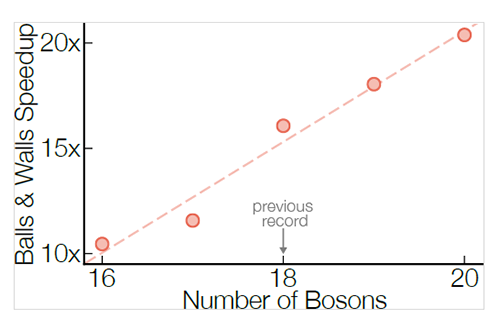
He said the fastest computers in the world have only been able to study 21 fermions on 42 lattice sites, and far fewer bosons. The coding he and Barghathi developed can study 20 bosons on 20 sites: 20 times faster than current methods. Beyond that, it takes much less memory, reducing the needed storage by a factor of the number of sites.

A graph showing the "Balls and Walls" counting tool time scaling.

“Think about how much memory you need for each letter that you store in a computer,” Barghathi said. “It will basically take eight bits. A number is at least going to take the memory of a letter.”

When facing huge numbers of possible configurations, he said, “you need to know how much memory you need to store them and how fast you can deal with them.”

Del Maestro explained that “the number of total configurations you need to store is gigantic, so if you can get a factor of 20 smaller, that’s the difference between being able to solve the problem or not. If something used to take a month, now it can take a day. Modern quantum experiments can start to use these larger system sizes and now we can actually predict what they’re going to measure in the lab.”

Spontaneous Advances

The findings are published in the first paper to come out of two departments from UT’s quantum materials cluster. While Del Maestro and Barghathi brought physics expertise in quantum mechanics, Del Maestro said “to understand this representation at the level of the bits, we needed computer science. This is where our colleagues like Micah Beck, a co-author on the paper, come in.”

The collaboration was a little slow at the beginning, with physicists and engineers speaking different languages about caches and buffers; bosons and symmetries.

“Interdisciplinarity is hard,” Del Maestro said. “It takes time and effort and thoughtfulness to build that bridge.”

The cluster plays a crucial role in that construction.

“Without that, it’s easy to be very fractured, even if we’re all working in quantum materials,” he said.

Del Maestro explained that because the cluster embedded him in engineering and computer science he wasn’t an outsider: he knew who to ask about this problem because he knew Beck was interested in it as well.

“That, I think, is the strength of the cluster,” he said. “It was very much spontaneous. The cluster will enable new types of spontaneous advances. We can’t predict where they’re going to come from because they really come at the interface where different expertise all of a sudden fits together and produces something profoundly new.”

May 31, 2022  |  Filed Under: Condensed Matter, Featured News, News

  • « Previous Page
  • 1
  • …
  • 8
  • 9
  • 10

Recent Posts

  • Cosmic Collaboration: Students Join Forces to Bring the Invisible to Life
  • UT’s Biophysics Group Investigates How Chromosomes Separate
  • WiP Closes Fall Term with Lunch & Networking
  • Work-Study Provides Early Research Advantages for Physics Undergraduates
  • First Haslam Family Professorships for Physics

Physics & Astronomy

College of Arts and Sciences

401 Nielsen Physics Building
1408 Circle Drive
Knoxville TN 37996-1200
Phone: 865-974-3342
Email: physics@utk.edu

Facebook Icon    X Icon

The University of Tennessee, Knoxville
Knoxville, Tennessee 37996
865-974-1000

The flagship campus of the University of Tennessee System and partner in the Tennessee Transfer Pathway.

ADA Privacy Safety Title IX