• Request Info
  • Visit
  • Apply
  • Give
  • Request Info
  • Visit
  • Apply
  • Give

Search

  • A-Z Index
  • Map

Physics & Astronomy

  • About
    • Honors
    • Administration
    • Faculty Resources
    • Nielsen Spaces
  • Research
    • Research Partners & Facilities
    • Condensed Matter
    • Particle / HEP
    • Biophysics / Soft Matter
    • Nuclear / Astrophysics
    • Quantum Information
  • People
    • Faculty
    • Staff
    • Joint Research & Adjunct Faculty
    • Post Docs
    • Graduate Students
  • Undergraduate
    • Why Physics
    • What Our Grads Do
    • Career Resources
    • Degree Programs
    • Research
    • Scholarships
    • Student Organizations
  • Graduate
    • Join Our Program
    • FAQs
    • Fellowships & Assistantships
    • Bains Fellowship
    • Where Our Grads Go
    • Research
    • Resources
  • News & Events
    • Newsletters
    • News
    • Colloquia Series
    • Events
    • In the Media
  • Outreach
    • Astronomy Outreach
    • Cool Things in the Sky this Month
    • Physics Outreach & High School Lecture Series
  • Alumni
    • Distinguished Alumni Award
    • Giving Opportunities
    • Share Your News
A banner showing a model of an atom and elementary particles

News

Particle

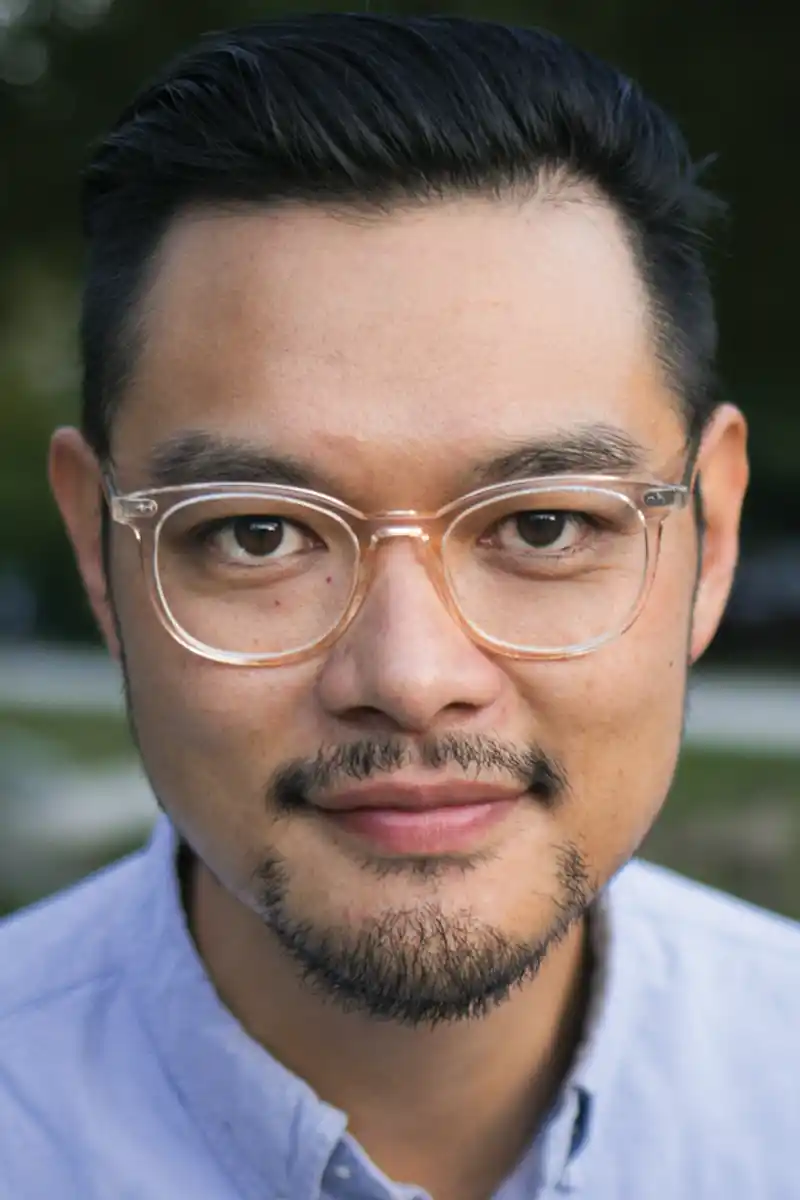
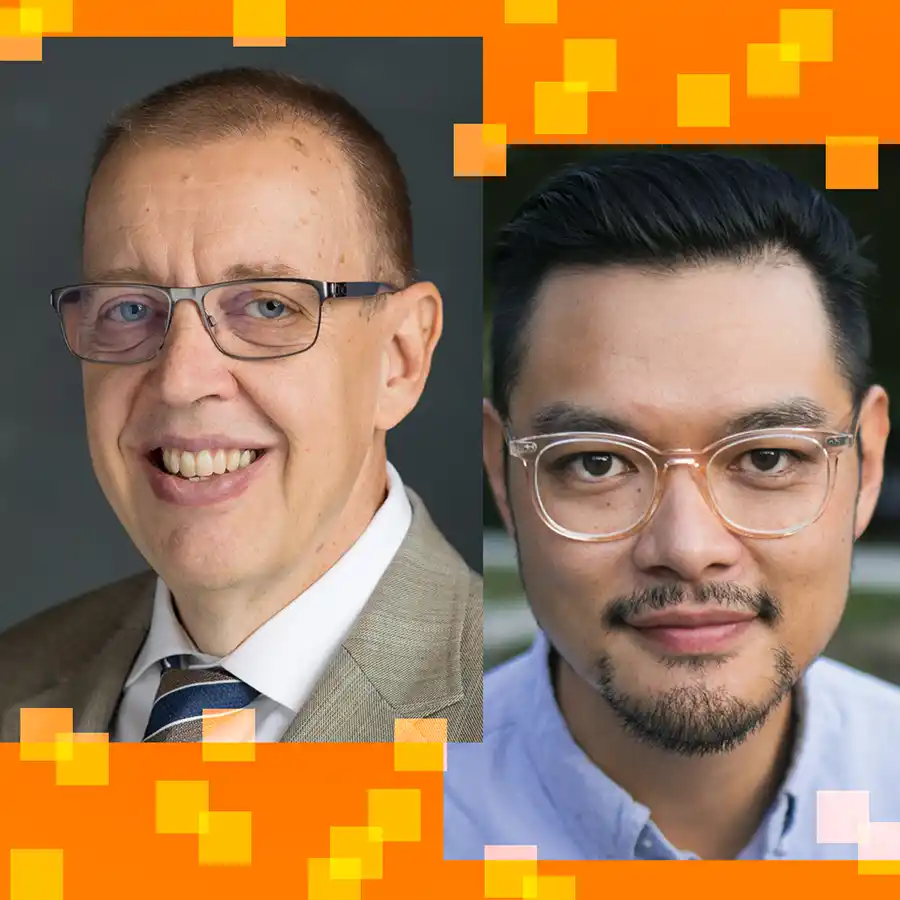
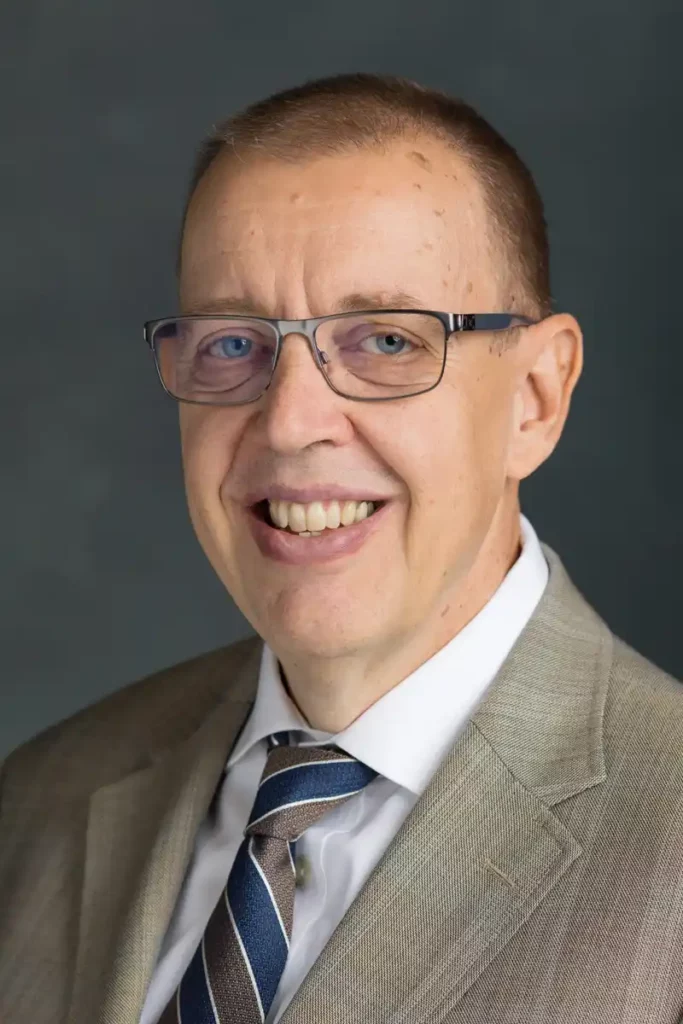
George Siopsis and Joon Sue Lee

Alumni Association Honors Lee and Siopsis for Teaching and Distinguished Service
July 12, 2024

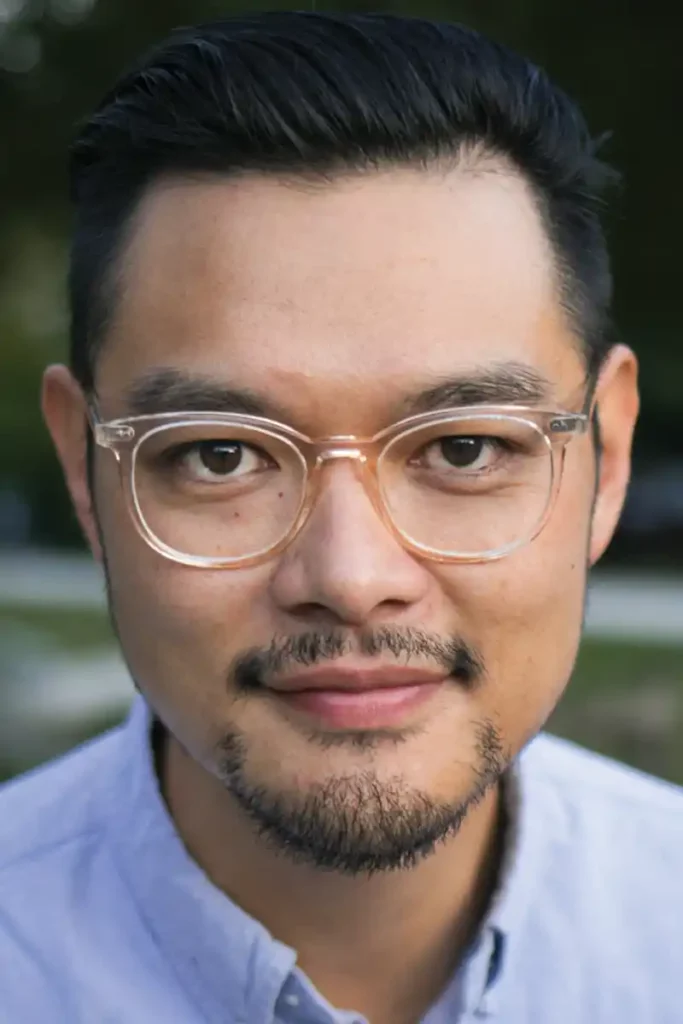
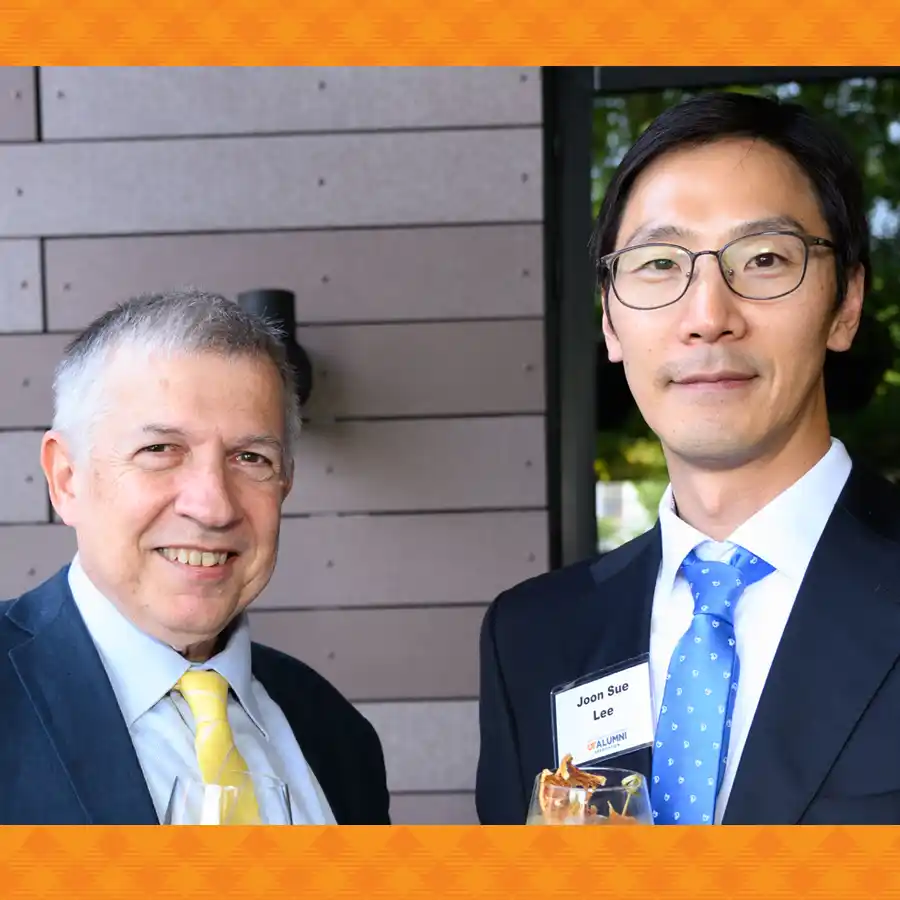
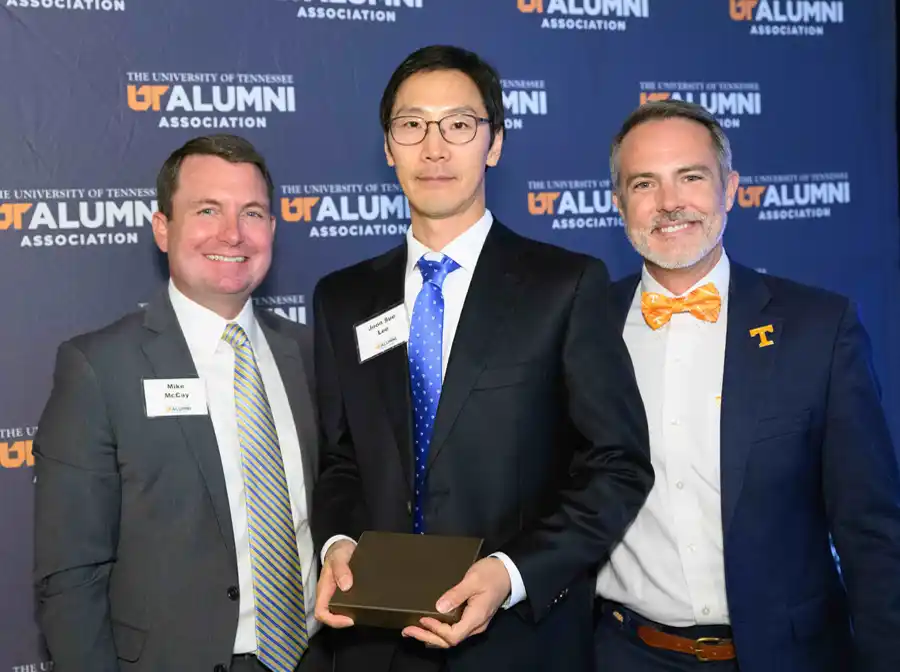
Joon Sue Lee with Mike McKay and Brian Winbigler at UTAA Faculty Awards Ceremony
Joon Sue Lee (center) with Mike McKay (UTAA) and Brian Winbigler (UTAA Board of Governors)
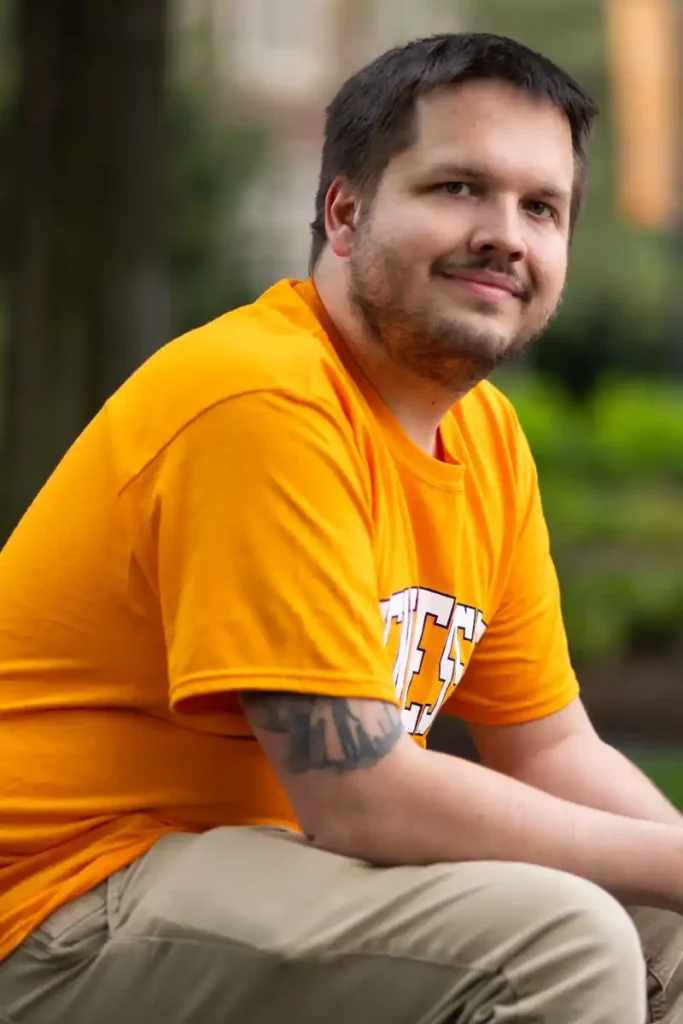
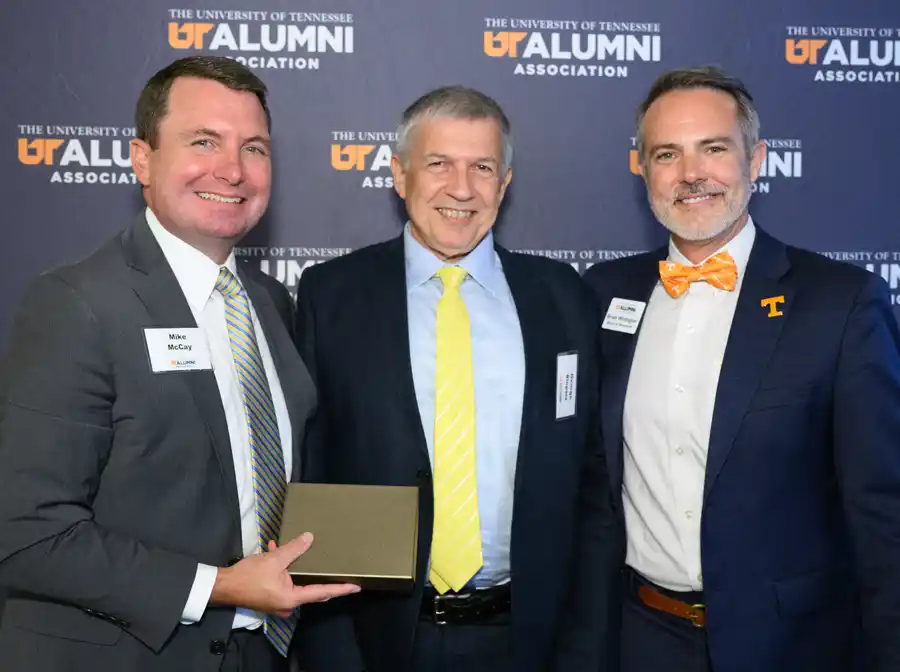
George Siopsis with Mike McKay and Brian Winbigler at UTAA Faculty Awards Ceremony
George Siopsis (center) with Mike McKay (UTAA) and Brian Winbigler (UTAA Board of Governors)

Joon Sue Lee and George Siopsis joined UT nearly three decades apart, but their shared commitment to the university’s mission transcends generations. The University of Tennessee Alumni Association (UTAA) has honored that dedication by recognizing Lee with an Outstanding Teacher Award and Siopsis with a Distinguished Service Professorship.

“The department was delighted to learn about the well-deserved alumni recognitions for Assistant Professor Joon Sue Lee and Professor George Siopsis, who both exemplify our training and knowledge-creation mission,” said Adrian Del Maestro, professor and department head. “Their passion for teaching and research in quantum technologies has played a large role in UT’s growing national and international prominence in this exciting area crucial for U.S. competitiveness.” 

Developing Self-Reliant Thinkers

This is the second teaching honor this year for Lee, an assistant professor. UT’s College of Arts and Sciences presented him with an Excellence in Teaching Award at the annual faculty convocation. Since joining the physics faculty in 2020, Lee has taught undergraduates enrolled in Thermal Physics, Electricity and Magnetism, Electronics Lab, and Modern Physics Lab. His approach—especially to teaching labs—equips students with an understanding of physics fundamentals as well as the hands-on experience they need for careers in academe, technology, and industry.

“What has surprised me most about teaching is the impact that a collaborative and supportive learning environment can have on students’ engagement and development,” he said. “I have seen how nurturing critical thinking and fostering a dynamic partnership can transform the learning experience, and witnessing this has been greatly rewarding.”

Lee’s teaching isn’t limited to the classroom. His research centers on developing quantum materials and devices. Students in his group learn from and contribute to the work.

“What I like best about teaching is the opportunity to guide students as they navigate complex concepts and develop into self-reliant thinkers,” he said. “Mentoring students in my research lab and seeing them grow into independent researchers through the continuous exchange of ideas and collaborative processes is deeply fulfilling.” 

Because the UTAA awardees are selected by a committee comprising alumni, Student Alumni Associates, and prior honorees, Lee and Siopsis were chosen in part by their peers, which Lee said is profoundly meaningful.

“The acknowledgement from my fellow faculty members, who understand the complexities and challenges of teaching, affirms the dedication and effort I put into creating an effective learning environment,” he said. “Additionally, being chosen by UT graduates highlights the impact of my teaching, extending beyond the classroom and into the students’ lives as alumni.”

Nurturing the Next Generation

For Siopsis, the UTAA Distinguished Service Professorship has encouraged him to reflect on his many accomplishments while thinking about what comes next.

“Receiving this distinguished faculty award makes me feel deeply honored and appreciated,” he said. “It’s a mix of gratitude, validation, pride, humility, motivation, and a sense of responsibility. This recognition not only celebrates past achievements but also inspires me to continue making meaningful contributions to my field, the broader academic community, and the UT family.”

Siopsis came to UT Physics in 1991 and has balanced teaching, research, and service ever since. He’s taught courses from the fundamental (Elements of Physics) to the complex (Quantum Field Theory). He’s served as director of the Governor’s School for the Sciences and Engineering. A theoretical particle physicist, he specializes in quantum computing and networking, which heavily influences his current priorities. He’s built strong collaborations with partners from other universities, industry, and national laboratories with two aims in mind: developing quantum network applications and drawing on this emerging field to foster economic and technological growth in Appalachia.

Of all his endeavors, Siopsis said he is most proud of his leadership role in the Appalachian Quantum Initiative (AQI) and his work to bring UT to the forefront of emerging quantum technology. The AQI connects university researchers in the Southeast with industry partners to develop quantum software for scientific and engineering applications. This includes a quantum curriculum and workforce development component in partnership with other universities, industry, and national labs. In that vein, he and colleagues from the University of Georgia won $3M from the National Science Foundation to launch an interdisciplinary training program for graduate students. Siopsis develops and teaches classes and seminars in quantum technologies and is currently supervising or co-supervising the work of 11 graduate students.

This, he said, is part of his dedication to “nurturing the next generation of scientists in the emerging quantum field.”

Siopsis also draws on his expertise to lead a university-national laboratory project to develop a quantum regional network and pointed out that the Knoxville Chamber included the installation of a quantum network from Oak Ridge National Laboratory to UT as a goal in their 2030 Protocol plan.

Siopsis and Lee were recognized with their fellow awardees at a Faculty Awards Dinner on May 31. The UTAA presented 11 Outstanding Teacher Awards, two Public Service Awards, and six Distinguished Service Professorships this year, honoring outstanding faculty from across the University of Tennessee family. The association serves more than 445,000 graduates of the UT system through networking opportunities, legislative advocacy, career services, and alumni benefits, among other initiatives.

July 12, 2024  |  Filed Under: Condensed Matter, Featured News, News, Particle

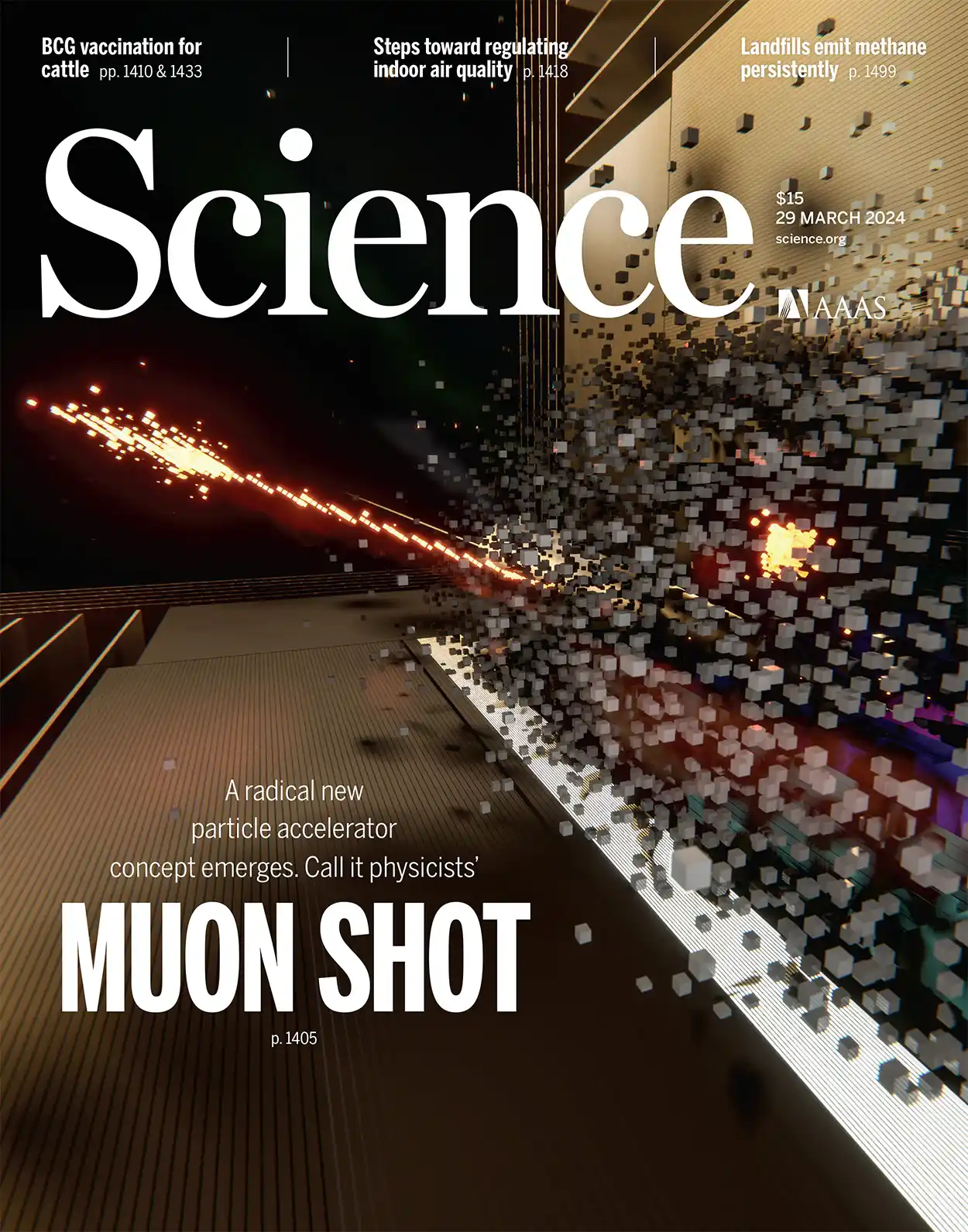
Cover Image of Science Magazine 29 March 2024, Used with Permission

The Art of Muon Collisions

April 3, 2024

Image of Science Magazine Cover 29 March 2024, Used with Permission
Credit: Reprinted with permission from AAAS; See Terms & Conditions below
Image of Tova Holmes
An image of Lawrence Lee
Charles Bell

Tova Holmes, Larry Lee, and Charles Bell

Assistant Professors Tova Holmes and Larry Lee are particle physicists and in their line of work, to think big, you have to think small. That’s where muons come in, and it’s how they became part of a Science Magazine story—including creating the cover art.

In “The Dream Machine,” journalist Adrian Cho reviews the newly-drawn roadmap for particle physics research in the United States. For the past century, physicists have designed, built, and deployed powerful accelerators that rev up and collide particles, precisely measuring the fragments and tracking the escapees to learn more about the building blocks of matter that make up the universe. With current instruments here and abroad reaching their energy limits, American physicists are looking at three possible types of colliders to replace them. Among them is a muon collider.

Will the Muon Have Its Moment?

Muons are fundamental particles. They’re quite a bit like electrons, but roughly 200 times heavier. Until now protons and electrons have been the particles of choice for collider physics, but with their extra mass muons are good candidates for collisions at energy scales up to 10 times higher than that of the Large Hadron Collider, the current world leader. As an early-career scientist, Holmes explained to Cho that waiting something like another five decades for a next-generation collider means the particle physics research she’s so passionate about would pass her by.

“I will be definitely not still working, possibly not alive,” she said.

That’s why she and Lee have spent nearly four years creating designs for a possible muon collider. Holmes coordinates the US-based research and development program for tracking detectors. (Her work has won her a Department of Energy Early Career Research Award, as well as place among the 2024 Class of Cottrell Scholars.) In her conversation with Cho she referred him to Lee as a source for images that could further describe the muon collider vision and enhance the article. Like Holmes, Lee has a strong belief in the power of imagery to convey scientific concepts, so he gladly accepted the assignment.

Renaissance and Romance

Planning for a muon collider is one thing. Promoting the idea to stakeholders is another. Holmes and Lee saw right away that the imagery accompanying those pitches didn’t always match the excitement for the collider’s promise.

In particle physics, “we have a long history of making what are called event displays,” Lee explained, which are simply visualizations of individual collision events. He said scientists have field-specific tools to create those displays, but the results look technical and aren’t particularly engaging.

“One thing I’ve wanted to do for a long time was bring in modern 3D environment modeling to essentially do the same thing, but in a slicker way,” he said.

With UT’s particle physicists’ involvement in the muon collider—specifically a conceptual design for a detector—he saw a fantastic opportunity.

“Right now, if we’re talking about the detector, we’re just in the design phase,” Holmes explained. “We write down some parameters, we try and visualize it, we simulate it, we shoot fake particles into it in our simulation, (and) we see what we can do to reconstruct it.”;

Lee enlisted Undergraduate Physics Major Charles Bell to help create a visualization of the detector and what the particles inside it might look like. They started with proprietary formats familiar to particle physics and brought in industry standard tools, ultimately incorporating Unreal Engine, a creative suite used for an array of simulation purposes. The resulting images were stunning enough to land on the cover of Science and alongside Cho’s article.

While standard event displays are great for showing off technical details, the new artistic images add another layer of strategic communication.

“Larry was trying to make a version of them that took advantage of all the tools that are out there to make them both useful and beautiful,” Holmes said. “Improving this kind of visual translation is really important for the future of our field because we have to be able to explain the kind of exploration we’re doing through visual media.”

Holmes said the muon collider’s success is dependent on audiences both inside and outside physics. At present only a few hundred scientists the world over are involved in the project.

“There have been past versions of this muon collider effort where the technology was not really close enough to ready for people to take it seriously as the next thing,” she said. “It needs to grow to happen. That means getting more people interested. It also needs the engagement of the field to get support from funding agencies. Being able to communicate clearly the excitement, and make sure that communication gets in people’s laps, matters.”

She’s hopeful Lee’s images will inspire a “renaissance” where researchers look at the technological progress surrounding the muon collider and see its potential in a new light. They both also want the public to become more excited about the science behind, literally, everything.

“In astrophysics it’s very easy to visualize because we take literal photographs of the universe,” Holmes said. “For us (in particle physics), we can’t take literal photographs. We do something similar with our detector reconstruction, but it doesn’t look like a photo.”

Lee said he wants images like those he created for the muon collider project to tie in to the “romantic big picture” of fundamental science and capture human imagination.

“We both feel very strongly that it’s important to make things visually compelling, because once you do, people remember them,” he said, even if they don’t fully understand the science behind the pictures.

“This was something we’ve been talking about in the muon collider effort because you’re asking the public to embrace a big project and if you can’t explain what it’s for, you have a real problem,” Holmes said.

This isn’t her first foray into art where the collider’s concerned: she created a poster that’s hanging in a good many physics departments as well as swag to promote the project.

Holmes and Lee believe that prioritizing compelling science communication isn’t just a feel-good pursuit: it’s a key to helping serious science thrive.

“This work is important,” Lee said. “It’s not purely outreach; it’s not purely just for fun. It really pushes us to the literal front of the journal.”

Terms and Conditions re: reprinted AAAS material: Readers may view, browse, and/or download material for temporary copying purposes only, provided these uses are for noncommercial personal purposes. Except as provided by law, this material may not be further reproduced, distributed, transmitted, modified, adapted, performed, displayed, published, or sold in whole or in part, without prior written permission from the publisher.

April 3, 2024  |  Filed Under: Featured News, News, Particle, Uncategorized

Taylor Sussmane Photo

In My Own Words: Undergraduate Taylor Sussmane

September 14, 2023

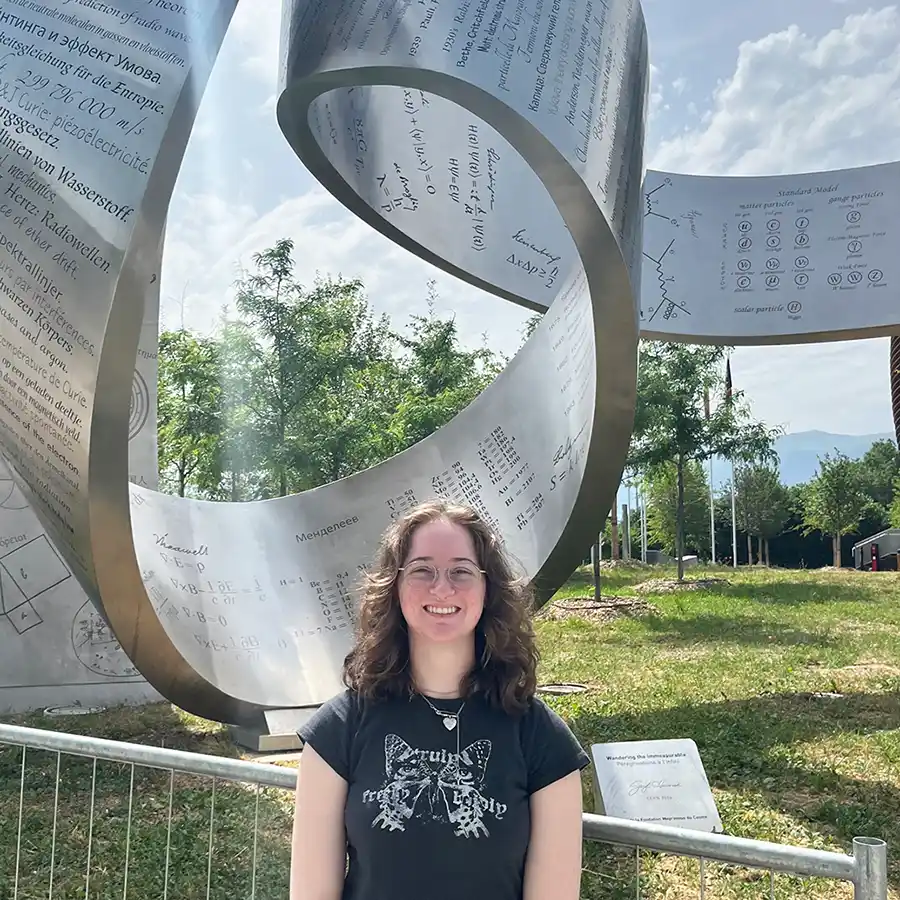
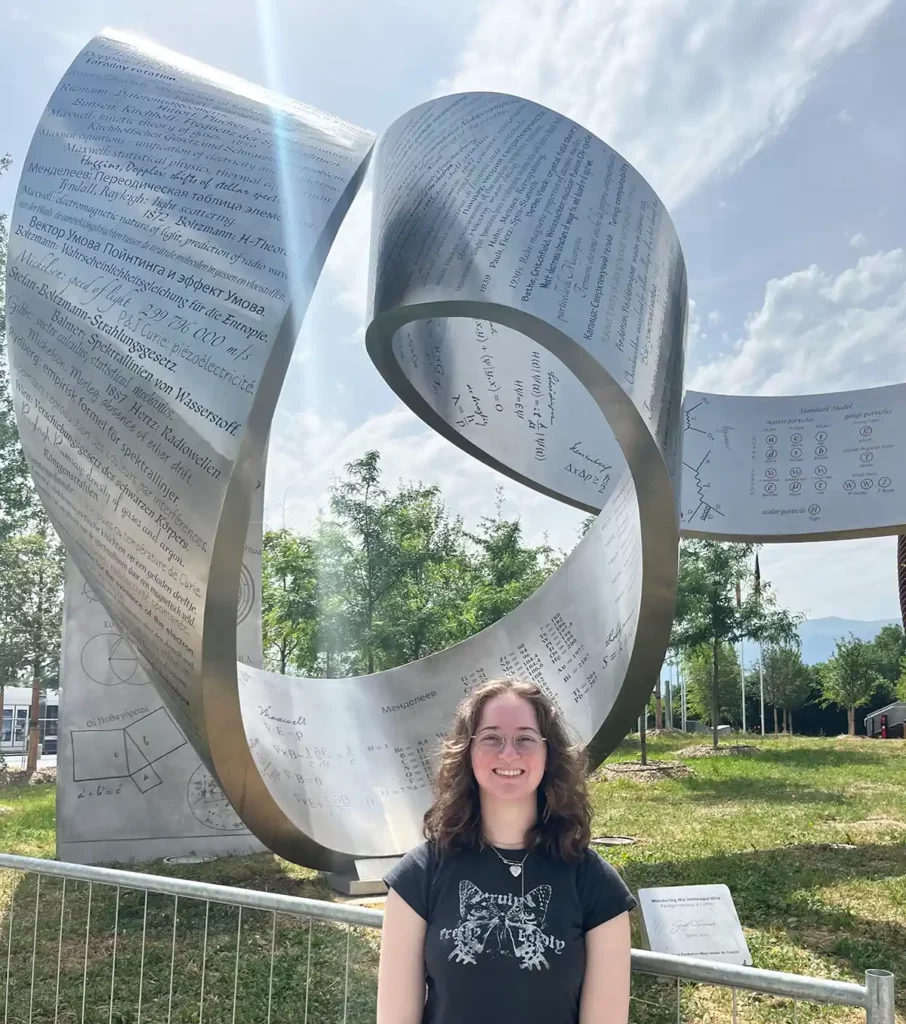
Photo: Taylor in front of "Wandering the Immeasurable," a sculpture designed by Gayle Hermick that welcomes CERN visitors. From the Mesopotamians' cuneiform script to the mathematical formalism behind the discovery of the Higgs boson, the sculpture narrates the story of how knowledge is passed through the generations and illustrates the aesthetic nature of the mathematics behind physics. (Description Credit: ATLAS experiment)
Photo: Taylor in front of “Wandering the Immeasurable,” a sculpture designed by Gayle Hermick that welcomes CERN visitors. From the Mesopotamians’ cuneiform script to the mathematical formalism behind the discovery of the Higgs boson, the sculpture narrates the story of how knowledge is passed through the generations and illustrates the aesthetic nature of the mathematics behind physics. (Description Credit: ATLAS experiment)

Taylor Sussmane, Undergraduate Physics Major

Hometown: Knoxville, Tennessee

Class of 2024

Undergraduate Taylor Sussmane spent the summer in Geneva working at CERN, home to the world’s largest and most complex scientific instruments dedicated to studying fundamental particles. She worked on the ATLAS experiment, which uses the largest detector ever constructed for a particle collider. Taylor was looking at the possibility of measurements that might further explain the Higgs Mechanism and therefore the electroweak theory, which unifies two of the four fundamental forces (the weak force and the electromagnetic force). She won support from the National Science Foundation Research Experiences for Undergraduates (REU) program via the University of Michigan.

Over the summer, I got the opportunity to do research at CERN through the University of Michigan REU program.

I was working on an ATLAS project studying the plausibility for a measurement of longitudinally polarized gauge bosons produced in VBF (Vector Boson Fusion) events. Because the longitudinal polarization state arises from the Higgs Mechanism, studying this state could answer some remaining questions about the Higgs Mechanism. Specifically, we wanted to study the energy dependence of the production cross section, which can tell us about the Goldstone Boson Equivalence Theorem in the domain of single gauge boson production.

In My Own Words Logo

I worked on this project under the advice of Dr. Philip Sommer, a visiting researcher at CERN. During the summer, I also attended the CERN Summer Student Lectures, where I learned about a wide range of topics relating to research done at CERN. Topics included high energy physics, antimatter studies, heavy ion physics, detector physics, and more. I definitely learned a lot while I was there! Overall, it was a fantastic summer of learning valuable career skills, lounging by Lac Léman, and eating too much Swiss chocolate.

September 14, 2023  |  Filed Under: Featured News, News, Particle

An image of Lawrence Lee

Challenging the Standard Model: Lawrence Lee Wins NSF CAREER Award

April 28, 2023

An image of Lawrence Lee
Lee

Lawrence Lee Wins NSF CAREER Award

Assistant Professor Lawrence Lee has won $1 million from the National Science Foundation through the Early Career Development (CAREER) Program, an initiative offering the foundation’s most prestigious awards in support of young faculty members.

Lee’s work pushes past what we know about the elementary particles that make up all matter (asteroids and baseballs and carbon atoms) to see what else is there. He’s keen to share what he learns with science fans and non-science fans alike, be that on the dance floor (really) or through exhibitions designed by art students. Research and outreach are two halves of an important whole framing Lee’s proposal: growing a strong talent pool in science, technology, engineering, and math (STEM). With appreciation for what’s already been done and enthusiasm to see what comes next, his NSF-sponsored work aims to inspire a new generation of physicists and science-supporting citizens.

Why Isn’t the Standard Model Enough?

Lee joined the physics department in 2021 as a particle physicist looking to break out of scientific confinements, both theoretical and practical. His curiosity compels him to travel beyond the rather tidy borders of the Standard Model to look for new particles, and consequently new physics. To do so he’ll upgrade a wildly successful detection system designed when he was in elementary school.

Lee is part of the Compact Muon Solenoid (CMS) experiment at the Large Hadron Collider (LHC) in Geneva, Switzerland. The LHC can be thought of as a 27-kilometer racetrack where scientists intentionally create subatomic head-on collisions. They accelerate two beams of particles and smash them together at four different spots, each with a particle detector to see what results from the impact. CMS is one of those detectors. Particles quickly emerge after the crash, allowing the detector to identify them and measure their momenta and energy. Lee sees potential for the detector to look outside the framework of known particles to find new ones.

“We usually assume that the particles leaving signals in our detector are those from the Standard Model,” he said. “Many theory models for physics beyond the Standard Model predict the existence of heavy new particles that can travel into the detector, and have unexpectedly large interactions.”

But why not just stick with this model that’s done so much to sort out particles and forces and help us understand how magnets work and what powers our Sun? What’s left to know? Plenty, it turns out.

“The Standard Model is a nice little story that has led to some of the most successful predictions in science, ever,” Lee said. “But it can’t be the whole picture. It’s wild for us to believe that our little model from 50 years ago, that describes today’s lab conditions on Earth, is all there is in the universe.”

Obvious omissions he pointed to are “the gravity we know and love or huge amounts of dark matter that seem to be there when we look at the sky.

“Science is about finding answers,” he said. “The Standard Model leaves us with so many questions, so we’re going to keep digging.”

The (In)compatibility Test

New particles, then, can help us expand the sliver of the universe we’ve begun to understand. But how to detect them?

“My group is working on using low-level detector information to distinguish these new heavy particles from Standard Model particles,” Lee said. “We can carefully sift through the data that we have today and that we’ll collect in the next few years to try and find something incompatible with the Standard Model.”

A key to making this work is upgrading the CMS detector, which underwent the first phase of construction in 1998 and took its first measurements in 2009. The CMS experiment has had starring roles in physics breakthroughs including discovery of the Higgs boson. New science, however, will require a bit of freshening up. A revamped CMS will go hand-in-hand with the LHC’s forthcoming High-Luminosity project, as higher luminosity translates into more data for detectors to gather. This means there will be many more particle “footprints” to follow.

“We’re upgrading the CMS detector in ways that will give it new capabilities, particularly in the initial filtering of collision events,” Lee explained. “We’re going to provide much more information about charged particles to this filtering stage (the ‘trigger’) such that we can continue to probe these anomalous tracks with new tools.”

Appreciate the Past; Plan for the Future

Of note in Lee’s proposal is a plan for upgrading the CMS detector so it can collect data for years to come without considerable reworking.

“We are always subject to the decisions of the past, especially for these long time-scale projects,” he explained. “The overall structure of CMS was designed decades ago. My program has been all about trying to use the system we have creatively to get additional physics sensitivity for signatures that the experiment was not designed for.”

This, he said, takes a lot of work, a lot of deep understanding, and a lot of creativity.

“For the future,” he continued, “we have various opportunities to try and create an upgraded detector that is as inclusive as possible for potential new physics signatures. We’re not going to get it perfect, but we can push to not over-optimize for a particular signature and preclude out-of-the-box thinking.”

For Lee, a central theme of good research is accepting that over centuries of modern science all claims of complete knowledge ultimately collapse.

“There are always surprises around the corner when we continue to explore the unknown,” he said. “The Standard Model has held up strong so far, so we need to start challenging it in more specific and less orthodox ways, and this is my research program. Eventually the (model) will fail, and when that happens, we’ll be there to help tear it down and figure out what replaces it.”

Preaching Beyond the Choir (& the Congregation)

Lee is well aware that not everyone shares his enthusiasm for subatomic particles or massive detectors. He’s not at all insulted by that. When he’s talking to colleagues, he knows he’s preaching to the choir. And he knows that science outreach programs are often aimed at people who are at least interested enough to show up for a Saturday morning lecture. He calls that “preaching to the congregation.” As with his research, Lee’s NSF-sponsored outreach goes beyond the confines of what’s been done.

The first of two components is ColliderScope, a mix of repurposed lab equipment and funk where Lee creates audio waveforms to paint musical pictures. At music festivals all over the world he’s gotten people to the dance floor who had no idea they were rocking out to particle physics. (He won the College of Arts and Sciences Outreach Teaching Award for the project.) He plans to expand his schedule and offer more shows, focusing on a U.S. audience. He’s also adding an experimental cloud chamber element, so while the music gets people moving, they’ll also learn about the cosmic rays moving through them.

“(Cosmic rays) are a beautiful playground of particle physics, relativity, astronomy, cosmology, etc.,” Lee explained. “And they’re not only in a lab. It’s incredibly democratic in that every one of us has a huge number of cosmic rays passing through our bodies at all times. What better way to connect the public to our particle physics research than to show them that particle physics is all around (and through!) us.”

Lee will expand on this notion to develop CosmoVision. He and Professor David Matthews from UT’s School of Interior Architecture will create a senior-level design course where UT students use cloud chambers to build a transportable educational exhibit.

“The over-arching goal of the CosmoVision project is to connect the normally invisible cosmic rays to something that you can experience with your own senses such that the public can really ‘feel’ and intuit,” Lee said.

He and Matthews are actually neighbors who’ve collaborated in the past to build a school outreach exhibit on the physics of sound. This encore project will give design students an opportunity to brainstorm what the CosmoVision experience will be and see that vision through to a finished product to engage general audiences and school groups.

“Integrating STEM education into the artistic design process is the most serious realization of the STEAM (science, technology, engineering, arts and mathematics) ideal that I can imagine,” Lee said. “I can’t wait to see what we can come up with together as a team.”

Developing New Scientists—and Their Cheering Section

Lee hopes this outreach plan will recruit future scientists and also share a fun side of physics with people who’ll never set foot in a lab.

“I’m interested in having a robust pipeline of STEM-education directly within my group,” he said. “I want significant training to happen from the undergraduate level all the way through the academic ranks, including with myself.”

His expectation of all scientists—including those he mentors—is that they engage with everyone, even if that means taking the show on the road.

“I want everyone to seriously participate in outreach and educational activities — yes, to grade school students, but also to the government, the general public that loves science, and most importantly the general public that does not particularly love science,” he said.

“Most taxpayers — most of the people who are funding our work — don’t seek out a physics lecture in their free time,” he continued. “A major goal of my programs is to connect with a different slice of the population, focusing on experiences, culture, and art that anybody can connect with, to make new enthusiastic supporters of basic research today.”

Lee’s award officially begins June 1 and includes five years of NSF support. This makes eight NSF CAREER Awards for UT Physics since 2012:

  • Larry Lee (2023)
  • Steve Johnston and Jian Liu (2019)
  • Lucas Platter and Andrew W. Steiner (2016)
  • Haidong Zhou (2014)
  • Jaan Mannik (2013)
  • Norman Mannella (2012)

Learn more about the CMS Experiment Group at UT.

April 28, 2023  |  Filed Under: Featured News, News, Particle

A photo of Weitering and Lee

The Art of Science

March 20, 2023

An image of Hanno Weitering
Weitering
An image of Lawrence Lee
Lee

Hanno Weitering and Larry Lee Honored at CAS Awards Banquet

Professor Hanno Weitering and Assistant Professor Larry Lee are physicists, but sometimes that means being a designer, architect, musician, or painter. This creative blend of art and science was appropriately rewarded at the annual College of Arts and Sciences awards banquet. Weitering was recognized for his Distinguished Research Career at UT while Lee was honored with the Outreach Teaching Award.

Serendipity and Strategy

Weitering has been at UT since 1993. Part of the condensed matter physics group, he’s an experimentalist who’s never been afraid to venture into new directions. For years he swore he’d never get involved in superconductivity research. Then he moved to an office next door to Professor Jim Thompson (now retired) and began collaborating on that very topic: a career highlight he chalks up to serendipity.

Weitering is interested in the often-unpredictable electronic properties of low dimensional materials systems. The smaller a system, the more subtle its physics becomes. He explained that many physicists like to find and study exotic electronic properties of materials that he sees as way too complex to truly comprehend. Instead, he prefers to look at theoretical models for those materials that are intuitively “easy” to understand, yet necessarily oversimplify aspects related to a material’s chemistry, which can be extremely complex and difficult to control.

“My approach is to create simple materials systems that would be a much closer experimental realization of some of the most promising theoretical models and then see (if) it all makes sense,” he said.

This involves some nanoscale architecture. Working with Associate Professor Steve Johnston, he found that silicon—the heart of the electronics industry—can host a novel form of superconductivity. Arriving at that result required him to create a sample comprising a third of a layer of tin atoms on a layer of silicon atoms. This wasn’t something he just happened upon, however.

“This was all by design,” Weitering said, part of a scientific approach that’s “a mix of serendipity and strategy.

“I never really jumped on hot topics,” he continued. “Instead I consider, ‘What is my expertise? What is my background? Where do I think I can make a really interesting and lasting contribution?'”

This mindset has resulted in a successful research career rounded out by dedicated classroom teaching and 10 years of service as department head, as well as 10 years as deputy director of what’s now the Institute for Advanced Materials and Manufacturing.

His hard work has not escaped notice. In addition to this honor from the College, in 2022 Weitering was elected a Fellow of the American Association for the Advancement of Science and appointed a UT Chancellor’s Professor.

While appreciative of the honors, he said his creativity is driven by curiosity, not potential accolades.

“You have people that I feel are giants, and they build cathedrals,” he said. “I just would like a nice mosaic somewhere on the floor that I’ll be remembered by.”

Setting Physics to Music

While Weitering crafts artwork for theoretical cathedral floors, Lee is literally bringing people to the dance floor.

Giving vintage tech equipment a second life, he engineers audio waveforms to show images from experimental particle physics—painting musical pictures through his ColliderScope project. He’s played festivals both in the United State and Europe, delighting crowds by transforming old oscilloscopes into the heartbeat of techno music and cool imagery.

Lee joined the faculty in 2021 and is both a musician in his own right as well as a particle physicist. When he’s creating riffs for ColliderScope he has to give equal weight to each role.

“It’s both all the way,” he said. “When you’re making these complicated sounds there’s an interplay between the shape of the sound and the timbral quality of the sound. If I know I want a particular visual to happen, I have to design it in way that will produce a sound that I want.”

In other words: he wants good physics and good music.

“It has to be true to science but also musically engaging,” Lee explained. “When you draw these shapes, they end up sounding complex and often naturally harsh. You then have the artistic choice to change the way it looks and therefore sounds, or compose around those harsh sounds.”

While he didn’t invent this method of drawing pictures with music, once he saw it he knew immediately it would be a perfect fit for particle physics outreach.

“It ties in with the electronics that we use and we build for our day-to-day lives,” he said.

Lee has an affinity for bringing physics out of the lab and offering it to the public in ways they can understand, appreciate, and enjoy. Last summer he and Assistant Professor Tova Holmes organized a free public viewing of Particle Fever to celebrate the 10-year anniversary of the Higgs Boson discovery. He hopes to put on a ColliderScope show in Knoxville when he can work out the timing with his research and teaching schedule and find the right venue.

With these latest awards, the Department of Physics and Astronomy has won 11 College Convocation Honors since 2016 for outstanding research, teaching, advising, and outreach.

March 20, 2023  |  Filed Under: Condensed Matter, Featured News, News, Particle

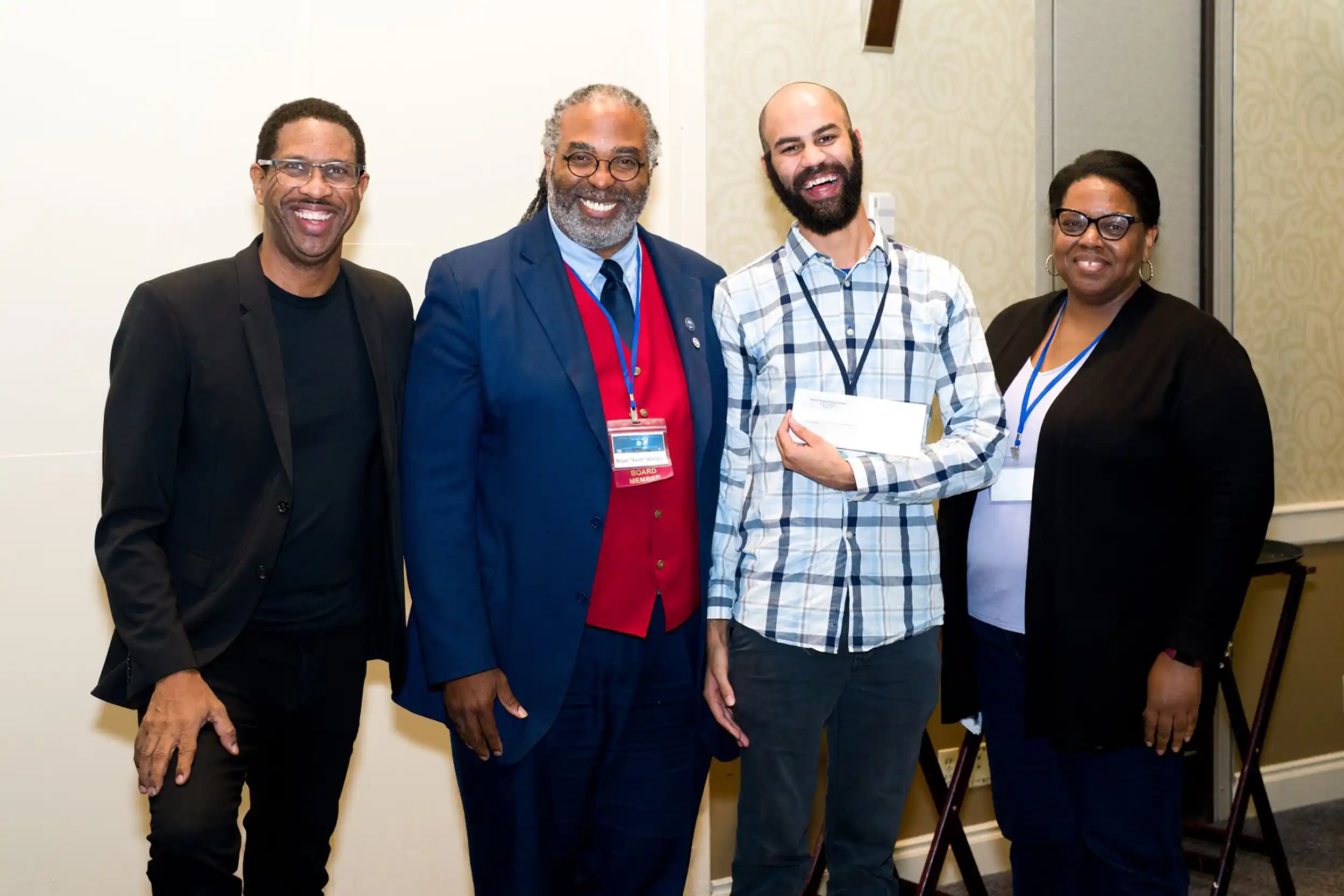
Hakeem Oluseyi, NSBP President; Bryan Kent Wallace, NSBP Treasurer; Awardee Jesse Harris; and Elaine Lalanne, NSBP Past-Treasurer. (Photo credit: National Society of Black Physicists)

Explaining Physics Beyond the Textbooks

December 7, 2022

Hakeem Oluseyi, NSBP President; Bryan Kent Wallace, NSBP Treasurer; Awardee Jesse Harris; and Elaine Lalanne, NSBP Past-Treasurer. (Photo credit: National Society of Black Physicists)
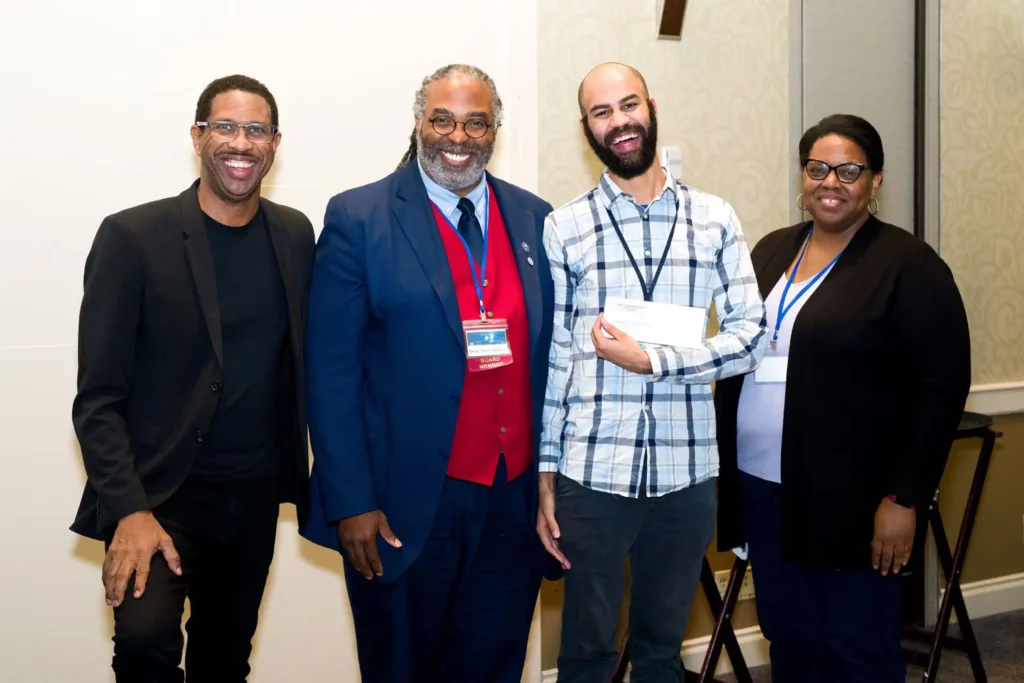
Presenting the honors: Hakeem Oluseyi, NSBP President; Bryan Kent Wallace, NSBP Treasurer; Awardee Jesse Harris; and Elaine Lalanne, NSBP Past-Treasurer. (Photo credit: National Society of Black Physicists)

Graduate Student Jesse Harris wins presentation prize at the 2022 NSBP conference

Graduate Student Jesse Harris knows how to explain the search for new physics. That talent was much appreciated at the National Society of Black Physicists (NSBP) conference last month, where he won the award for Best Oral Presentation in the field of Nuclear and Particle Physics.

Harris, who works with Professor Stefan Spanier in UT’s Compact Muon Solenoid (CMS) group, presented his work searching for certain rare Higgs decays, a strategy to probe physics beyond the standard model, or, as Spanier describes it, “physics beyond the textbooks.”

They’re looking for glimmers of small, rare differences in how the Higgs boson shows up in experiment versus what present theory predicts. Harris uses machine learning to improve sensitivity in the search and his preliminary findings have shown improvement by a factor of two.

A native of Big Stone Gap, Virginia, Harris earned a bachelor’s degree at the University of Virginia’s College at Wise before joining UT’s graduate program in physics. His work in both research and teaching labs has been recognized before. In 2020 he won a research stipend from the UT Office of Research and Engagement and in 2021 he was selected for the department’s Outstanding Graduate Teaching Assistant Award. The NSBP award was sponsored by the Facility for Rare Isotope Beams (FRIB) and the National Science Foundation.

Harris was one of eight UT physics students attending the NSBP conference, along with Associate Professor Lucas Platter. Graduate students were Idris Abijo, Victor Ale, Olesson Cesalien, Harris, and Olugbenga Olunloyo. The undergraduate cohort comprised Carson Broughton, Cordney Nash, and Cora Thomas. (Nash, another of Spanier’s students, presented his on-campus research on silicon pixel detectors for the High-Luminosity Large Hadron Collider.)

The NSBP conference is the largest academic meeting of minority physicists in the United States. The meeting provides mentorship opportunities, access to recruiters, and networking opportunities while informing the broader physics community on best practices. UT Physics has sent delegations of students every year since 2016, typically led by Associate Professor Christine Nattrass. UT was a gold sponsor of the 2022 meeting, held November 6- 9, 2022, in Charlottesville, Virginia, and will co-host the 2023 conference with Oak Ridge National Laboratory. This year’s gathering provided a welcome return to the in-person experience after two years of virtual meetings.

“The pandemic has just been brutal on all of our students but in particular on students who also come from marginalized groups,” Nattrass said. “I think our students needed this.”

December 7, 2022  |  Filed Under: Featured News, News, Nuclear, Particle

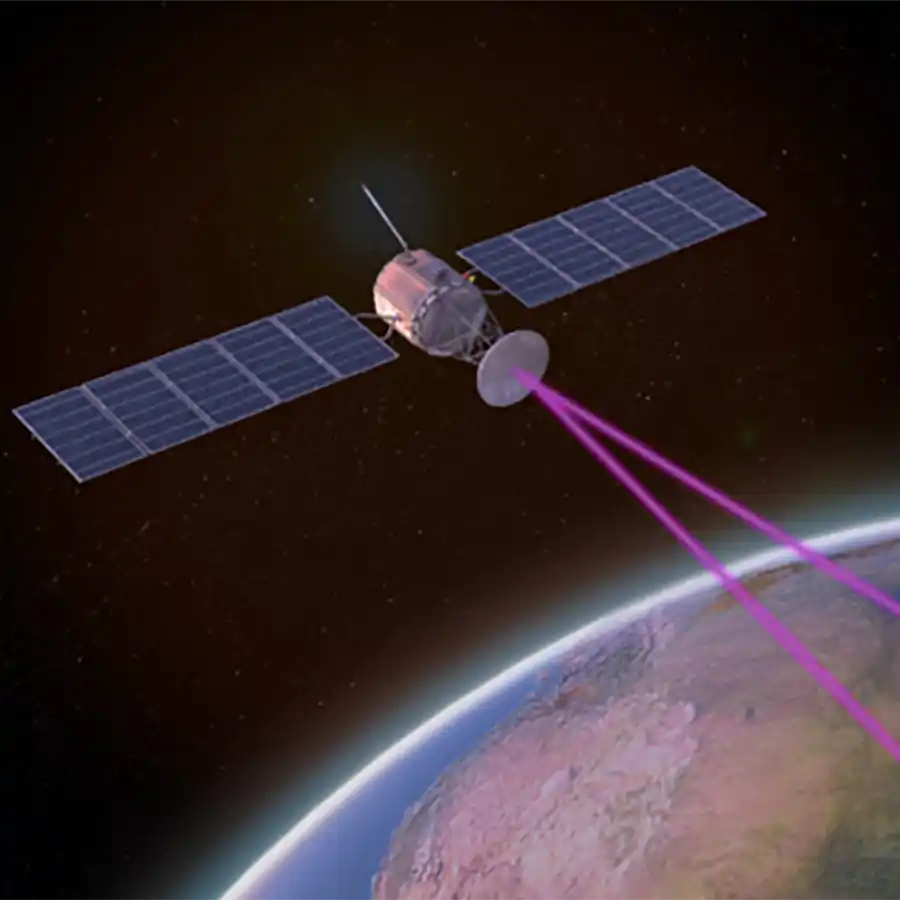
An image of a satellite

New Quantum Networks Research and Training Program Receives $3M NSF Award

July 15, 2022

Courtesy of Professor George Siopsis

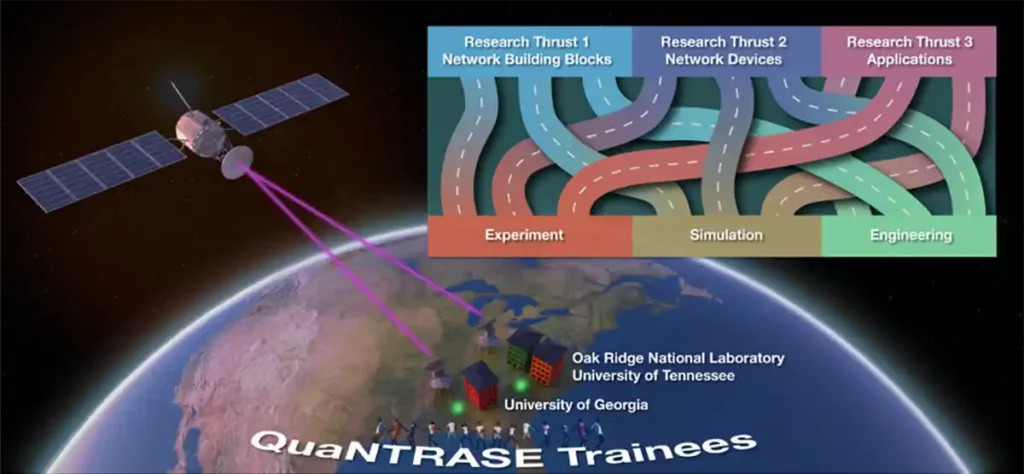
The National Science Foundation Research Traineeship Program (NRT) awarded a $3 million Collaborative Grant to the University of Georgia (UGA) and the University of Tennessee, Knoxville, to develop a Quantum Networks Training and Research Alliance in the Southeast (QuaNTRASE).

Quantrase infographic

The NSF award advances convergent research in quantum information science and engineering, which it has identified as a national priority of utmost importance, via training graduate students through a comprehensive traineeship model. The program supports graduate students, educates the STEM leaders of tomorrow, and strengthens the national research infrastructure.

“NSF continues to invest in the future STEM workforce by preparing trainees to address challenges that increasingly require crossing traditional disciplinary boundaries,” said Sylvia Butterfield, acting assistant director for NSF’s Directorate for Education and Human Resources. “Supporting innovative and evidence-based STEM graduate education with an emphasis on recruiting and retaining a diverse student population is critical to ensuring a robust and well-prepared STEM workforce.”

Quantum networks promise a novel and more secure functionality than the classical networks on which current communication encryption technologies are built. Developments surrounding quantum networks include fundamental discoveries in quantum science as well as key applications in cybersecurity, quantum sensors, and quantum computing.

“To realize the promised advantage of a quantum internet, many fundamental science and engineering challenges must be overcome via a convergent combination of expertise from several science and engineering disciplines and the development of a well-trained, interdisciplinary quantum network workforce.” said Yohannes Abate, Susan Dasher and Charles Dasher MD Professor of Physics at UGA. “The goal of this program is to advance quantum networks research through the design and development of components and applications of quantum networks.”

“The program is one of the first comprehensive, interdisciplinary quantum information science and engineering (QISE) training programs in the Southeast.” said George Siopsis, professor of physics at UT and director of the university’s Quantum Leap Initiative.

This joint UGA-UT effort, in collaboration with Oak Ridge National Laboratory and industry partners, will expand the diversity of students in quantum information science and engineering, including historically underrepresented groups.

“The strength of QuaNTRASE is our capacity to integrate the quantum networking expertise from two major research institutions with a national laboratory to advance research and prepare trainees for the developing quantum economy,” said Tina Salguero, professor of chemistry at UGA.

The program will develop MS and PhD programs via five key elements of the education and training frameworks: (i) the development of a curriculum that integrates interdisciplinary and cross-institutional course offerings; (ii) the incorporation of vibrant cross-institutional and interdisciplinary advising and mentoring; (iii) the introduction of quantum technology concepts into existing science and engineering disciplines; (iv) research rotations, which will enhance students’ experience in quantum networks; and (v) additional professional development through national laboratory and industry-university partnerships, a trainee-led career fair, research retreats, and summer internships. This interdisciplinary collaboration will be a core component of the QuaNTRASE research program.

In addition to the scientific activities, the project will develop and deliver STEM outreach activities for local high school students and teachers focused on quantum concepts, careers, and practices through summer and after-school STEM programming.

“Preparing future generations for jobs in the quantum and AI fields is a national priority,” said Mehmet Aydeniz, professor of STEM education at UT. “By reaching out to high school students and introducing them to quantum concepts, practices and careers early on, we aim to prepare the scientists and engineers of the future, who will be instrumental to the nation’s leadership in science and quantum computing specifically.”

July 15, 2022  |  Filed Under: Featured News, News, Particle

CMS Detector diagram

Finding Hidden Physics

June 7, 2022

Image of Tova Holmes
Holmes

Tova Holmes awarded DOE Early Career Research award to break the Standard Model

Tova Holmes has a challenging but welcome task: looking for hidden physics with particles no human can see. She’ll pursue this aim with an Early Career Research award from the US Department of Energy Office of Science. The grant begins July 1 and includes $750,000 of support over the next five years.

Breaking the Standard Model

Particle physics helps drive not only discoveries about our universe but also innovative tools that improve our lives here on earth. As a field it describes the stuff of matter but it’s also the foundation for practical spinoffs like Wi-Fi and magnetic resonance imaging (MRIs). Holmes joined the department as an assistant professor in 2020 and is part of the CMS group, which uses the Compact Muon Solenoid detector to study high-energy particle collisions in the search for new particles, and new physics, at the Large Hadron Collider (LHC) in Geneva.

The LHC is where scientists discovered the Higgs boson, a feat that led to a Nobel Prize and completed the Standard Model of physics. All matter in the universe is made of fundamental particles and forces and the Standard Model explains how they relate to one another. The Higgs has a crucial role in this framework.

“When we designed the LHC, we wanted to find the Higgs,” Holmes explained. “There’s a Higgs field everywhere and it contains energy everywhere. All of our other particles are basically continuously interacting with this Higgs field as they move through space. That mechanism is exactly what gives most of the particles in the Standard Model mass.”

The Higgs may be a giver, but it’s also a taker.

“There’s a key problem that only gets worse when you find the Higgs, which is that the Higgs mass itself doesn’t make any sense,” Holmes said. “(It) not only gives mass to those other particles, it’s going to collect additional mass from the interactions. That means that its mass should blow up. You’re solving one mass problem by introducing the Higgs, but you’re creating a new one.”

This problem fuels the idea that there’s something else that so far has escaped detection.

“We can tell that we’re missing things,” Holmes said. “There’s direct evidence that we have missed something that could be as big as the Standard Model itself. We might be looking at a tiny corner of what actually exists out there.”

Finding something new would in effect break the Standard Model, and that’s where Holmes’ research comes in.

“I am studying things that would couple to the Higgs and solve this mass problem,” she said.

Her proposal will upgrade detector capabilities and take new data that can identify phenomena the LHC might have previously missed, including long-lived particles.

Chasing the Unconventional, and Why It Matters

These particles Holmes hopes to find have unconventional signatures, which she describes as “things that our detectors weren’t designed to look for.”

The CMS detector sits on one of four collision points on the LHC ring, the most powerful particle accelerator ever built. Though CMS is described as a giant, high-speed camera, “we never directly see any of the particles that we study,” Holmes said. “That’s the inherent challenge.”

The detector does the looking instead.

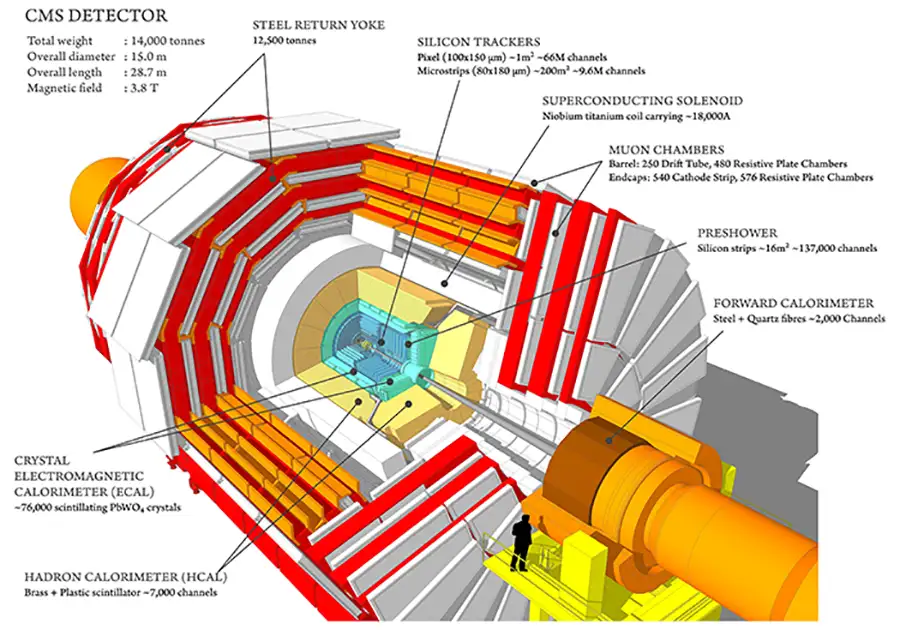
The CMS detector resembles a giant cylinder with several layers wrapped around it. Collisions occur in the center. Exotic, unstable particles like the Higgs decay almost immediately, while more commonplace particles like electrons and muons have longer trajectories and filter through more layers. As they travel, the detector measures what they leave behind (electric charge, energy, etc.) as a way to identify them. The detector’s design limits what it can measure, but it’s not the only restriction.

“Not only our detector, but also our trigger system,” Holmes said, “which is how we decide while we’re running our experiment which of the data to keep. We collide 40 million times a second and we keep about a thousand of those collisions per second. If our trigger isn’t designed for a signature, then it’s something we would have missed.”

CMS Detector diagram
CMS Detector, courtesy of CERN

Longer-lived particles—the ones that make it through more layers before they decay—leave the unconventional signatures she wants to find. They can show up in supersymmetry (SUSY), which Holmes described as “a whole zoo of particles that exist, one for each of the Standard Model particles.” Every particle would have a partner that’s its opposite, balancing things out. Finding SUSY, she said, “magically solves all your problems.”

With the DOE grant her group will expand the detector’s triggering capabilities to record new data that she hopes will reveal a wider variety of long-lived particles, including those that might show up in SUSY. Students and postdocs will play a key role, Holmes said, as “every major physics output will be driven by a graduate student.”

Beyond the research and educational aspects, why does this research matter? It has to do both with the fate of our planet and how well we live on it.

“We might find as we understand the Higgs better that we’re actually in an unstable point of the Higgs vacuum, which is to say at any point our universe could tunnel to a new state and explode, or collapse into a tiny nothing,” Holmes explained. “We don’t fundamentally understand where our universe is going. Understanding the Higgs is really key to that.”

(She emphasizes she doesn’t expect this to happen anytime soon.)

“From a much more practical point of view, we have a long history of finding fundamental particles and not knowing why anyone would care, and then finding out there are really good reasons,” she said.

When electromagnetic radiation was discovered people thought it was a nice, if useless, idea. Now we know it’s the foundation of Wi-Fi, infrared and X-rays, among other applications. The same goes for MRIs. To build the former Tevatron particle accelerator at Fermilab required bending beams with magnets.

“In developing that magnet technology, they made the first large-scale production of these really high-field magnets that are now the magnets that are used in MRIs,” Holmes explained. “It was particle physics that created that technology. That’s the nature of trying to do technical accomplishments that have never been achieved before: you build technology that gets used by everybody else. Basically everything that we have technology-wise today was built on fundamental discoveries.”

“That’s the nature of trying to do technical accomplishments that have never been achieved before: you build technology that gets used by everybody else. Basically everything that we have technology-wise today was built on fundamental discoveries.”

Tova Holmes

Challenges, Not Impossibilities

Pursuing these fundamental discoveries is a good fit for the Early Career Research Program, which made 83 awards this cycle (Livia Casali of the UT Department of Nuclear Engineering was also among the awardees). The initiative supports outstanding scientists early in their careers whose research reinforces the DOE Office of Science mission to deliver scientific discoveries and tools to transform our understanding of nature and advance the energy, economic, and national security of the United States.

For Holmes that means keeping an eye on where particle physics should go next. While the LHC has been wildly successful, she believes future particle accelerators will require some new thinking.

“We went from tiny, tabletop rings to bigger ones that are the size of a building,” she said. “Then we went to where it fits, just barely, in the laboratory site. Now we’re at the LHC where it literally goes across countries’ borders.”

Building bigger rings can only take you so far, she said, adding that “if we want our field to continue, we need alternative paths.”

Her team has been working on a muon collider to solve some of these problems. It’s a circular collider where the ring size is related to the mass of the particle you’re accelerating. There are some hurdles, like trying to get a beam out of unstable particles, but Holmes is undeterred by those obstacles.

“That creates some interesting experimental challenges,” she said. “But those are problems you can solve—not impossibilities.”

June 7, 2022  |  Filed Under: Featured News, News, Particle

  • « Previous Page
  • 1
  • 2

Recent Posts

  • Cosmic Collaboration: Students Join Forces to Bring the Invisible to Life
  • UT’s Biophysics Group Investigates How Chromosomes Separate
  • WiP Closes Fall Term with Lunch & Networking
  • Work-Study Provides Early Research Advantages for Physics Undergraduates
  • First Haslam Family Professorships for Physics

Physics & Astronomy

College of Arts and Sciences

401 Nielsen Physics Building
1408 Circle Drive
Knoxville TN 37996-1200
Phone: 865-974-3342
Email: physics@utk.edu

Facebook Icon    X Icon

The University of Tennessee, Knoxville
Knoxville, Tennessee 37996
865-974-1000

The flagship campus of the University of Tennessee System and partner in the Tennessee Transfer Pathway.

ADA Privacy Safety Title IX