• Request Info
  • Visit
  • Apply
  • Give
  • Request Info
  • Visit
  • Apply
  • Give

Search

  • A-Z Index
  • Map

Physics & Astronomy

  • About
    • Honors
    • Administration
    • Faculty Resources
    • Nielsen Spaces
  • Research
    • Research Partners & Facilities
    • Condensed Matter
    • Particle / HEP
    • Biophysics / Soft Matter
    • Nuclear / Astrophysics
    • Quantum Information
  • People
    • Faculty
    • Staff
    • Joint Research & Adjunct Faculty
    • Post Docs
    • Graduate Students
  • Undergraduate
    • Why Physics
    • What Our Grads Do
    • Career Resources
    • Degree Programs
    • Research
    • Scholarships
    • Student Organizations
  • Graduate
    • Join Our Program
    • FAQs
    • Fellowships & Assistantships
    • Bains Fellowship
    • Where Our Grads Go
    • Research
    • Resources
  • News & Events
    • Newsletters
    • News
    • Colloquia Series
    • Events
    • In the Media
  • Outreach
    • Astronomy Outreach
    • Cool Things in the Sky this Month
    • Physics Outreach & High School Lecture Series
  • Alumni
    • Distinguished Alumni Award
    • Giving Opportunities
    • Share Your News
A banner showing a model of an atom and elementary particles

News

Condensed Matter

George Siopsis and Joon Sue Lee

Alumni Association Honors Lee and Siopsis for Teaching and Distinguished Service
July 12, 2024

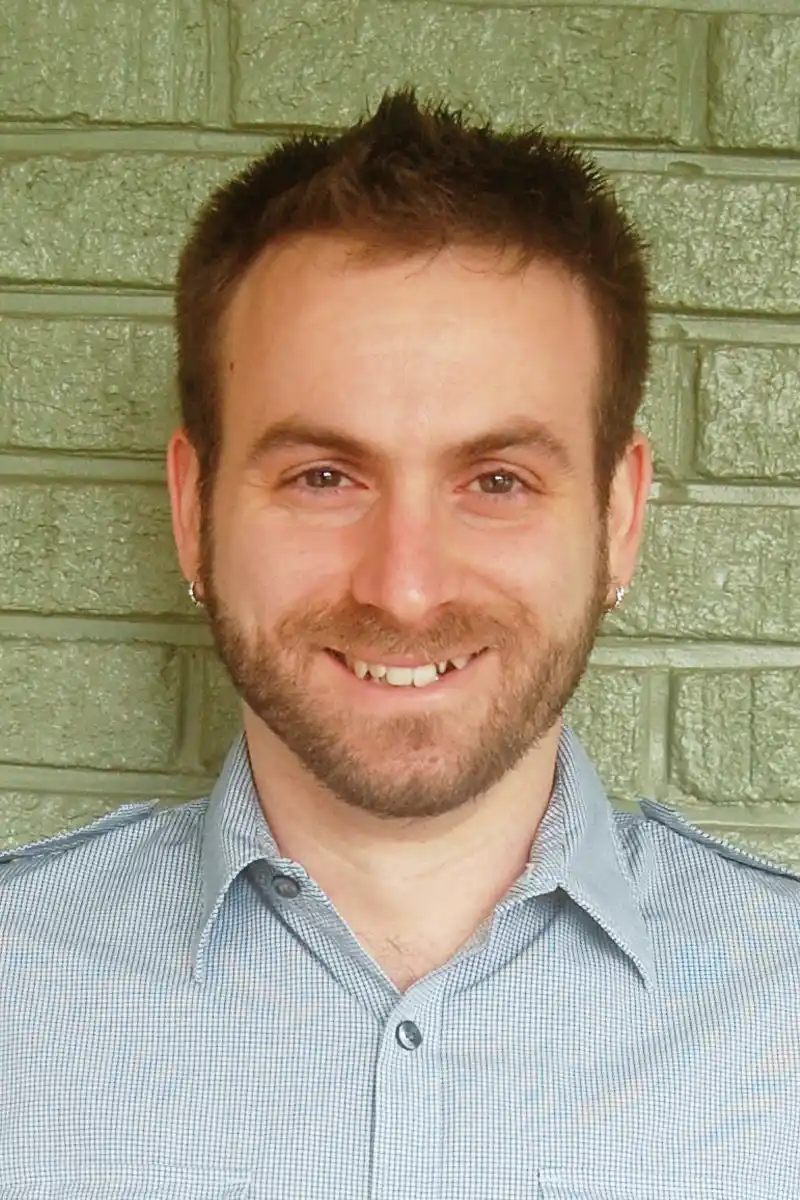
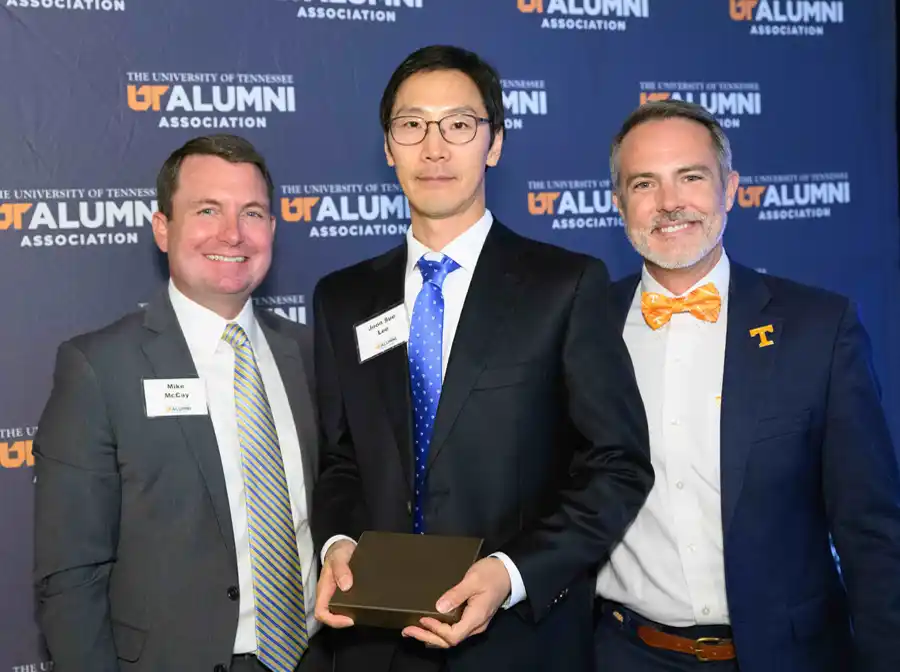
Joon Sue Lee with Mike McKay and Brian Winbigler at UTAA Faculty Awards Ceremony
Joon Sue Lee (center) with Mike McKay (UTAA) and Brian Winbigler (UTAA Board of Governors)
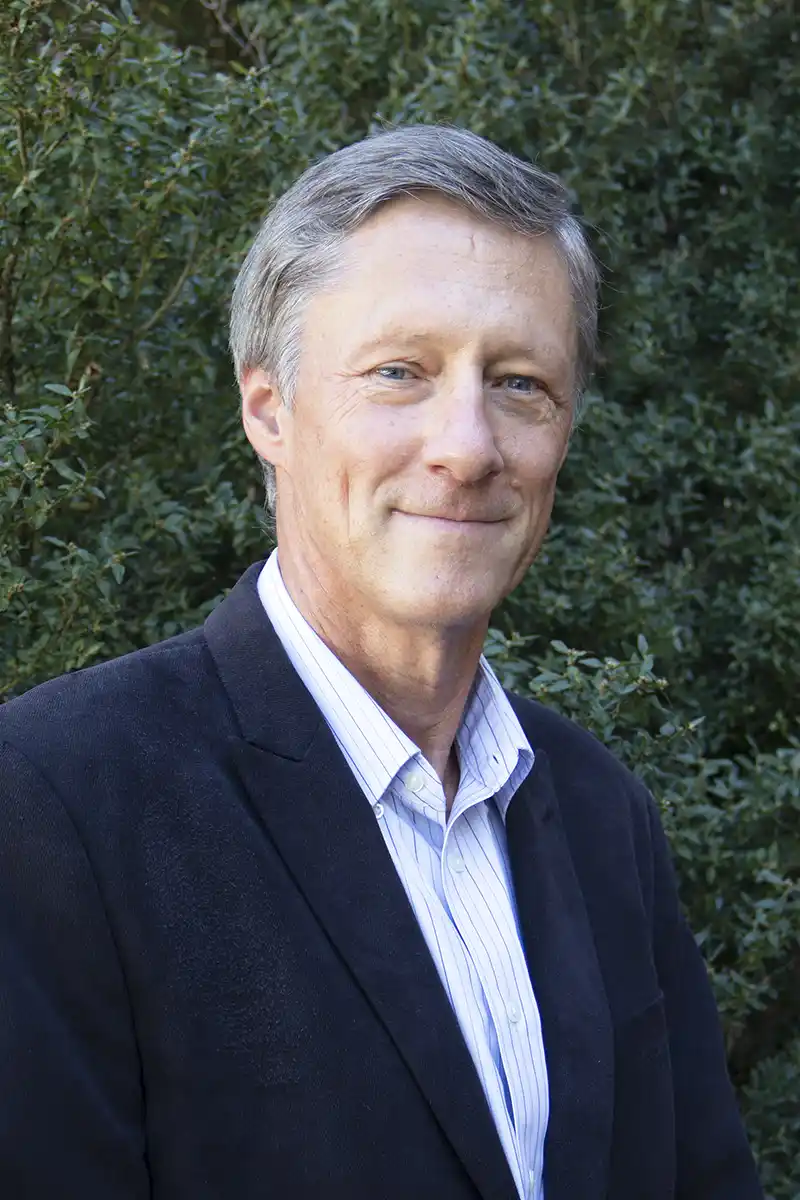
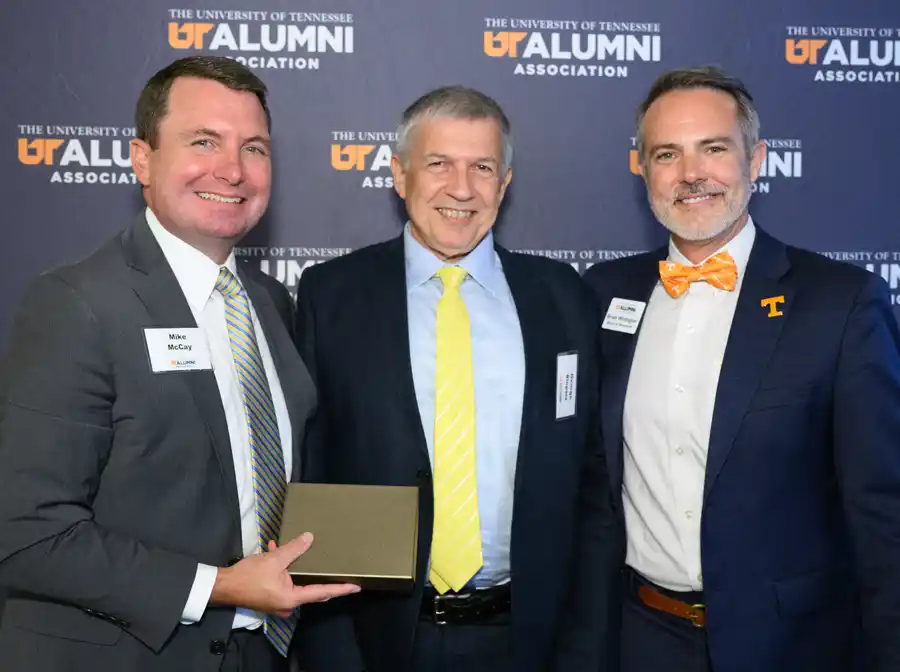
George Siopsis with Mike McKay and Brian Winbigler at UTAA Faculty Awards Ceremony
George Siopsis (center) with Mike McKay (UTAA) and Brian Winbigler (UTAA Board of Governors)

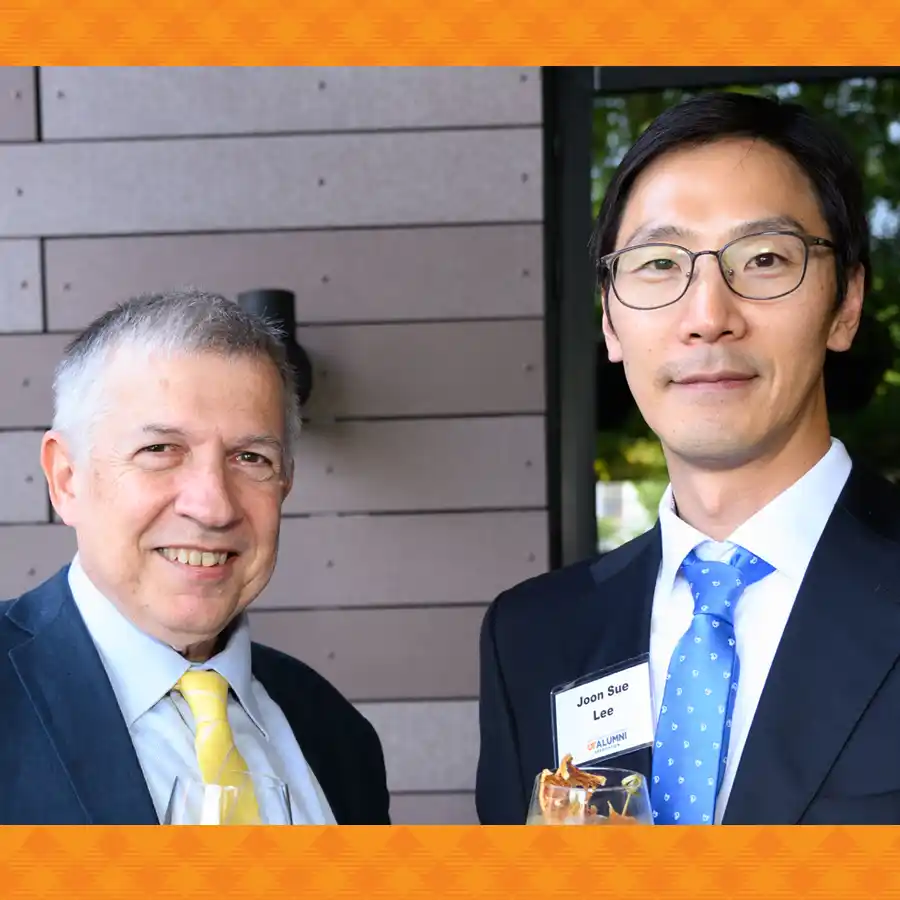
Joon Sue Lee and George Siopsis joined UT nearly three decades apart, but their shared commitment to the university’s mission transcends generations. The University of Tennessee Alumni Association (UTAA) has honored that dedication by recognizing Lee with an Outstanding Teacher Award and Siopsis with a Distinguished Service Professorship.

“The department was delighted to learn about the well-deserved alumni recognitions for Assistant Professor Joon Sue Lee and Professor George Siopsis, who both exemplify our training and knowledge-creation mission,” said Adrian Del Maestro, professor and department head. “Their passion for teaching and research in quantum technologies has played a large role in UT’s growing national and international prominence in this exciting area crucial for U.S. competitiveness.” 

Developing Self-Reliant Thinkers

This is the second teaching honor this year for Lee, an assistant professor. UT’s College of Arts and Sciences presented him with an Excellence in Teaching Award at the annual faculty convocation. Since joining the physics faculty in 2020, Lee has taught undergraduates enrolled in Thermal Physics, Electricity and Magnetism, Electronics Lab, and Modern Physics Lab. His approach—especially to teaching labs—equips students with an understanding of physics fundamentals as well as the hands-on experience they need for careers in academe, technology, and industry.

“What has surprised me most about teaching is the impact that a collaborative and supportive learning environment can have on students’ engagement and development,” he said. “I have seen how nurturing critical thinking and fostering a dynamic partnership can transform the learning experience, and witnessing this has been greatly rewarding.”

Lee’s teaching isn’t limited to the classroom. His research centers on developing quantum materials and devices. Students in his group learn from and contribute to the work.

“What I like best about teaching is the opportunity to guide students as they navigate complex concepts and develop into self-reliant thinkers,” he said. “Mentoring students in my research lab and seeing them grow into independent researchers through the continuous exchange of ideas and collaborative processes is deeply fulfilling.” 

Because the UTAA awardees are selected by a committee comprising alumni, Student Alumni Associates, and prior honorees, Lee and Siopsis were chosen in part by their peers, which Lee said is profoundly meaningful.

“The acknowledgement from my fellow faculty members, who understand the complexities and challenges of teaching, affirms the dedication and effort I put into creating an effective learning environment,” he said. “Additionally, being chosen by UT graduates highlights the impact of my teaching, extending beyond the classroom and into the students’ lives as alumni.”

Nurturing the Next Generation

For Siopsis, the UTAA Distinguished Service Professorship has encouraged him to reflect on his many accomplishments while thinking about what comes next.

“Receiving this distinguished faculty award makes me feel deeply honored and appreciated,” he said. “It’s a mix of gratitude, validation, pride, humility, motivation, and a sense of responsibility. This recognition not only celebrates past achievements but also inspires me to continue making meaningful contributions to my field, the broader academic community, and the UT family.”

Siopsis came to UT Physics in 1991 and has balanced teaching, research, and service ever since. He’s taught courses from the fundamental (Elements of Physics) to the complex (Quantum Field Theory). He’s served as director of the Governor’s School for the Sciences and Engineering. A theoretical particle physicist, he specializes in quantum computing and networking, which heavily influences his current priorities. He’s built strong collaborations with partners from other universities, industry, and national laboratories with two aims in mind: developing quantum network applications and drawing on this emerging field to foster economic and technological growth in Appalachia.

Of all his endeavors, Siopsis said he is most proud of his leadership role in the Appalachian Quantum Initiative (AQI) and his work to bring UT to the forefront of emerging quantum technology. The AQI connects university researchers in the Southeast with industry partners to develop quantum software for scientific and engineering applications. This includes a quantum curriculum and workforce development component in partnership with other universities, industry, and national labs. In that vein, he and colleagues from the University of Georgia won $3M from the National Science Foundation to launch an interdisciplinary training program for graduate students. Siopsis develops and teaches classes and seminars in quantum technologies and is currently supervising or co-supervising the work of 11 graduate students.

This, he said, is part of his dedication to “nurturing the next generation of scientists in the emerging quantum field.”

Siopsis also draws on his expertise to lead a university-national laboratory project to develop a quantum regional network and pointed out that the Knoxville Chamber included the installation of a quantum network from Oak Ridge National Laboratory to UT as a goal in their 2030 Protocol plan.

Siopsis and Lee were recognized with their fellow awardees at a Faculty Awards Dinner on May 31. The UTAA presented 11 Outstanding Teacher Awards, two Public Service Awards, and six Distinguished Service Professorships this year, honoring outstanding faculty from across the University of Tennessee family. The association serves more than 445,000 graduates of the UT system through networking opportunities, legislative advocacy, career services, and alumni benefits, among other initiatives.


July 12, 2024  |  Filed Under: Condensed Matter, Featured News, News, Particle

A photo of Yang Zhang

Yang Zhang Wins Prestigious IUPAP Early Career Scientist Prize

June 20, 2024

A photo of Yang Zhang

Assistant Professor Yang Zhang hadn’t planned to go to Greece this summer, much less prepare an invited lecture. But when he learned he’d been chosen for the 2024 International Union of Pure and Applied Physics (IUPAP) Early Career Scientist Prize in Computational Physics, he was happy to put together some last-minute travel plans.

Watching Galaxies Form

The IUPAP comprises 20 international Commissions representing different subfields of physics. Each Commission recognizes outstanding physicists in the first stages of their careers with the Early Career Scientist Prize. C20, the Commission on Computational Physics, selected Zhang for this year’s award. He was cited “for his significant and innovative achievements in computational study of topological bands and quantum anomalous Hall states in two-dimensional semiconductors.”

As the C20 website explains, computational physics is where a computer becomes the basic tool for exploring natural laws. When experiments are impossible or impractical, computation provides simulated studies with closely-controlled conditions. Where data are overwhelming or unwieldy in terms of volume or intricacy, computational codes and models can work through them more easily.

Zhang has been intrigued by the field’s possibilities since his early studies.

“I first got interested in computational physics during my undergraduate research internship with Dr. Sverre Aarseth” of the University of Cambridge Institute of Astronomy, he said. “Seeing a galaxy form on the computer screen was mesmerizing. I learned to tweak parameters and to optimize the program even at hardware level, gaining a deeper understanding of the physics and computational techniques involved. The blend of physical intuition, mathematical rigor, and computational creativity ignited my passion for the field and set me on the path to further studies and research in computational physics.”

Zhang has taken that passion and applied it quantum materials, helping build UT’s research and teaching expertise in this growing and critical field.

Physics Professor and Department Head Adrian Del Maestro explained that Zhang “is driving innovation in quantum materials research by translating the latest advances in artificial intelligence and applying them to extraordinarily challenging problems in strongly interacting quantum systems.”

He added that with his strong collaboration network, Yang’s research has a truly global impact, while at the same he has a unique gift for developing new algorithmic methods and communicating these discoveries to UT’s undergraduate and graduate students.

Del Maestro works with Zhang through their leadership roles in UT’s Center for Advanced Materials and Manufacturing, a National Science Foundation-supported Materials Research Science and Engineering Center (MRSEC). Both hold joint appointments in the Department of Physics and Astronomy and the Min H. Kao Department of Electrical Engineering and Computer Science.

An Unexpected Honor

Zhang joined UT in 2023 after a postdoctoral appointment at the Massachusetts Institute of Technology following completion of a PhD at the Max Planck Institute Dresden. He has won several awards, including two Overall Winner Awards in the World Supercomputing Contest, the SFB Best Doctoral Thesis Award, the Tschirnhaus Medal from the Leibniz Association, and the Otto-Hahn Medal of the Max Planck Society. Now he adds the prestigious IUPAP Early Career Scientist Prize to that list.

“Receiving this award means a great deal to me,” Zhang said. “It recognizes my hard work and dedication in computational quantum matter and highlights the importance of my method development, as well as my contributions in semiconductor superlattice. This recognition motivates me to continue pushing the boundaries of knowledge in developing methods for large-scale quantum systems and inspires me to mentor future scientists.”

Zhang was surprised to learn he had won the prize, as nominees may have up to eight years of research experience after finishing a doctoral degree and he was about four years past his PhD when he learned he had been nominated.

“This award was an unexpected but deeply appreciated honor,” he explained. “I believe recent breakthroughs in fractional quantum anomalous Hall effects played a significant role in earning this recognition, and I am grateful for the support and acknowledgment of my work in this exciting field.”

Zhang will accept the prize at the 35th IUPAP International Conference on Computational Physics (CCP2024) to be held in Thessaloniki, Greece, July 7-12. As part of his recognition, he’s invited to deliver a lecture. Though his summer agenda hadn’t included the conference, he said he “quickly organized my travel arrangements and prepared for the event.”

About IUPAP

The International Union of Pure and Applied Physics (IUPAP) was established more than a century ago in Brussels with 13 member countries, holding its first General Assembly in 1923 in Paris. That number has grown to 60 member countries, with the Union being the only international physics organization run by the physics community itself. IUPAP’s mission is “to assist in the worldwide development of physics, to foster international cooperation in physics, and to help in the application of physics toward solving problems of concern to humanity.”

June 20, 2024  |  Filed Under: Condensed Matter, Featured News, News, Quantum Materials

A photo of Steve Johnston

Steve Johnston Named Bains Professor

March 4, 2024

A photo of Steve Johnston
Johnston

Steve Johnston wants to save time. And though he never met them, Elizabeth and Jim Bains are going to help.

Johnston knows that while silicon has long played a dominant role in industry, quantum materials will shape technology’s future. The challenge is that these atomic-scale materials are hardly straightforward. Like any good mystery, they come with intricacies, entanglements, and surprises that require case-by-case study. A theorist working in condensed matter physics, Johnston and his research group are developing a library of codes to simplify those investigations. Now, as the Elizabeth M. Bains and James A. Bains Professor of Physics and Astronomy, he’ll have resources to build that library faster.

Tennessee SmoQy Codes

While Johnston’s appointment as the Bains Professor began February 1, he first joined the physics faculty in 2014 as an assistant professor. He’s been busy ever since. He directs the department’s graduate program and teaches graduate-level courses. He’s won a National Science Foundation CAREER Award, secured funding to design quantum materials, and played a role in UT’s successful proposal for the NSF-funded Center for Advanced Materials and Manufacturing (CAMM). His work with Chancellor’s Professor Hanno Weitering on chiral superconductivity made the cover of Nature Physics.

Now, with a professorship supported by an endowed bequest from Elizabeth and Jim Bains, he’ll have additional funding to work in areas beyond the confined focus of funding agencies.

“What I’m really looking forward to is using (this support) for exploratory work,” Johnston said. “If I’m interested in pursuing some new line of research, this gives me a little bit of flexibility to do that. My group is investing a lot of time and effort in developing some open source software and, at least for this first year, I’m planning on using (funding) to shore up that effort.”

The heart of this effort is the SmoQy Suite, a collection of codes to help map the quantum landscape.

Scientists confront a host of challenges in defining the properties of quantum materials, one of the first steps in figuring out how and where they’ll be useful. The problem is that the quantum world doesn’t abide by the laws and equations that physicists have spent generations refining. Among the trickier issues is the many-body problem. In microscopic systems, how particles interact is much more complex than in macroscopic environments. And the more particles you have (especially electrons), the more unwieldy the situation becomes. So as researchers developed new quantum materials, physicists were spending more and more time calculating their properties.

“We used to do things (where) our codes were written to simulate one-off models,” Johnston said. “Whenever a new material comes out, we figure out what model it actually needs, then we have to re-write that code for that model. It’s very reactive.”

The SmoQy codes are a much more proactive approach.

“You build the tools upfront and that way when new discoveries come along we’re able to jump on them immediately and do more right away,” Johnston explained. “It’s also an attempt to make a version-control record of these things.”

His postdoc, Benjamin Cohen-Stead, is the lead developer on SmoQy. The Bains Professorship will allow Johnston to support him as he continues to develop resources and make them available to other scientists working in quantum materials.

“He invested a lot of time building a very versatile code and a bunch of frameworks that we can now use to build other codes,” Johnston said.

In true It Takes a Volunteer fashion, he added the group “would like to get some of the many-body methods that we’re using to a stage where anyone can download and use them. We’re trying to really highlight this as a good tool for the community. We’ve also begun to go after new funding to further expand these codes.”

If you’re wondering how the name SmoQy came about, there’s a Volunteer connection there too.

“We wanted something that was in line with the Tennessee spirit,” Johnston said.

They chose to feature the Smoky Mountains, but with a q to highlight the quantum many-body problem. Johnston explained that SmoQy is actually a play on another many-body software package called ALPS (Algorithms and Libraries for Physics Simulations).

“All many-body codes appear to have to be named after mountain ranges, so we decided to stick with that,” he said.

(Johnston noted that he’s also gotten quite a few emails from people asking him about Smokey, UT’s beloved mascot.)

Johnston’s group is spearheading the SmoQy effort, but he said eventually he’d like to involve more students and partner with UT’s Min H. Kao Department of Electrical Engineering and Computer Science on code development. He’s already working with Physics Professor and Department Head Adrian Del Maestro (who holds a joint appointment with that department) to add codes to the SmoQy library.

“Professor Johnston has an incredible impact across the teaching, research, and service mission of the department,” Del Maestro said. “As the Elizabeth M. Bains and James A. Bains Professor of Physics and Astronomy, I look forward to his transformative contributions to quantum materials research that will help shape future technologies for Tennesseans and beyond.”

These opportunities to expand the department’s quantum materials portfolio are possible because of a young couple who met five decades ago not far from Johnston’s office in the Nielsen Physics Building.

When Liz Met Jim

When Elizabeth (Liz) Miller enrolled in the master’s program in the mid-1960s her primary interests were atomic and nuclear physics. She changed her life—and many others’—when she decided to pursue ultrasonics instead. That’s where she got serious with fellow graduate student Jim Bains. The couple married and earned PhDs before settling in Texas to pursue their careers. When Liz and Jim passed away (in 2015 and 2020, respectively), they left the physics department its largest-ever gift.

In the fall of 2022 that bequest funded the first Bains Graduate Fellowship, which helped Shruti Agarwal get an early start on research. Now the Bains Professorship will help Johnston accelerate quantum materials research and in turn help the broader materials community.

“I’m very appreciative to the college and the department for giving me this,” he said. “As we’re trying to look at all kinds of new materials, we want our codes to respond to those materials. It’s not just about the problems I care about solving but also the problems that other people care about solving.”

With the new appointment Johnston becomes the third faculty member to hold a named professorship, alongside Cristian Batista (Lincoln Chair Professor) and Anthony Mezzacappa (Newton W. and Wilma C. Thomas Endowed Chair).

March 4, 2024  |  Filed Under: Condensed Matter, Featured News, News

A photo of Elbio Dagotto

Elbio Dagotto Wins SEC Faculty Achievement Award

February 23, 2024

A photo of Elbio Dagotto
Dagotto

Elbio Dagotto is a condensed matter theorist who hears “football” and automatically thinks “soccer.” Now he’s a Southeastern Conference champion, not for football (American or otherwise), but for his outstanding work as a professor.

Since 2012 the SEC has acknowledged one exceptional faculty member from each member university to celebrate their success in teaching, research, and service. Dagotto, a distinguished professor of physics and a distinguished scientist at Oak Ridge National Laboratory, is this year’s University of Tennessee, Knoxville, recipient of the SEC Faculty Achievement Award. He will be among the 14 professors considered for the 2024 SEC Professor of the Year honor, to be announced later in the spring.

“I am deeply honored to be selected among so many distinguished faculty to represent the University of Tennessee for the SEC academic award,” Dagotto said. “I am proud to be a Volunteer, proud to be a faculty member of the department of physics and our wonderful university at large, proud of my state of Tennessee, and proud to live in the South of the USA.”

As Adrian Del Maestro, professor and department head, remarked, “Professor Dagotto represents all the best qualities of a university professor and member of the SEC community where ‘it just means more.’ He is a dedicated teacher, beloved by his students, and he is internationally recognized for his fundamental research on how materials can be coaxed to exhibit astounding and useful quantum phenomena that enable the modern technologies we use every day.”

Dagotto joined the faculty in 2004, bringing with him a research program dedicated to understanding strongly correlated electrons: the effects when the properties of one individual electron depend strongly on what the rest of the ensemble of many other electrons is doing. These interactions can be especially difficult to calculate, and untangling them is Dagotto’s specialty. The findings are particularly useful to figure out quantum systems, where the parameters may include only a few atoms and traditional laws of physics don’t apply. In terms of devices and applications, quantum science will take over where silicon meets its limits, and Dagotto’s work is important for exploring this new frontier. He lends his expertise to UT’s research cluster on Quantum Materials for Future Technologies, as well as ORNL’s Materials Science and Technology Division.

“In my 20 years here, I have witnessed the steep positive trajectory of our academic efforts in many fields of research,” he said. “Everybody in the national and international scientific community now knows that ‘something big is brewing’ in East Tennessee, in conjunction with our partner institution, Oak Ridge National Laboratory.”

The SEC award is one of many on Dagotto’s long list of honors. In 2022 he won the American Physical Society’s Adler Award in Materials Physics for his pioneering work on the theoretical framework of correlated electron systems and his gift for describing their importance through elegant written and oral communications. (His top five publications have been cited more than 11,000 times, and in 2004 he was listed among the 250 most highly-cited physicists.) A Fellow of both the American Physical Society and the American Association for the Advancement of Science, he has written or edited numerous works on condensed matter physics principles, properties, and potential applications; including books, journals, and invited review articles.

Dagotto shares his knowledge in the classroom and has impressed students with his teaching ability, especially in the introductory quantum mechanics course for undergraduates. Last spring he won the UT Society of Physics Students Teacher of the Year Award for the third time in five years (2019, 2021, 2023). At the 2023 Academic Honors Banquet UT recognized Dagotto’s university contributions with the Alexander Prize. Named for former UT president and Tennessee senator Lamar Alexander and his wife, Honey, the award honors a faculty member who is “an exceptional undergraduate teacher whose scholarship is also distinguished.”

A native of Argentina who earned undergraduate and graduate degrees in physics at the Instituto Balseiro in Bariloche, Dagotto’s service extends beyond research and teaching. Along with Professor Adriana Moreo, he helps organize campus lunches for Hispanic physicists at all levels so they feel welcome both in the department and in the field. They also like to discuss what Dagotto good-naturedly calls “real football” (meaning soccer). And he’s pleased with the evolving perception that the SEC no longer means just sports.

“The SEC is slowly but surely transforming from an athletic conference to a broader powerhouse that certainly includes the STEM (science, technology, engineering, and math) arena,” he said. “Our future is bright, and I am happy to have contributed to these developments.”

February 23, 2024  |  Filed Under: Condensed Matter, Featured News, News

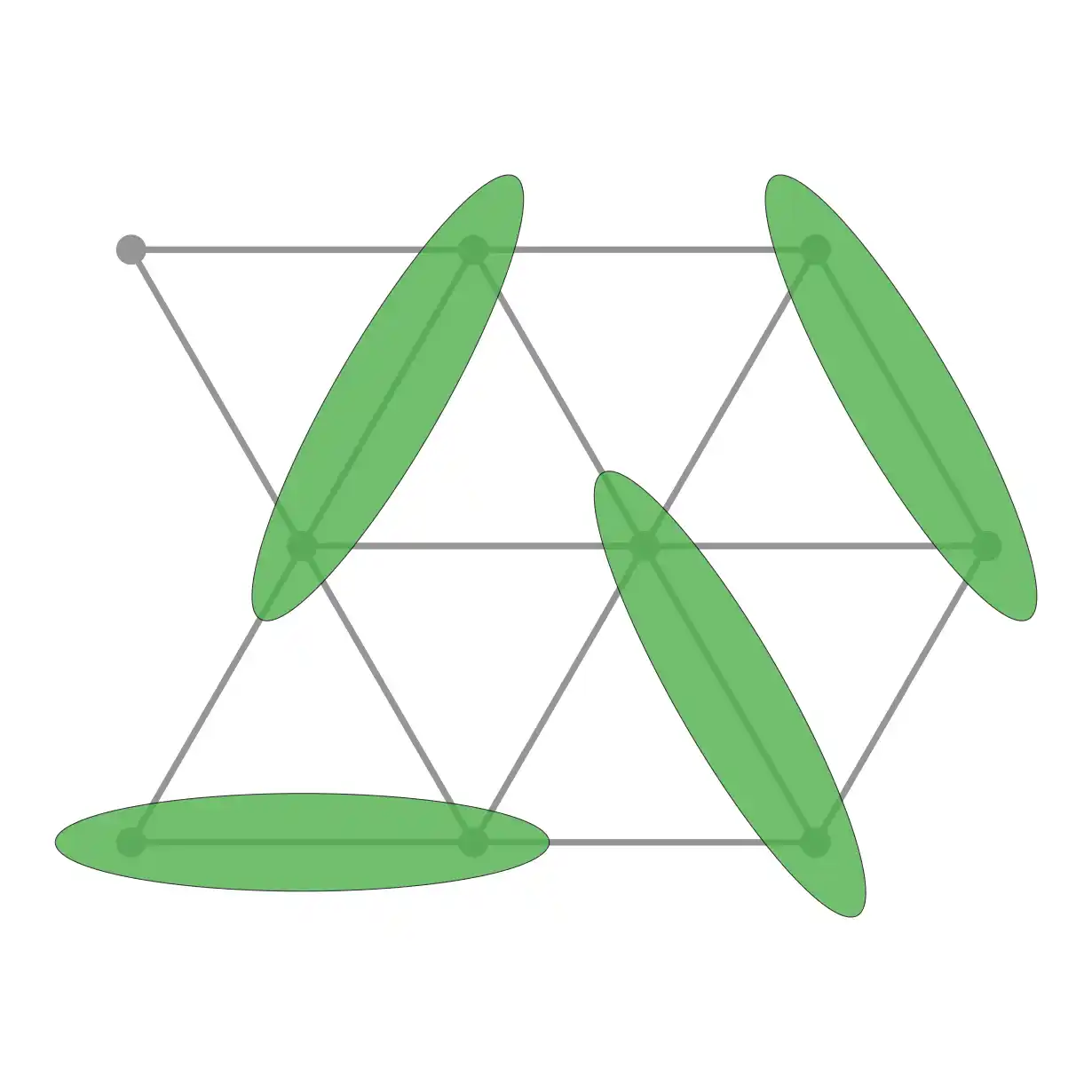
An illustration of the lattice examined by Phil Anderson in the early '70s.

Finding the Elusive Quantum Spin Liquid by Taking the Road Less Traveled

December 7, 2023

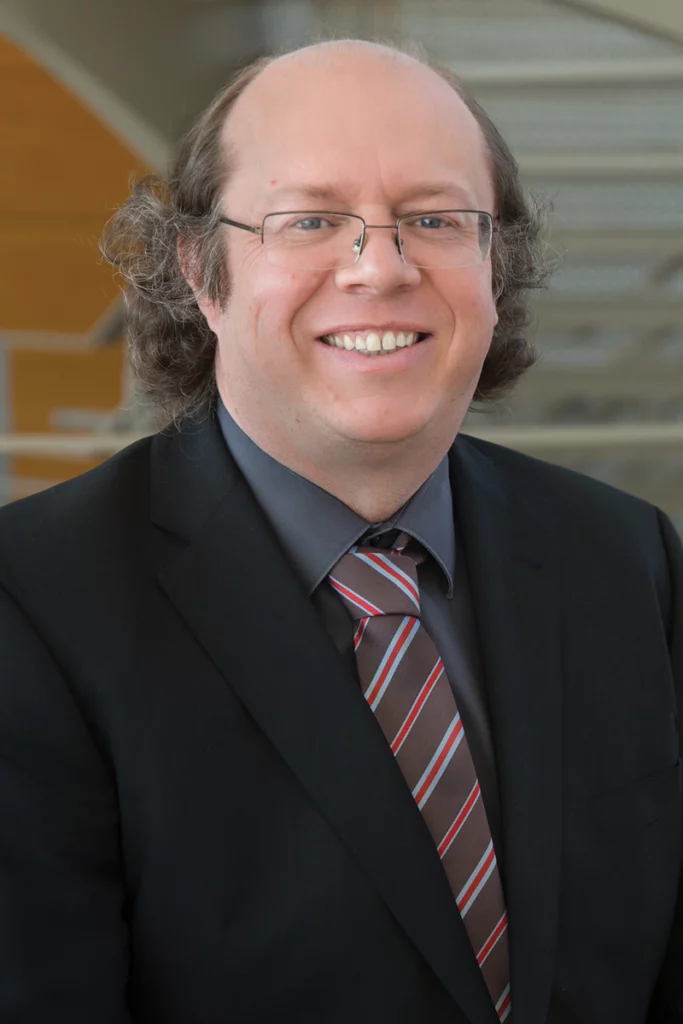
A photo of Alan Tennant
Tennant
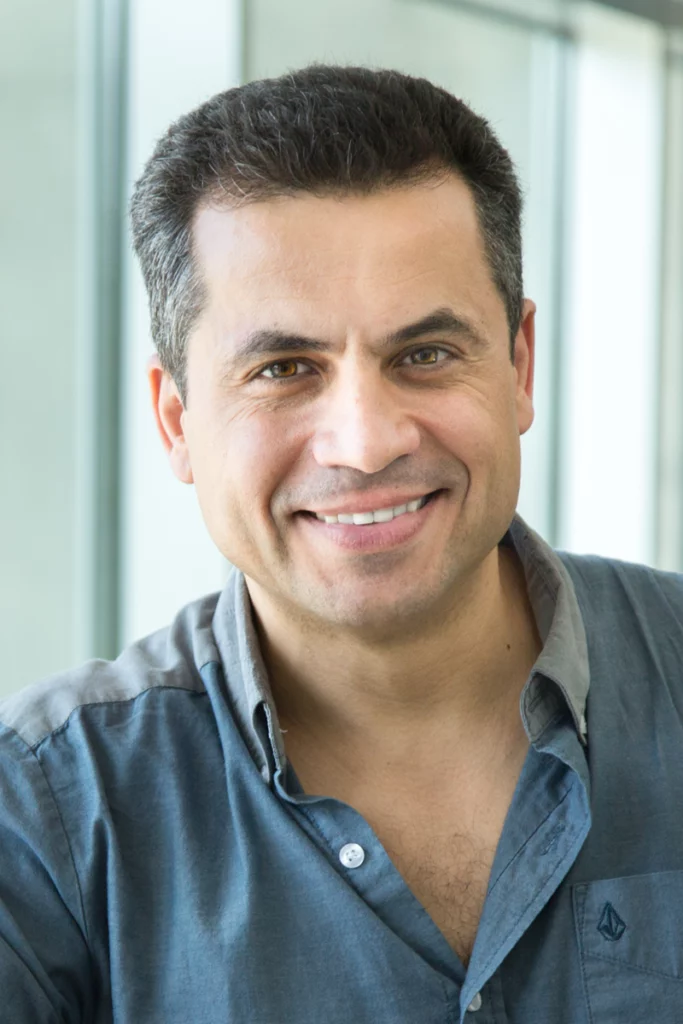
A photo of Cristian Batista
Batista

They couldn’t hide forever.

With combined expertise and sophisticated tools, scientists like UT’s Alan Tennant and Cristian Batista are revealing even the most well-concealed secrets of quantum materials.

An illustration of the lattice examined by Phil Anderson in the early '70s.
An illustration of the lattice examined by Phil Anderson in the early ’70s. Shown as green ellipses, pairs of quantum particles fluctuated among multiple combinations to produce a spin liquid state. Credit: Allen Scheie/Los Alamos National Laboratory, U.S. Dept. of Energy (via ORNL)

Professors Tennant and Batista are part of the scientific team that confirmed the presence of quantum spin liquid (QSL) behavior in a new material: KYbSe2. QSLs are an elusive state of matter with a promising role to play in next-generation quantum information technologies. They’re also notoriously hard to find.

So what, exactly, is a QSL? It’s a bit of a magnetic outlier. Typical magnetic materials like iron or nickel arrange their magnetic moments (the source of their magnetic fields) in an ordered pattern. Things are messier and a bit more free-flowing in QSLs (hence “liquid” in the name). Here, magnetic moments exist in a highly entangled, fluctuating state. To complicate the picture, QSLs also come with exotic quasiparticles, which aren’t actually particles but instead are the collective behavior of particles in close quarters. All this makes it extraordinarily difficult to locate a QSL state in a material.

Tennant and Batista were joined by a collaboration of scientists from national laboratories, universities, and institutes to track down a QSL by taking the road less traveled. Many studies go searching for these exotic states by looking for what’s not there: missing magnetic order, for example. They decided instead to look for what they call “positive evidence”—a highly-entangled state or exotic quasiparticles. They found both in a material comprising potassium, ytterbium, and selenium by using powerful neutron science facilities at Oak Ridge National Laboratory and combined theorical, experimental, and computational resources. The findings were published in Nature Physics.

The teamwork approach to solving problems is nothing out of the ordinary for Tennant and Batista, both of whom are part of UT’s research cluster on Quantum Materials for Future Technologies, the Shull Wollan Center, and the Quantum Science Center (which is one of five US National Quantum Information Science Centers run by the Department of Energy). Each of these initiatives pools resources to solve complex problems and draws on the unique convergence of scientific talent and tools in East Tennessee.

As Tennant pointed out, “Quantum problems like these are too hard for individual researchers to solve alone. The combination of the best research facilities with forefront researchers is vital and East Tennessee is starting to be recognized as a leader for this kind of team science.”

December 7, 2023  |  Filed Under: Condensed Matter, Featured News, News

A photo of Del Maestro from the YouTube video announcing new Center for Advanced Materials and Manufacturing

UT Wins NSF Funding for the Center for Advanced Materials and Manufacturing

June 27, 2023

A photo of Alan Tennant
Tennant
Del Maestro

Lightning in a Bottle

Physics faculty will play key roles in a new National Science Foundation Materials Research Science and Engineering Center (NSF MRSEC) set to discover, design, and develop materials that will transform science and industry.

UT won $18 million for the Center for Advanced Materials and Manufacturing (CAMM), one of nine new MRSECS announced June 26. The NSF announcement said the investment “will drive the creation of advanced materials capable of remarkable things—from being tough enough to withstand the heat of a fusion reactor to processing information at the quantum level.”

CAMM has two major initiatives: using artificial intelligence to tame the complexity of quantum materials and building new materials that can operate in extreme conditions.

Physics Professor Alan Tennant will serve as CAMM’s director, while Professor and Department Head Adrian Del Maestro will lead the quantum materials initiative. Del Maestro explained the heart of the work is unlocking the properties of quantum mechanics—the incredibly complex interactions and entanglement between individual electrons or constituents.

UT Announces the new Center for Advanced Materials and Manufacturing

“That can have implications for sustainable energy, for quantum communication, (and for) national security concerns,” he said. “There’s a real need for new types of materials, for example, that can operate in these extreme conditions. Think about things like the center of nuclear reactors. And so advances there could have a really immediate effect on people’s day-to-day life.”

In the past three years the university has built an impressive roster of expertise in quantum materials and artificial intelligence with the Quantum Materials for Future Technologies cluster. With new hires joining faculty already in place, this team includes 13 members from the physics department, many (like Tennant and Del Maestro) with joint appointments in the Tickle College of Engineering.

“CAMM is a model for interdisciplinary research and innovation,” Tennant said. “We are leveraging all the capabilities we have to advance the materials frontier while also developing our nation’s future leaders in these areas. And by working with companies like Lockheed Martin, Volkswagen and Eastman, and launching new high-tech start-ups like SkyNano that will co-locate with us here in Knoxville, we are ensuring that our innovations create economic opportunities for Tennesseans.”

As Del Maestro said, “I think we managed to kind of get this lightning in a bottle. All the pieces fit together. (This) is the right place to do this work.”

June 27, 2023  |  Filed Under: Condensed Matter, Featured News, News

A photo of Weitering and Lee

The Art of Science

March 20, 2023

An image of Hanno Weitering
Weitering
An image of Lawrence Lee
Lee

Hanno Weitering and Larry Lee Honored at CAS Awards Banquet

Professor Hanno Weitering and Assistant Professor Larry Lee are physicists, but sometimes that means being a designer, architect, musician, or painter. This creative blend of art and science was appropriately rewarded at the annual College of Arts and Sciences awards banquet. Weitering was recognized for his Distinguished Research Career at UT while Lee was honored with the Outreach Teaching Award.

Serendipity and Strategy

Weitering has been at UT since 1993. Part of the condensed matter physics group, he’s an experimentalist who’s never been afraid to venture into new directions. For years he swore he’d never get involved in superconductivity research. Then he moved to an office next door to Professor Jim Thompson (now retired) and began collaborating on that very topic: a career highlight he chalks up to serendipity.

Weitering is interested in the often-unpredictable electronic properties of low dimensional materials systems. The smaller a system, the more subtle its physics becomes. He explained that many physicists like to find and study exotic electronic properties of materials that he sees as way too complex to truly comprehend. Instead, he prefers to look at theoretical models for those materials that are intuitively “easy” to understand, yet necessarily oversimplify aspects related to a material’s chemistry, which can be extremely complex and difficult to control.

“My approach is to create simple materials systems that would be a much closer experimental realization of some of the most promising theoretical models and then see (if) it all makes sense,” he said.

This involves some nanoscale architecture. Working with Associate Professor Steve Johnston, he found that silicon—the heart of the electronics industry—can host a novel form of superconductivity. Arriving at that result required him to create a sample comprising a third of a layer of tin atoms on a layer of silicon atoms. This wasn’t something he just happened upon, however.

“This was all by design,” Weitering said, part of a scientific approach that’s “a mix of serendipity and strategy.

“I never really jumped on hot topics,” he continued. “Instead I consider, ‘What is my expertise? What is my background? Where do I think I can make a really interesting and lasting contribution?'”

This mindset has resulted in a successful research career rounded out by dedicated classroom teaching and 10 years of service as department head, as well as 10 years as deputy director of what’s now the Institute for Advanced Materials and Manufacturing.

His hard work has not escaped notice. In addition to this honor from the College, in 2022 Weitering was elected a Fellow of the American Association for the Advancement of Science and appointed a UT Chancellor’s Professor.

While appreciative of the honors, he said his creativity is driven by curiosity, not potential accolades.

“You have people that I feel are giants, and they build cathedrals,” he said. “I just would like a nice mosaic somewhere on the floor that I’ll be remembered by.”

Setting Physics to Music

While Weitering crafts artwork for theoretical cathedral floors, Lee is literally bringing people to the dance floor.

Giving vintage tech equipment a second life, he engineers audio waveforms to show images from experimental particle physics—painting musical pictures through his ColliderScope project. He’s played festivals both in the United State and Europe, delighting crowds by transforming old oscilloscopes into the heartbeat of techno music and cool imagery.

Lee joined the faculty in 2021 and is both a musician in his own right as well as a particle physicist. When he’s creating riffs for ColliderScope he has to give equal weight to each role.

“It’s both all the way,” he said. “When you’re making these complicated sounds there’s an interplay between the shape of the sound and the timbral quality of the sound. If I know I want a particular visual to happen, I have to design it in way that will produce a sound that I want.”

In other words: he wants good physics and good music.

“It has to be true to science but also musically engaging,” Lee explained. “When you draw these shapes, they end up sounding complex and often naturally harsh. You then have the artistic choice to change the way it looks and therefore sounds, or compose around those harsh sounds.”

While he didn’t invent this method of drawing pictures with music, once he saw it he knew immediately it would be a perfect fit for particle physics outreach.

“It ties in with the electronics that we use and we build for our day-to-day lives,” he said.

Lee has an affinity for bringing physics out of the lab and offering it to the public in ways they can understand, appreciate, and enjoy. Last summer he and Assistant Professor Tova Holmes organized a free public viewing of Particle Fever to celebrate the 10-year anniversary of the Higgs Boson discovery. He hopes to put on a ColliderScope show in Knoxville when he can work out the timing with his research and teaching schedule and find the right venue.

With these latest awards, the Department of Physics and Astronomy has won 11 College Convocation Honors since 2016 for outstanding research, teaching, advising, and outreach.

March 20, 2023  |  Filed Under: Condensed Matter, Featured News, News, Particle

Nature Physics Magazine Cover for the issue that featured the article referenced in this post

Stealing Electrons and Reversing Time

January 30, 2023

An image of Hanno Weitering
Weitering
A photo of Steve Johnston
Johnston

Evidence for a chiral superconductor could bring quantum computing closer to the mainstream

UT’s physicists led the scientific team that found silicon—a mainstay of the soon-to-be trillion-dollar electronics industry—can host a novel form of superconductivity that could bring rapidly emerging quantum technologies closer to industrial scale production. The findings are reported in Nature Physics and involve electron theft, time reversal, and a little electronic ambidexterity.

Couples on the Superconducting Dance Floor

Superconductors conduct electric current without resistance or energy dissipation. Their uses range from powerful electromagnets for particle accelerators and medical MRI devices to ultrasensitive magnetic sensors to quantum computers. Superconductivity is a spectacular display of quantum mechanics in action on a macroscopic scale. And it all comes down to the electrons.

Electrons are negatively charged and repel each other in a vacuum. However, in a solid-state medium—the realm of metals and semiconductors—there are roughly 1023 (= 100 billion x one trillion) other electrons and positive ions that complicate the picture enormously. In a superconductor, conduction electrons overcome their mutual repulsion and become attracted to each other through interactions with the other particles. This interaction causes them to pair up like dancers at a ball, forming composite particles, or “Cooper pairs” (so named for Nobel laureate Leon Cooper).

Typically, the “glue” causing this pairing comes from the atom vibrations in a metal, but only if the electrons don’t repel each other too strongly. The process is somewhat like two people (the electrons) on a soft mattress (the medium) that roll toward one another when the mattress is compressed in the center. The laws of quantum mechanics dictate that Cooper pairs (unlike single electrons) can all condense into a single coherent quantum state, where they move in lock step. The condensate exhibits a rigidity as a result, allowing current to flow without interruption or dissipation. In other words: to superconduct. This mechanism leads to conventional (s-wave) superconductors such as aluminum, tin, or lead.

When the repulsion between electrons is strong, however, they pair up in higher angular momentum states so that they can’t get too close, resulting in, e.g., a d-wave superconductor. This is the case with materials made from copper and oxygen (cuprates) and it plays a starring role in the Nature Physics research and its future potential.

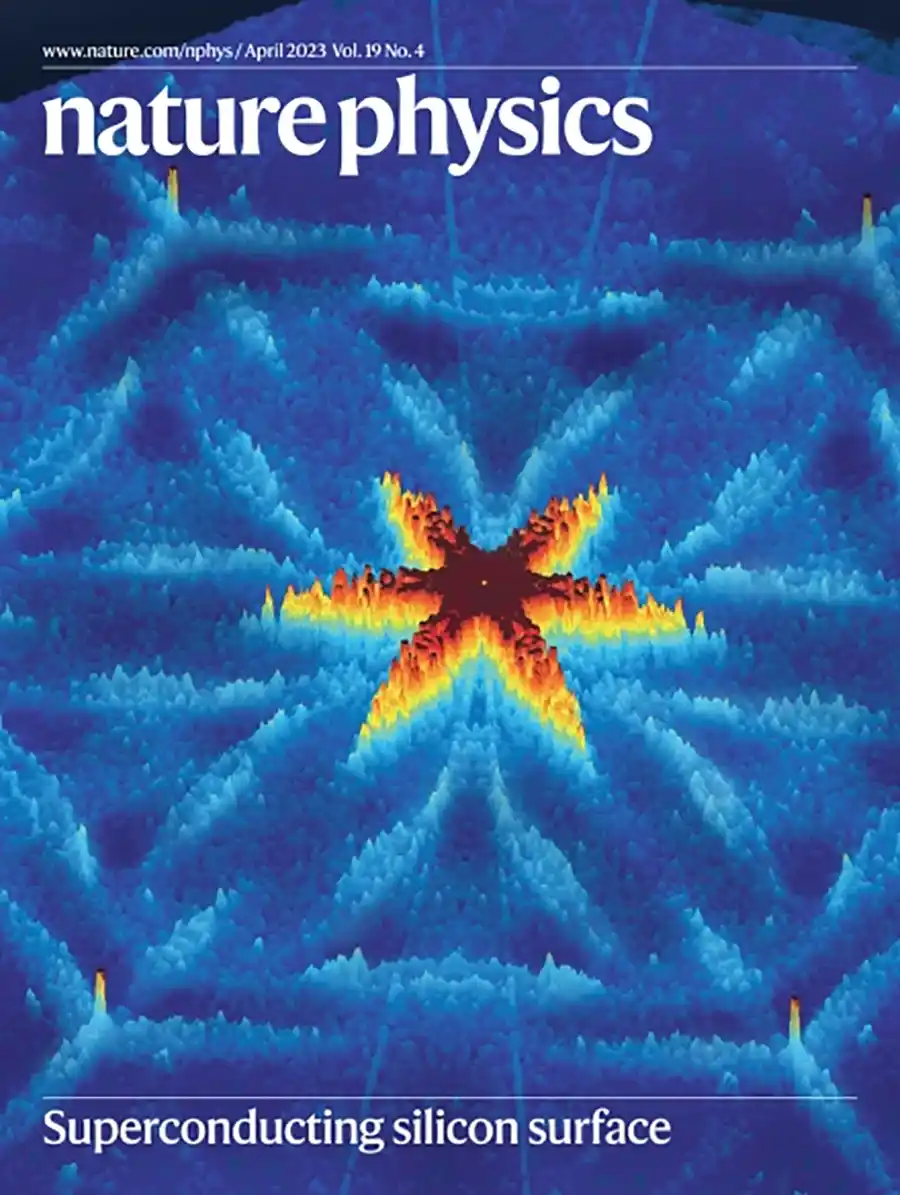
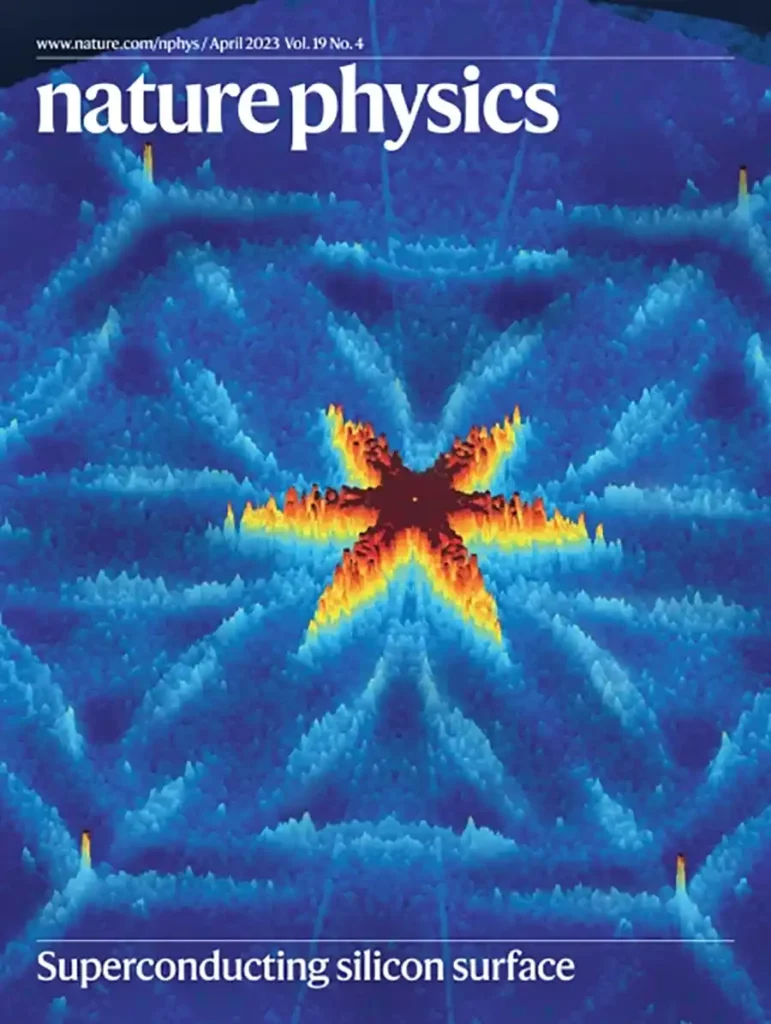
Nature Physics Magazine Cover for the issue that featured the article referenced in this post
Featured on the April 23 (Vol. 19, No 4) cover of Nature Physics: A 3D rendition of images from the paper.

This is a quasi-particle interference spectrum of a monatomic superconducting tin layer on a silicon substrate. The bright star at the center originates from quasi-particle scattering processes in which time-reversal symmetry is broken. The latter indicates that the superconductivity is topological in nature.

Stealing Electrons

In this work, Professor Hanno Weitering and Associate Professor Steve Johnston and their colleagues in the U.S., Spain, and China replicated cuprate-like physics by growing one-third of a monolayer of tin atoms on a substrate (base layer) of silicon. Think of it as nine silicon atoms in a single layer, with three tin atoms—placed farther apart—stacked in another layer on top. The system is engineered such that the repulsion between the tin electrons is so strong they can’t move and won’t superconduct.

Weitering, Johnston, et al., found a clever workaround by implanting boron atoms in the silicon layer’s diamond-like crystal structure. The boron atoms proceeded to steal electrons from the tin layer (typically about 10 percent) in a process similar to techniques perfected by the semiconductor industry. This gave the remaining tin electrons the freedom to move about. The tin layer thus becomes metallic and even superconducting at a critical temperature exceeding that of nearly all elemental superconductors. Importantly, the phenomenon also scales with the number of boron atoms or stolen electrons, behavior reminiscent of the cuprate superconductors.

Reversing Time and Quantum Computing Applications

While electron theft-based superconductivity is interesting in its own right, the research team found even more intriguing physics suggesting this tin-silicon material hosts chiral superconductivity. This highly exotic state of matter is heavily pursued, in part because of its potential for quantum computing.

In chiral systems, clockwise and counterclockwise rotations are the same and yet different—like how left and right hands are mirror images of each other that can’t be superimposed. In quantum mechanics, the properties of single or paired electrons are encoded in a mathematical wavefunction that can be left-handed, right-handed, or “topologically trivial.” The superconducting wavefunction in the tin layer turns out to be clockwise in parts of the sample and counterclockwise in other parts. If one were to rewind the clock, the clockwise wavefunction would become counterclockwise and vice-versa, but these two wavefunctions are still different, just like the left hand and right hand are different. Or as the physicist would say, time-reversal symmetry is broken.

Time-reversal symmetry breaking is a hallmark of chiral superconductivity. Another is that the system has two one-dimensional conduction channels that run like railroad tracks along the perimeter of the sample material. These channels host exotic particle-like entities (named for Ettore Majorana) where under certain conditions the particle and its antiparticle become indistinguishable. Majorana particles are topologically protected, impervious to what’s going on in the environment around them. They’ve been envisioned as building blocks of future quantum computers, a rapidly emerging technology that could help solve problems too complex for classical computers. The use of Majorana particles implies a safeguard against decoherence, a critical requirement for quantum computation to succeed.

Taken together, the Nature Physics results suggest the possibility of integrating exotic properties with an easily scalable silicon-based materials platform. As such, this would bring futuristic quantum technologies closer to industrial scale production.

January 30, 2023  |  Filed Under: Condensed Matter, Featured News, News

A photo of Jian Liu

Symmetry Breaking in Quantum Systems

December 21, 2022

A photo of Jian Liu
Liu
A photo of Haidong Zhou
Zhou
A photo of Junyi Yang
Yang
A photo of Dongliang Gong
Gong
A photo of Shashi Pandey
Pandey
Lin Hao
Hao
An image of Han Zhang
Zhang

What nature doesn’t readily provide, Associate Professor Jian Liu’s group will create or compel. By designing or controlling a material’s geometry they can tune how its electrons behave. Fundamental research like this is the foundation of everyday electronics we know well. It reveals how phenomena like magnetism, insulation, and superconductivity arise, opening the door to new and exotic properties that drive future discoveries. Graduate students and postdocs play key roles in Liu’s group and have found creative ways to use or alter an atom’s architecture to control electronic behavior.

Breaking Some (But Not All) Rules

How do scientists tune electrons? It starts with the materials they study. Liu and his colleagues focus on samples that have a crystalline structure, and that involves symmetry.

As Richard Feynman explained in his famous lectures, “everyone likes objects or patterns that are in some way symmetrical. It is an interesting fact that nature often exhibits certain kinds of symmetry in the objects we find in the world around us. … The crystals found in rocks exhibit many different kinds of symmetry, the study of which tells us some important things about the structure of solids.”

Researchers have been interested in solid state physics for decades. Simply put, it’s the science of solid materials, where atoms are in close quarters. This proximity gives rise to intriguing interactions, especially where electrons are concerned. That knowledge gave us devices like transistors and semiconductors. Solid state physics is part of what’s now more commonly known as condensed matter physics, which includes materials with the lattice-like, repetitive patterns Liu studies. To get to new and interesting physics, his group has found ways to break that symmetry in quantum materials.

“Condensed matters are complicated due to the large number of constituents, especially when quantum effects are significant,” Liu explained. “While electrons often spontaneously break a certain symmetry, they have to follow the symmetries afforded by the crystal structures. If we can design or control the lattice symmetry as we want, we can tune electron behavior the way we want and even force them to spontaneously break another symmetry that they don’t want to break originally.”

In recent papers his group has outlined a successful strategy to do this, including materials that already exist in nature and “toy model” materials they created on their own.

Top-Down Design and Bottom-Up Synthesis

One of Liu’s interests is the interplay of topology and electron correlation in materials. Topology has to do with systems that don’t change even when you bend, twist, or deform them. Electron correlation is how much an electron’s movement is determined by other electrons in the same system. Topology has been a more recent revolution in understanding quantum materials, but electron correlation isn’t well understood in quantum materials despite being known for a long time. Further, what scientists understand about topology assumes the electrons don’t interact with each other.

To implement topology to correlated electrons in a controllable way, Liu and his colleagues created their own materials from strontium, iridium, calcium, titanium, and oxygen.

“One can pick the desired elements and put them into a structure with the designed symmetries,” he said. “We call this top-down design and bottom-up synthesis.”

In this case, he said they devised a “toy-model material that has the ingredients of both topology and correlation (to) find out what the electrons would actually do.”

That’s how they found new physics in the middle ground: the intermediate coupling of electrons. In their fabricated materials, electrons form an insulator (as expected when correlation is strong) and at the same time exhibit a spontaneous Hall effect (as expected if the electron wave function has topological properties). They occur simultaneously because the correlation is not too strong, but just strong enough, so that electrons can break the designed symmetry by ordering their spins magnetically. The unusual phenomena open a new view on electronic topology and correlation interplay in a largely unexplored regime.

Liu’s group had similar success designing a hybrid structure using most of the same elements. By stacking two sheets of atoms, they brought electron spins close to each other but without direct contact or bonding. He explained they “figure out a way to compromise” and create distinct rotational symmetries.

Same Ends, Different Means

How electrons spin is key to additional symmetry-breaking research the Liu group published with Associate Professor Haidong Zhou.

“The idea is quite simple,” Liu said. “While spins can point to any direction, they have to spontaneously pick a direction when they form a magnetic order. The process depends on the internal symmetry of the material.”

Liu gives this analogy: imagine arranging furniture in a rectangular-shaped office. People typically place a desk against one of the walls even though they don’t have to. Now imagine strain is put on the four walls, making the room oblique. That changes the symmetry, and one may not like having the furniture against the walls anymore. Similarly, researchers can deform a material’s structure so that parallel atomic planes slide past each other, forcing spins to make a new choice.

“There is no obvious choice like before,” Liu said, “so it turns out they spontaneously come up with a new solution where their directions are modulated in space.”

This symmetry breaking hadn’t been seen before in the material they used, which comprised strontium, iridium, and oxygen. The findings are significant, Liu explained, not only because the strain-induced interaction hadn’t been previously observed, but also because two magnetic interactions are competing “just because they want the spins to point along different axes.”

Continuous strain tuning and controllable new phases could be widely applicable to two dimensional materials—those consisting of isolated single layers of atoms—that promise to play an increasingly important role in future technologies.

The Inevitable Experience of Failure, and Why it’s Good

Young scientists in Liu’s group were first or co-authors on all papers stemming from this research. They include Junyi Yang (PhD, 2022; now a postdoc at Argonne National Laboratory), Dongliang Gong (postdoc), Shashi Paney (graduate student), and Lin Hao and Han Zhang (both former UT postdocs).

Liu believes giving students leadership roles is important for the field to advance.

“The students are the future,” he said. “By leading a project, they have to face all the challenges, tackle them, and inevitably experience failure of the experiment during which they actually learn a lot more. This process makes the final success of the experiment much more rewarding. That’s how they become the next generation of physicists.”

December 21, 2022  |  Filed Under: Condensed Matter, Featured News, News

A photo of Elbio Dagotto

Elbio Dagotto Receives APS Adler Award in Materials Physics

October 11, 2022

A photo of Elbio Dagotto
Dagotto

Elbio Dagotto doesn’t necessarily take things at face value, at least not when it comes to materials. He is interested in the complexity often going on below the surface—how electrons move, spin, and interact and what happens as a result, often with competing tendencies leading to unusual patterns and properties. Superconductivity, magnetism, and quantum computing all have ties to the fundamental research Dagotto conducts as both a Distinguished Professor of Physics at UT and a Distinguished Scientist in Oak Ridge National Laboratory’s Materials Science and Technology Division. For his outstanding contributions to materials physics, the American Physical Society (APS) has awarded him the 2023 David Adler Lectureship Award in the Field of Materials Physics.

“Professor Dagotto is a leader in the field of strongly correlated electrons, consistently pushing forward new paradigms and ideas to solve some of the most pressing problems facing the world today,” said Professor and Department Head Adrian Del Maestro. “At the same time, he is well known for his dedication to teaching and mentorship, having trained a large number of successful scientists as well as consistently being a recipient of departmental undergraduate teaching awards. He has a knack for communicating complicated ideas in a pedagogical manner, demonstrated through his popular review papers, and he is always at the top of my list to teach introductory quantum mechanics.”

Dagotto is a condensed matter theorist and uses advanced models and computational tools to predict how correlated electrons behave in a wide variety of materials, as well as nanoscale systems.

“We say electrons are correlated when the properties of one individual electron depend strongly on what the rest of the ensemble of many other electrons is doing, a formidable challenge for calculations,” he explained.

These studies provide the bedrock for understanding at a fundamental level how several properties, such as insulation, magnetism, and superconductivity arise: crucial discoveries for unveiling new exotic materials as well as developing atomic scale devices. Dagotto literally wrote the book on Nanoscale Phase Separation and Colossal Magnetoresistance and co-edited another on Multifunctional Oxide Heterostructures. He has authored or co-authored more than 450 publications that have been cited more than 30,000 times. In 2004 he joined UT and ORNL with a 50-50 percent split appointment; that same year he was listed among the world’s top 250 most Highly Cited Physicists. His research is currently funded by the U.S. Department of Energy, Office of Science, Basic Energy Sciences, Materials Sciences and Engineering Division.

Dagotto’s expertise is so well regarded that he has been invited to weigh in—often as sole author—on the state of condensed matter physics for prestigious journals including Science, Nature, and Reviews of Modern Physics. For four years he was a divisional editor specializing in condensed matter for Physical Review Letters. He has also served on the National Academies’ Solid State Sciences Committee (now the Condensed Matter and Materials Research Committee), a body that helps set the national agenda for materials research.

Dagotto earned a PhD in physics at Instituto Balseiro, Bariloche, in his native Argentina. He has a keen interest in supporting other Hispanic scientists at all stages of their careers. To that end he and Professor Adriana Moreo have organized a series of Hispanics in Physics lunch gatherings for the department, welcoming everyone from undergraduates to senior faculty.

The Adler Lectureship Award will now appear on Dagotto’s CV among a host of other honors, including his election as a Fellow of both the American Physical Society and the American Association for the Advancement of Science. The UT Society of Physics Students has also recently selected him as Teacher of the Year the last two times he taught quantum mechanics for undergraduate students.

Dagotto’s official citation for the Adler Lectureship reads:

“For pioneering work on the theoretical framework of correlated electron systems and describing their importance through elegant written and oral communications.”

The David Adler Lectureship Award in the Field of Materials Physics is awarded annually to a scientist making outstanding contributions to the field of materials physics and who is notable for high quality research, review articles, and lecturing. The honor is named for the late David Adler, a condensed matter physicist and professor at the Massachusetts Institute of Technology. The official award presentation will be next March at the American Institute of Physics meeting, where Dagotto will give an invited talk.

October 11, 2022  |  Filed Under: Condensed Matter, Featured News, News

  • « Previous Page
  • 1
  • 2
  • 3
  • Next Page »

Recent Posts

  • Cosmic Collaboration: Students Join Forces to Bring the Invisible to Life
  • UT’s Biophysics Group Investigates How Chromosomes Separate
  • WiP Closes Fall Term with Lunch & Networking
  • Work-Study Provides Early Research Advantages for Physics Undergraduates
  • First Haslam Family Professorships for Physics

Physics & Astronomy

College of Arts and Sciences

401 Nielsen Physics Building
1408 Circle Drive
Knoxville TN 37996-1200
Phone: 865-974-3342
Email: physics@utk.edu

Facebook Icon    X Icon

The University of Tennessee, Knoxville
Knoxville, Tennessee 37996
865-974-1000

The flagship campus of the University of Tennessee System and partner in the Tennessee Transfer Pathway.

ADA Privacy Safety Title IX