• Request Info
  • Visit
  • Apply
  • Give
  • Request Info
  • Visit
  • Apply
  • Give

Search

  • A-Z Index
  • Map

Physics & Astronomy

  • About
    • Honors
    • Administration
    • Faculty Resources
    • Nielsen Spaces
  • Research
    • Research Partners & Facilities
    • Condensed Matter
    • Particle / HEP
    • Biophysics / Soft Matter
    • Nuclear / Astrophysics
    • Quantum Information
  • People
    • Faculty
    • Staff
    • Joint Research & Adjunct Faculty
    • Post Docs
    • Graduate Students
  • Undergraduate
    • Why Physics
    • What Our Grads Do
    • Career Resources
    • Degree Programs
    • Research
    • Scholarships
    • Student Organizations
  • Graduate
    • Join Our Program
    • FAQs
    • Fellowships & Assistantships
    • Bains Fellowship
    • Where Our Grads Go
    • Research
    • Resources
  • News & Events
    • Newsletters
    • News
    • Colloquia Series
    • Events
    • In the Media
  • Outreach
    • Astronomy Outreach
    • Cool Things in the Sky this Month
    • Physics Outreach & High School Lecture Series
  • Alumni
    • Distinguished Alumni Award
    • Giving Opportunities
    • Share Your News
A banner showing a model of an atom and elementary particles

News

News

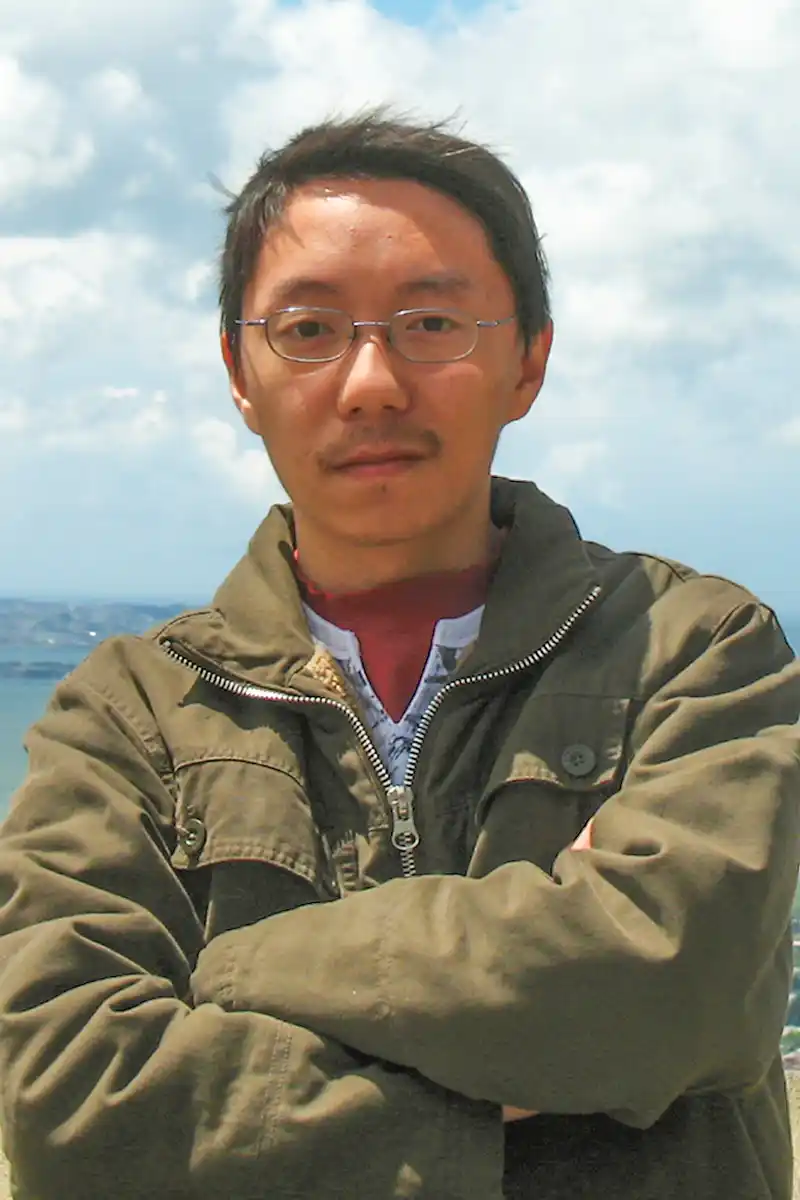
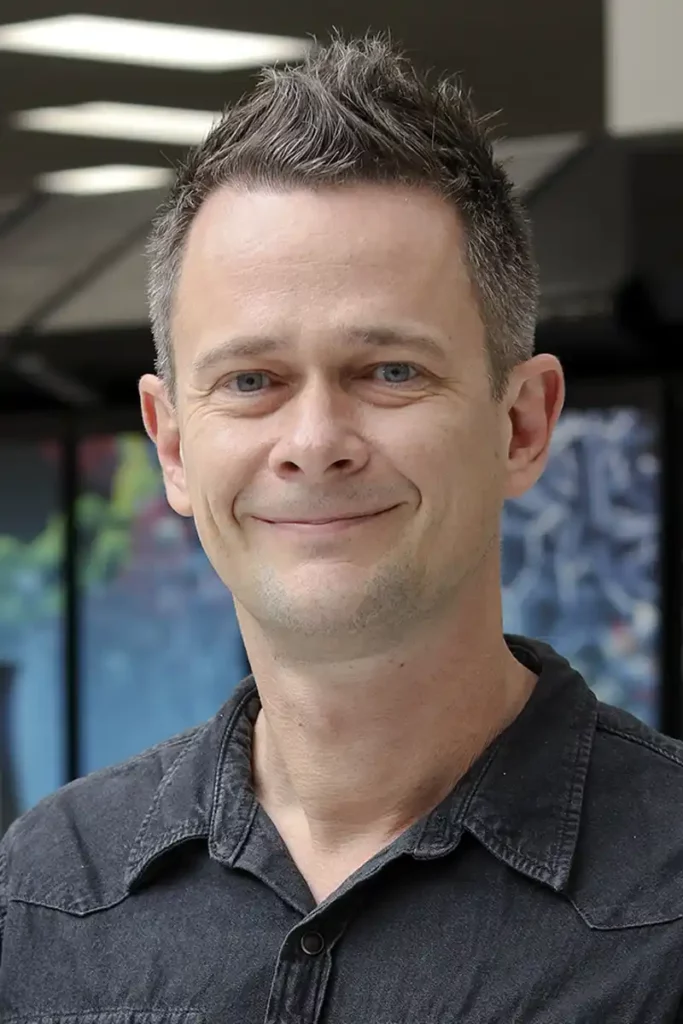
A photo of Jian Liu

Symmetry Breaking in Quantum Systems

December 21, 2022

A photo of Jian Liu
Liu
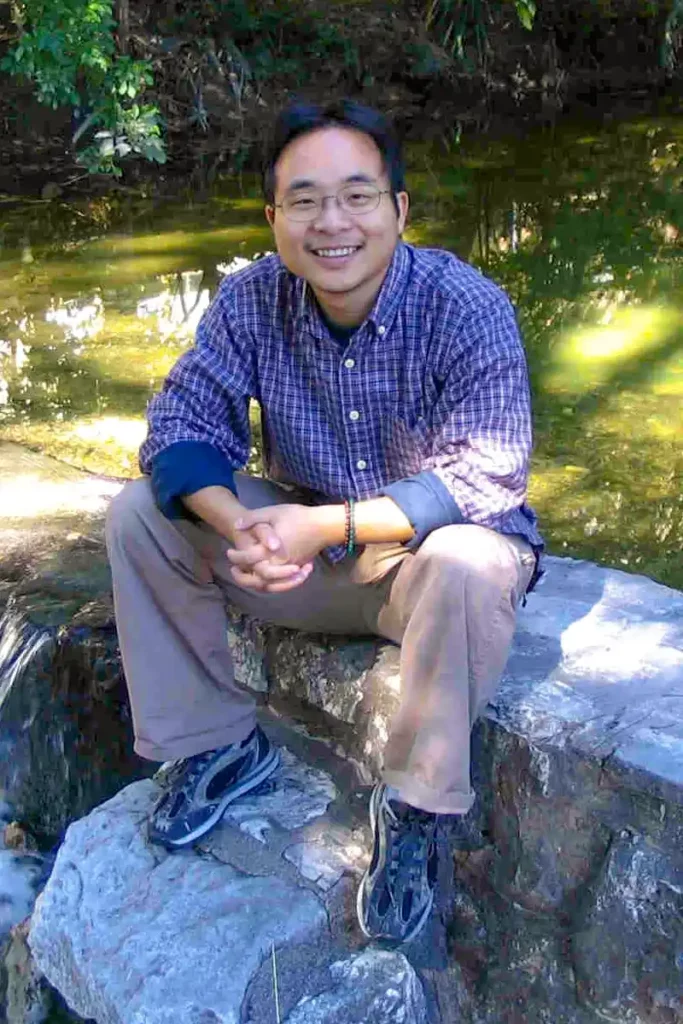
A photo of Haidong Zhou
Zhou
A photo of Junyi Yang
Yang
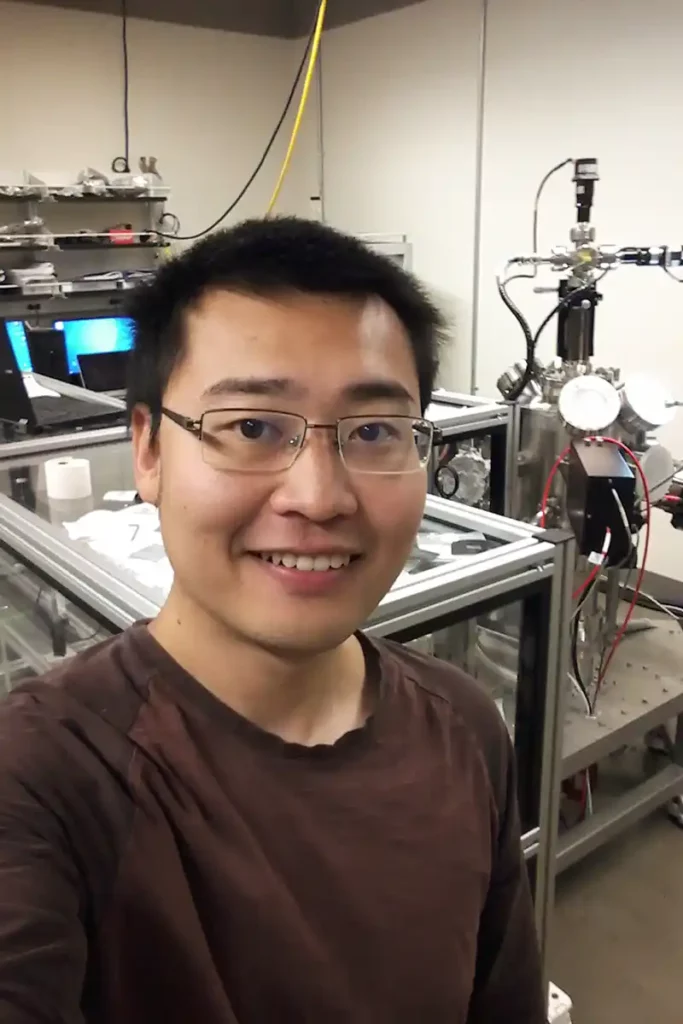
A photo of Dongliang Gong
Gong
A photo of Shashi Pandey
Pandey
Lin Hao
Hao
An image of Han Zhang
Zhang

What nature doesn’t readily provide, Associate Professor Jian Liu’s group will create or compel. By designing or controlling a material’s geometry they can tune how its electrons behave. Fundamental research like this is the foundation of everyday electronics we know well. It reveals how phenomena like magnetism, insulation, and superconductivity arise, opening the door to new and exotic properties that drive future discoveries. Graduate students and postdocs play key roles in Liu’s group and have found creative ways to use or alter an atom’s architecture to control electronic behavior.

Breaking Some (But Not All) Rules

How do scientists tune electrons? It starts with the materials they study. Liu and his colleagues focus on samples that have a crystalline structure, and that involves symmetry.

As Richard Feynman explained in his famous lectures, “everyone likes objects or patterns that are in some way symmetrical. It is an interesting fact that nature often exhibits certain kinds of symmetry in the objects we find in the world around us. … The crystals found in rocks exhibit many different kinds of symmetry, the study of which tells us some important things about the structure of solids.”

Researchers have been interested in solid state physics for decades. Simply put, it’s the science of solid materials, where atoms are in close quarters. This proximity gives rise to intriguing interactions, especially where electrons are concerned. That knowledge gave us devices like transistors and semiconductors. Solid state physics is part of what’s now more commonly known as condensed matter physics, which includes materials with the lattice-like, repetitive patterns Liu studies. To get to new and interesting physics, his group has found ways to break that symmetry in quantum materials.

“Condensed matters are complicated due to the large number of constituents, especially when quantum effects are significant,” Liu explained. “While electrons often spontaneously break a certain symmetry, they have to follow the symmetries afforded by the crystal structures. If we can design or control the lattice symmetry as we want, we can tune electron behavior the way we want and even force them to spontaneously break another symmetry that they don’t want to break originally.”

In recent papers his group has outlined a successful strategy to do this, including materials that already exist in nature and “toy model” materials they created on their own.

Top-Down Design and Bottom-Up Synthesis

One of Liu’s interests is the interplay of topology and electron correlation in materials. Topology has to do with systems that don’t change even when you bend, twist, or deform them. Electron correlation is how much an electron’s movement is determined by other electrons in the same system. Topology has been a more recent revolution in understanding quantum materials, but electron correlation isn’t well understood in quantum materials despite being known for a long time. Further, what scientists understand about topology assumes the electrons don’t interact with each other.

To implement topology to correlated electrons in a controllable way, Liu and his colleagues created their own materials from strontium, iridium, calcium, titanium, and oxygen.

“One can pick the desired elements and put them into a structure with the designed symmetries,” he said. “We call this top-down design and bottom-up synthesis.”

In this case, he said they devised a “toy-model material that has the ingredients of both topology and correlation (to) find out what the electrons would actually do.”

That’s how they found new physics in the middle ground: the intermediate coupling of electrons. In their fabricated materials, electrons form an insulator (as expected when correlation is strong) and at the same time exhibit a spontaneous Hall effect (as expected if the electron wave function has topological properties). They occur simultaneously because the correlation is not too strong, but just strong enough, so that electrons can break the designed symmetry by ordering their spins magnetically. The unusual phenomena open a new view on electronic topology and correlation interplay in a largely unexplored regime.

Liu’s group had similar success designing a hybrid structure using most of the same elements. By stacking two sheets of atoms, they brought electron spins close to each other but without direct contact or bonding. He explained they “figure out a way to compromise” and create distinct rotational symmetries.

Same Ends, Different Means

How electrons spin is key to additional symmetry-breaking research the Liu group published with Associate Professor Haidong Zhou.

“The idea is quite simple,” Liu said. “While spins can point to any direction, they have to spontaneously pick a direction when they form a magnetic order. The process depends on the internal symmetry of the material.”

Liu gives this analogy: imagine arranging furniture in a rectangular-shaped office. People typically place a desk against one of the walls even though they don’t have to. Now imagine strain is put on the four walls, making the room oblique. That changes the symmetry, and one may not like having the furniture against the walls anymore. Similarly, researchers can deform a material’s structure so that parallel atomic planes slide past each other, forcing spins to make a new choice.

“There is no obvious choice like before,” Liu said, “so it turns out they spontaneously come up with a new solution where their directions are modulated in space.”

This symmetry breaking hadn’t been seen before in the material they used, which comprised strontium, iridium, and oxygen. The findings are significant, Liu explained, not only because the strain-induced interaction hadn’t been previously observed, but also because two magnetic interactions are competing “just because they want the spins to point along different axes.”

Continuous strain tuning and controllable new phases could be widely applicable to two dimensional materials—those consisting of isolated single layers of atoms—that promise to play an increasingly important role in future technologies.

The Inevitable Experience of Failure, and Why it’s Good

Young scientists in Liu’s group were first or co-authors on all papers stemming from this research. They include Junyi Yang (PhD, 2022; now a postdoc at Argonne National Laboratory), Dongliang Gong (postdoc), Shashi Paney (graduate student), and Lin Hao and Han Zhang (both former UT postdocs).

Liu believes giving students leadership roles is important for the field to advance.

“The students are the future,” he said. “By leading a project, they have to face all the challenges, tackle them, and inevitably experience failure of the experiment during which they actually learn a lot more. This process makes the final success of the experiment much more rewarding. That’s how they become the next generation of physicists.”

December 21, 2022  |  Filed Under: Condensed Matter, Featured News, News

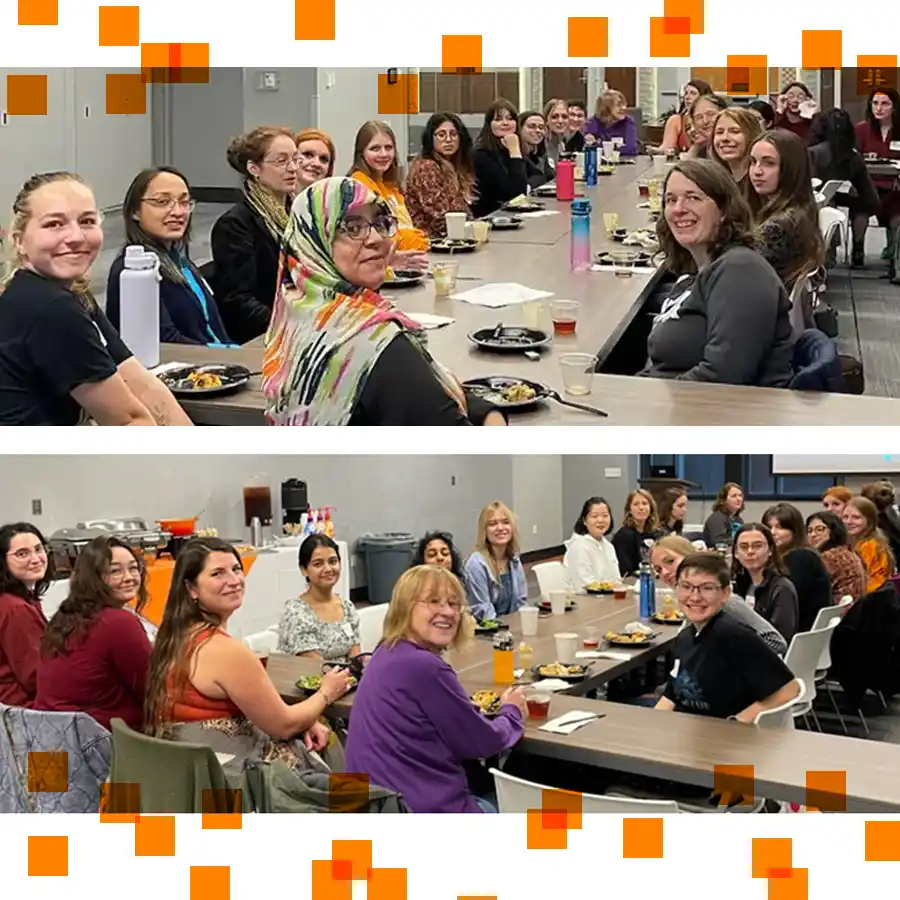
Women dining: a collage photo from the Women in Physics luncheon

Women in Physics Lunch: Fall Edition

December 9, 2022

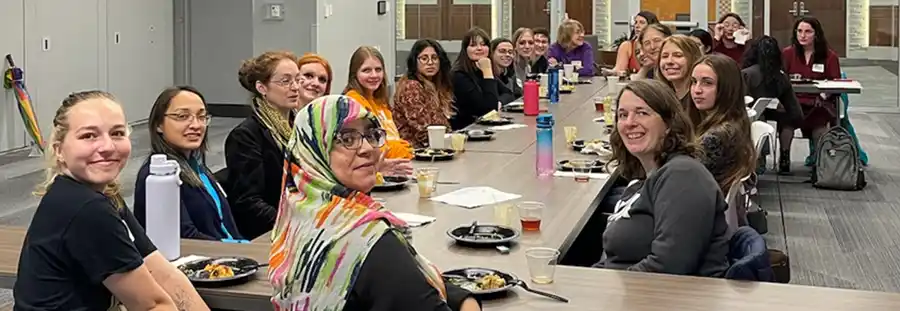
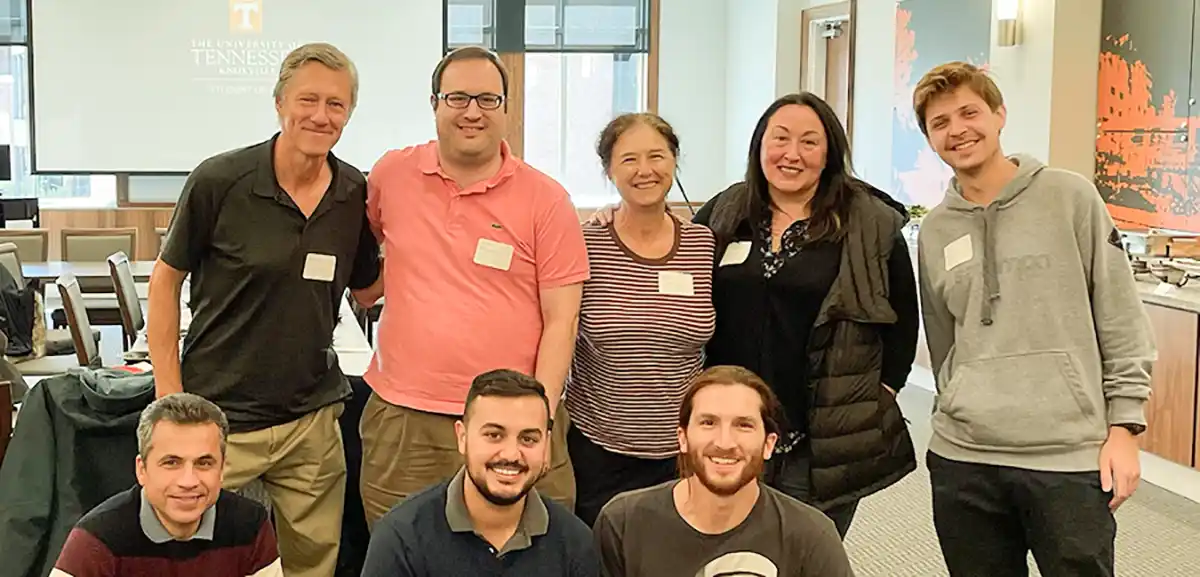
The Fall edition of the Women in Physics Lunch, sponsored by the Department of Physics and Astronomy, was held on December 8, 2022. Thirty female students, post-docs, and faculty shared great food and stimulating conversation. Save the date for our next lunch, which is going to be on Wednesday, May 10, 2023.

Women dining: a photo from the Women in Physics luncheon
Courtesy of Professor Adriana Moreo

December 9, 2022  |  Filed Under: Featured News, News

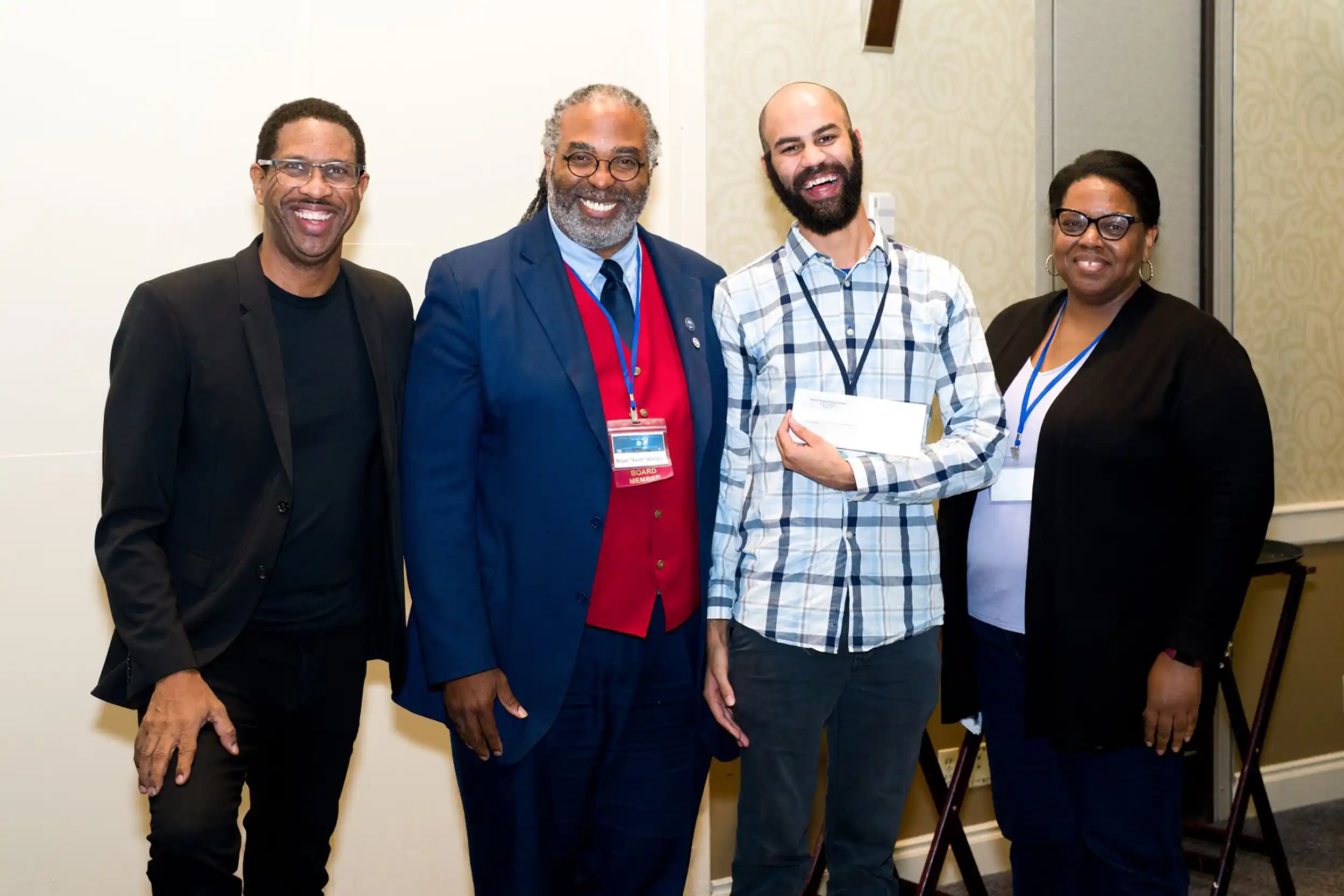
Hakeem Oluseyi, NSBP President; Bryan Kent Wallace, NSBP Treasurer; Awardee Jesse Harris; and Elaine Lalanne, NSBP Past-Treasurer. (Photo credit: National Society of Black Physicists)

Explaining Physics Beyond the Textbooks

December 7, 2022

Hakeem Oluseyi, NSBP President; Bryan Kent Wallace, NSBP Treasurer; Awardee Jesse Harris; and Elaine Lalanne, NSBP Past-Treasurer. (Photo credit: National Society of Black Physicists)
Presenting the honors: Hakeem Oluseyi, NSBP President; Bryan Kent Wallace, NSBP Treasurer; Awardee Jesse Harris; and Elaine Lalanne, NSBP Past-Treasurer. (Photo credit: National Society of Black Physicists)

Graduate Student Jesse Harris wins presentation prize at the 2022 NSBP conference

Graduate Student Jesse Harris knows how to explain the search for new physics. That talent was much appreciated at the National Society of Black Physicists (NSBP) conference last month, where he won the award for Best Oral Presentation in the field of Nuclear and Particle Physics.

Harris, who works with Professor Stefan Spanier in UT’s Compact Muon Solenoid (CMS) group, presented his work searching for certain rare Higgs decays, a strategy to probe physics beyond the standard model, or, as Spanier describes it, “physics beyond the textbooks.”

They’re looking for glimmers of small, rare differences in how the Higgs boson shows up in experiment versus what present theory predicts. Harris uses machine learning to improve sensitivity in the search and his preliminary findings have shown improvement by a factor of two.

A native of Big Stone Gap, Virginia, Harris earned a bachelor’s degree at the University of Virginia’s College at Wise before joining UT’s graduate program in physics. His work in both research and teaching labs has been recognized before. In 2020 he won a research stipend from the UT Office of Research and Engagement and in 2021 he was selected for the department’s Outstanding Graduate Teaching Assistant Award. The NSBP award was sponsored by the Facility for Rare Isotope Beams (FRIB) and the National Science Foundation.

Harris was one of eight UT physics students attending the NSBP conference, along with Associate Professor Lucas Platter. Graduate students were Idris Abijo, Victor Ale, Olesson Cesalien, Harris, and Olugbenga Olunloyo. The undergraduate cohort comprised Carson Broughton, Cordney Nash, and Cora Thomas. (Nash, another of Spanier’s students, presented his on-campus research on silicon pixel detectors for the High-Luminosity Large Hadron Collider.)

The NSBP conference is the largest academic meeting of minority physicists in the United States. The meeting provides mentorship opportunities, access to recruiters, and networking opportunities while informing the broader physics community on best practices. UT Physics has sent delegations of students every year since 2016, typically led by Associate Professor Christine Nattrass. UT was a gold sponsor of the 2022 meeting, held November 6- 9, 2022, in Charlottesville, Virginia, and will co-host the 2023 conference with Oak Ridge National Laboratory. This year’s gathering provided a welcome return to the in-person experience after two years of virtual meetings.

“The pandemic has just been brutal on all of our students but in particular on students who also come from marginalized groups,” Nattrass said. “I think our students needed this.”

December 7, 2022  |  Filed Under: Featured News, News, Nuclear, Particle

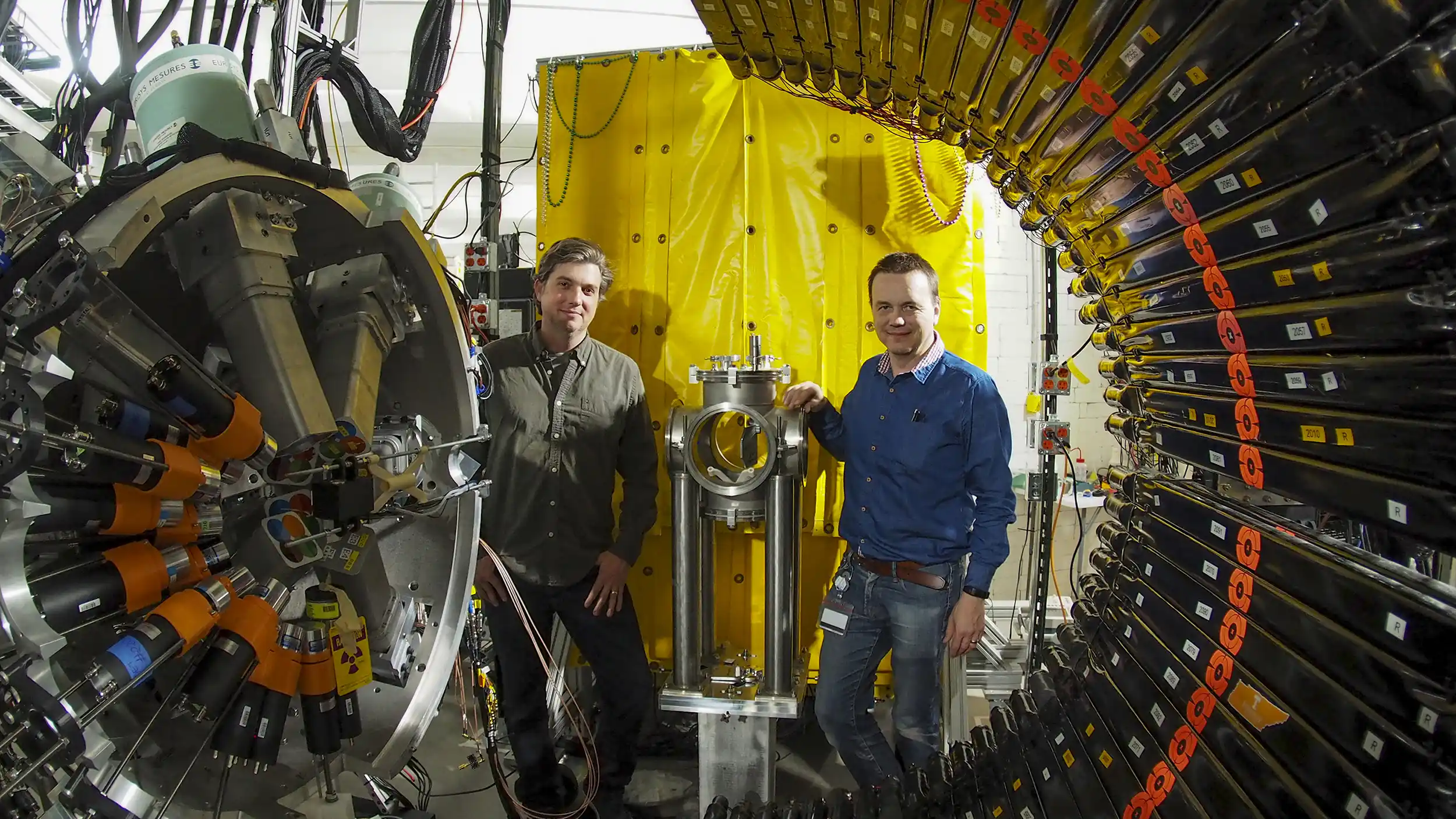
Mitch Allmond, left, with Robert Grzywacz at the Facility for Rare Isotope Beams. Credit: Robert Grzywacz/ORNL, U.S. Dept. of Energy

Where Instability is a Good Thing

November 14, 2022

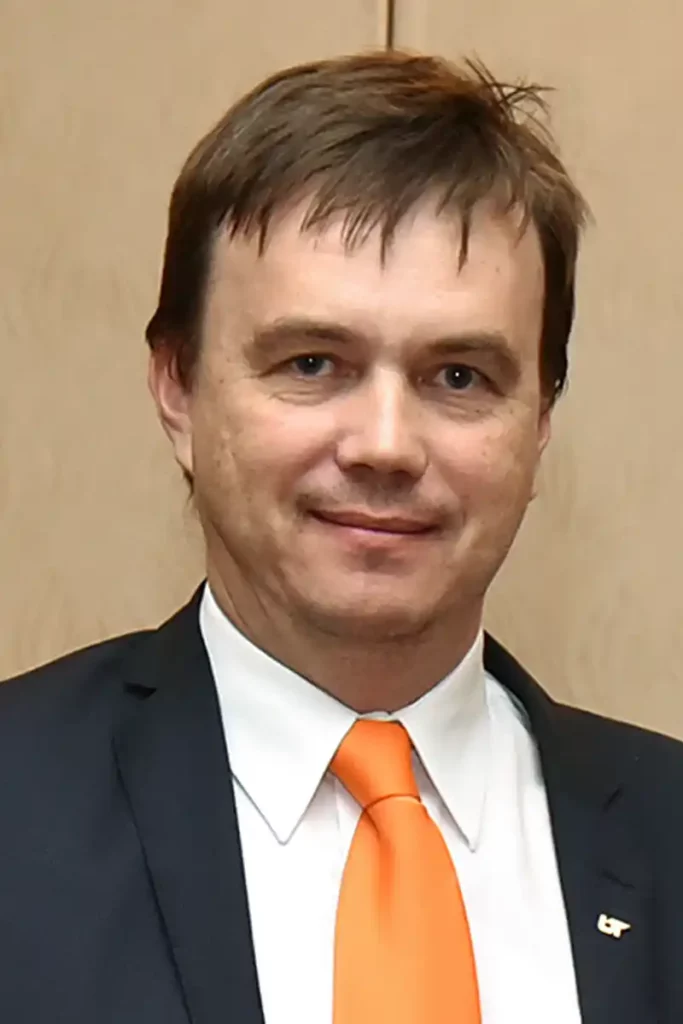
A photo of Robert Grzywacz
Grzywacz
A photo of Kate Jones
Batista

FRIB just published the first paper from its first experiment. UT’s physicists built the tools that made it possible.

The email came with a simple subject line: “Now with ribbon.”

Professor Robert Grzywacz was at Michigan State University sending photos as dignitaries cut a giant green ribbon to open the Facility for Rare Isotope Beams (FRIB). For him and his colleagues it was more than christening a powerful research facility. It was a new chapter in a story of scientific creativity, and community, and turning drawbacks into opportunities.

Things Fall Apart

Grzywacz, like Professor Kate Jones and Assistant Professor Miguel Madurga, dwells in the land of low-energy nuclear physics. They’re interested in how a nucleus is structured, how stable it is, and the way its components interact. Rare isotopes are an ideal vehicle to find out.

FRIB creates these exotic nuclei by stripping electrons from stable atoms and guiding the resulting ions into a linear accelerator where they travel faster than half the speed of light. When the beam hits a target, nuclei lose protons or neutrons, creating unstable, short-lived rare isotopes. FRIB can stop and re-accelerate the beam, filtering out isotopes so that researchers get the ones they want.

Studying isotopes as they fall apart gives scientists a window into a nucleus’s innermost mysteries, knowledge that moves science forward and also meets practical needs.

“There are applications from medical imaging and therapy to energy,” Jones explained.

In June FRIB completed its first experiment. Scientists slammed a stable beam of calcium-48 into a beryllium target. The fragments from that collision gave them a bunch of exotic isotopes to study. Observing their decay, which takes less than a second, led to the first reported measurements of half-lives for five exotic isotopes of phosphorous, silicon, aluminum, and magnesium. The findings were published in Physical Review Letters as the first paper from FRIB’s first experiment.

“This result builds on a lot of our past work,” Grzywacz said.

Making those measurements required sophisticated instrumentation called the FRIB Decay Station initiator (FDSi), a system he knows well.

Finding a Silver Lining

The FDSi didn’t come out of nowhere. It’s descended from generations of detectors designed before FRIB was born. Grzywacz has been part of this effort since 1998, when he started proposing experiments at FRIB’s predecessor, the National Semiconductor Cyclotron Laboratory (NSCL).

The facility was nearly 20 years old and “the nuclear physics community was in the process of discussing what and where the new generation facility (would) be,” he said.

At the time, he and Jones were deeply integrated at the Holifield Radioactive Ion Beam Facility (HRIBF) at Oak Ridge National Laboratory (ORNL). Grzywacz’s group built and contributed to new instruments to study radioactive, neutron-rich isotopes. They were the first to use digital signal processing broadly for nuclear spectroscopy experiments for low-energy nuclear physics. They partnered with industry to develop a digital data acquisition system (which eventually made its way to FRIB).

Among their key accomplishments was building a suite of instruments to detect and measure decay patterns. Krzysztof Rykaczewski led an ORNL-centered program with buy-in from other universities (Georgia Tech, Louisiana State, Mississippi State, and Vanderbilt) through the University Radioactive Ion Beam Consortium (UNIRIB) and the Joint Institute of Nuclear Physics and Applications (JINPA).

“The decay program at HRIBF was strong and unique,” Grzywacz said.

In 2008, the U.S. Department of Energy decided the future was with FRIB and in 2011 HRIBF was closed. Despite their disappointment, Grzywacz and his colleagues found a silver lining.

“The scientific strength of the research program at HRIBF and available instrumentation encouraged us to engage in the construction of one of the key FRIB projects: the FRIB Decay Station,” he said.

Use What You Have

The FRIB Decay Station (FDS) focuses on four strategic areas: nuclear structure, nuclear astrophysics, tests of fundamental symmetries, and applications of isotopes for society.

In 2016 some 60 scientists gathered at JINPA and established the FDS collaboration, with Grzywacz as spokesperson. The FDS would be a new instrument: an efficient, modular system of multiple detectors under one infrastructure that would provide parallel and simultaneous measurements. It came with a hefty price tag, so in the interim researchers formed the FDS Initiator (FDSi) group.

“This project aimed to realize the FDS vision but using existing instrumentation,” Grzywacz said. “The FDSi was to provide a unified framework for the variety of instrumentation provided by the community. The essential elements of the FDS were to be realized by existing detectors.”

In August 2021 FDSi went into production with a talented, collaborative cast.

ORNL staff led by James Allmond designed the elements and led construction. Machinists from UT Physics made precision parts for the frame. UT’s low-energy nuclear physics group built new detectors, making sure they could be integrated in FRIB’s digital data acquisition framework. Grzywacz came up with the idea of using two focal planes for easy switching between two sets of apparatus, as well as the designs for the implantation detectors. These are necessary to stop the nuclei and measure the charged particle decays.

While this was happening the FRIB Program Advisory Committee announced the first approved experiments. Of 34 accepted proposals, eight included the FDSi.

By February 2022 FDSi installation began at Michigan State. In June the system was ready for the calcium fragments that came its way, as were Grzywacz and Madurga; graduate students Ian Cox and James Christie; and postdocs Noritaka Kitamura, Kevin Siegl, and Zhengyu Xu, all of whom worked on FRIB’s inaugural experiment.

Twelve Neutrons from Stability

After years of work to get FRIB up and running, scientists can now reap the benefits. The FDSi is one of multiple instruments along the beam, giving them lots of options to explore nuclei.

Jones will use a high-resolution spectrograph and gamma-ray energy tracking array in an experiment on the structure of light tin isotopes, slated to run this December.

“Tin is magic,” she explained. “It has 50 protons, which forms a closed nuclear shell.”

The isotopes Tin-100 (50 neutrons) and Tin-132 (82 neutrons) are “doubly-magic.”

“Doubly-magic nuclei are cornerstones of the nuclear shell model,” Jones said. “Knowing the single-particle states outside of these nuclei allows theorists to calculate the properties of more complex nuclei.”

Tin-112 is the element’s last stable isotope. This makes Tin-100, at 12 neutrons from stability, particularly difficult to reach.

“The further from stability, the harder isotopes are to produce,” Jones said. “Hence, FRIB.”

By knocking out a neutron from Tin-104, her group will get a look at the states in Tin-103. They expect the ground and first excited states to have the same nature as Tin-105 and Tin-107. Ultimately, as they get closer to Tin-101 (which can be reached when FRIB reaches full power) they anticipate those states will be flipped.

This kind of research—learning about the structure of key exotic nuclei—is in line with FRIB’s aspiration to be the world’s leading laboratory in rare isotope science.

The Nuclear Family

A premier research facility needs a community with a shared purpose. Grzywacz and Jones’s nuclear connections span decades and continents. Grzywacz still works with colleagues from his alma mater, the University of Warsaw. Jones can trace her nuclear family’s roots to her undergraduate days at the University of Surrey and follow them through postdoc appointments across Germany and France, where she and Grzywacz met. FRIB is home to scientists they’ve met along the way as well as former students and postdocs they’ve mentored. And, of course, there’s Witek Nazarewicz, a longtime professor of physics at UT before he signed on as FRIB’s chief scientist.

“There is a scientific community around FRIB that we are integrated in,” Jones said. “There are people who are critical links in making FRIB happen, such as those who develop the rare ion beams, who we met back in Europe or here in East Tennessee.”

This community is essential for FRIB, and nuclear science, to thrive.

“The future of low-energy nuclear physics in the U.S. depends to a large extent on the success of FRIB,” Jones said. “Without building new facilities it would be difficult for the U.S. to stay ahead in our field.”

She and Grzywacz met some of their colleagues long before they celebrated the ribbon-cutting at FRIB’s opening. The importance of those early (and continuing) ties can’t be overstated.

“There are decades of knowledge that are passed between researchers, not only in papers, but working together in labs, at workshops and conferences, and teaching in classrooms and professors’ offices,” Jones said. “If you break the chain, it’s hard to rebuild.”

Mitch Allmond, left, with Robert Grzywacz at the Facility for Rare Isotope Beams. Credit: Robert Grzywacz/ORNL, U.S. Dept. of Energy

November 14, 2022  |  Filed Under: Featured News, News, Nuclear

A photo of a gathering of faculty, students, and post-docs for the Fall Hispanics in Physics lunch

Hispanics in Physics Lunch: Fall 2022

October 24, 2022

A photo of a gathering of faculty, students, and post-docs for the Fall  Hispanics in Physics lunch
Contributed by Professor Adriana Moreo

The fall edition of the “Hispanics in Physics Lunch,” sponsored by our department, took place on October 20, 2022. Faculty, students, and post-docs participated; mostly Spanish was spoken over a menu that included meat-based and vegetarian/vegan options. Stay tuned for our next lunch in the Spring semester!

October 24, 2022  |  Filed Under: Featured News, News

A photo of Thomas Papenbrock

Getting Under the (Neutron) Skin

October 20, 2022

A photo of Thomas Papenbrock
Papenbrock

Every atomic nucleus, miniscule or massive, is governed by a basic law of nature: the strong force holding it together. The more we know about the complex workings of nuclei the better we understand different kinds of matter, including elements produced in cosmic collisions (like the gold in our jewelry boxes). In Nature Physics, UT’s physicists and their colleagues at Chalmers University of Technology present a groundbreaking model to calculate the properties of a lead nucleus with a method that can be used across the nuclear landscape—all the way to neutron stars.

The Story of Stars in a Single Nucleus

Scientists use computational models to get the most complete picture of a nucleus. Heavier nuclei typically don’t fit well in those models. They may be unstable and fall apart quickly. They might have so many protons and neutrons that it’s difficult to keep track of all the interactions between them. Nuclei with lots of neutrons present a particular challenge. The new approach turns that obstacle into an asset.

When neutrons outnumber protons, equal numbers of each gather in the nucleus’s center while the surplus neutrons collect on its surface, forming a skin. Lead (Pb-208) is a good example. With 126 neutrons and 82 protons, it’s a heavy (yet stable) nucleus covered in a neutron skin. This outer layer is sensitive to the strong force, which holds its protons and neutrons together.

Professor Thomas Papenbrock described how he and his colleagues connected this single, simple nucleus to massive neutron stars, a teaspoon of which would weigh 4 billion tons on Earth.

Combining advanced methods, statistical tools, and computational modeling, they were able to calculate the neutron skin in lead. This informs scientists about the “nuclear equation of state,” which describes matter under various conditions like pressure, volume, or temperature. That equation in turn links neutron skin thickness to the structure and size of neutron stars. Further, the model can be adapted across the nuclear landscape to predict properties of other heavy nuclei that have eluded models in the past.

The work also shows that a heavy nucleus can be computed with tools theorists routinely use: Hamiltonians (functions that describe a dynamic system) rooted in the theory describing the strong force (quantum chromodynamics, or QCD). These tools have well-understood parameters that help quantify uncertainties, making predictions more precise.

The Physics in Your Jewelry Box

Papenbrock outlined multiple reasons why understanding nuclear structure and properties is important. First, there’s understanding the complexity arising from the strong force, one of nature’s four basic interactions (along with the weak, electromagnetic, and gravitational forces).

“Second,” he said, “is understanding the production of elements in the early universe and in stellar processes such as neutron-star mergers and supernovae explosions.”

(Helium and hydrogen were born in the early seconds of our universe, while gold and platinum trace their beginnings to merging neutron stars.)

“This require us to understand very neutron-rich nuclei that cannot all be produced and studied in laboratories,” Papenbrock said. “So, we have to compute them.”

Understanding the nucleus not only helps us understand what happened eons ago or what goes on in far-away objects. It also helps scientists shape future discoveries.

“Searches for physics beyond the Standard Model of elementary particles almost all involve hypothetical reactions of such particles with or inside atomic nuclei,” he explained.

An image of Gaute Hagen
Hagen

James Bond and Nuclear Physics

Papenbrock pursues nuclear studies through a joint faculty appointment with Oak Ridge National Laboratory. He worked with ORNL’s Zhonghao Sun (former UT postdoc) and Gaute Hagen (an adjunct professor with UT Physics) to calculate lead’s neutron skin, a feat made possible by ORNL’s Summit supercomputer.

“Computing has been a game changer over the last two-to-three decades,” Papenbrock said. “Moore’s law states that computing power doubles roughly every 16 months. Our phones can do things today that seemed science fiction (or James Bond) just a few decades ago.

“This has forced nuclear physicists to collaborate with computer scientists to really use all these technologies,” he continued. “We had to make so many changes to our codes over the years to adapt to this evolution of computing.”

Using collaborative strengths and computing power for nuclear physics is familiar territory for Papenbrock and Hagen. They’re part of the NUCLEI (the NUclear Computational Low Energy Initiative) collaboration that recently won $13 million in funding through SciDAC, the U.S. Department of Energy’s Scientific Discovery Through Advanced Computing program (part of the Office of Science). Papenbrock became the group’s principal investigator this year.

Comprising five national laboratories and seven universities, NUCLEI aims to advance the computations of atomic nuclei and processes. The Nature Physics paper was a result of the collaboration’s research, earning a News and Views article in the journal for its significance. This work, the review explains, “has allowed practitioners to reach for the stars.”

October 20, 2022  |  Filed Under: Featured News, News, Nuclear

A photo of Andrew Steiner

Andrew W. Steiner Elected APS Fellow

October 19, 2022

Steiner

When a giant star dies, Andrew W. Steiner gets a little more lab space.

An associate professor with a joint appointment at Oak Ridge National Laboratory, Steiner studies the neutron stars left after massive stars collapse. His outstanding research has earned him election as a Fellow of the American Physical Society (APS), making him the 10th APS Fellow on the current physics faculty.

APS Fellowship recognizes members who have made advances in physics through original research and publication or significant innovative contributions in applying physics to science and technology. They may also have made significant contributions to physics teaching or service. Steiner was cited “for pioneering a data-driven approach to constraining neutron star properties and the dense matter equation of state that combines advanced statistical methods, state-of-the-art nuclear theory, experimental constraints on bulk nuclear properties, and astrophysical data.”

A Stellar Laboratory

Dense, with a mass much larger than that of our sun, an average neutron star could fit in the space between the Tennessee Theatre and McGhee Tyson Airport. Yet these stellar bodies are actually good models for atoms. Steiner uses neutron star observations as a kind of laboratory to learn more about how neutrons and protons interact, especially in terms of the strong force (one of nature’s four basic forces) that holds them together. He was a bit surprised the citation mentioned “advanced statistical methods,” because he’s never actually had any courses in statistics.

“It is, in part, a testament to how much our field has changed over the past decade or so,” he said. “Statistical methods, computational tools, and machine learning continue to transform our ability to use data to elucidate our knowledge of the strong nuclear force.”

Steiner’s work has ties to important progress in nuclear astrophysics. The team that first detected gravitational waves produced by colliding neutron stars cited his group’s predictions about tidal deformability (what he calls “squishiness”) in these massive objects. He’s also director of the Nuclear Physics from Multi-Messenger Mergers (NP3M) research hub. The National Science Foundation (NSF) awarded UT $3.25 million to launch this national effort, bringing together scientists with expertise in nuclear physics and astrophysical simulations to study the properties of matter not available on Earth. Among the hub’s goals is training a diverse new generation of scientists.

“Professor Steiner works at the forefront of theoretical nuclear astrophysics where he uses cutting edge computational tools to probe the properties of hot and dense strongly interacting matter,” said Physics Professor and Department Head Adrian Del Maestro. “His dedication to building open source tools ensures that his research has a broad impact on the field as recognized by his peers through election as a Fellow of the APS. We are proud to add him to the list of 10 APS Fellows forging new knowledge and teaching and mentoring students in the Department of Physics and Astronomy at the University of Tennessee.”

Steiner earned a bachelor’s degree in physics at Carnegie Mellon University, followed by master’s and doctoral degrees in physics at the State University of New York at Stony Brook. He joined the UT Physics faculty in 2014. In 2016 he won an NSF Faculty Early Career Development Program (CAREER) Award, following that up in 2019 with a Senior Career Award for Research and Creative Achievement from the College of Arts and Sciences.

Steiner credits a long list of supporters for his career success: his wife, his daughter, his parents, and colleagues from UT Physics and around the country (including Madappa Prakash, his graduate advisor).

Each year, no more than one half of one percent of the society’s membership (excluding student members) is recognized by their peers for election to the status of Fellow. Steiner was recommended for Fellowship by his colleagues in the APS Division of Nuclear Physics. He will be acknowledged at the Division’s annual meeting later this month.

October 19, 2022  |  Filed Under: Featured News, News, Nuclear

A photo of Elbio Dagotto

Elbio Dagotto Receives APS Adler Award in Materials Physics

October 11, 2022

A photo of Elbio Dagotto
Dagotto

Elbio Dagotto doesn’t necessarily take things at face value, at least not when it comes to materials. He is interested in the complexity often going on below the surface—how electrons move, spin, and interact and what happens as a result, often with competing tendencies leading to unusual patterns and properties. Superconductivity, magnetism, and quantum computing all have ties to the fundamental research Dagotto conducts as both a Distinguished Professor of Physics at UT and a Distinguished Scientist in Oak Ridge National Laboratory’s Materials Science and Technology Division. For his outstanding contributions to materials physics, the American Physical Society (APS) has awarded him the 2023 David Adler Lectureship Award in the Field of Materials Physics.

“Professor Dagotto is a leader in the field of strongly correlated electrons, consistently pushing forward new paradigms and ideas to solve some of the most pressing problems facing the world today,” said Professor and Department Head Adrian Del Maestro. “At the same time, he is well known for his dedication to teaching and mentorship, having trained a large number of successful scientists as well as consistently being a recipient of departmental undergraduate teaching awards. He has a knack for communicating complicated ideas in a pedagogical manner, demonstrated through his popular review papers, and he is always at the top of my list to teach introductory quantum mechanics.”

Dagotto is a condensed matter theorist and uses advanced models and computational tools to predict how correlated electrons behave in a wide variety of materials, as well as nanoscale systems.

“We say electrons are correlated when the properties of one individual electron depend strongly on what the rest of the ensemble of many other electrons is doing, a formidable challenge for calculations,” he explained.

These studies provide the bedrock for understanding at a fundamental level how several properties, such as insulation, magnetism, and superconductivity arise: crucial discoveries for unveiling new exotic materials as well as developing atomic scale devices. Dagotto literally wrote the book on Nanoscale Phase Separation and Colossal Magnetoresistance and co-edited another on Multifunctional Oxide Heterostructures. He has authored or co-authored more than 450 publications that have been cited more than 30,000 times. In 2004 he joined UT and ORNL with a 50-50 percent split appointment; that same year he was listed among the world’s top 250 most Highly Cited Physicists. His research is currently funded by the U.S. Department of Energy, Office of Science, Basic Energy Sciences, Materials Sciences and Engineering Division.

Dagotto’s expertise is so well regarded that he has been invited to weigh in—often as sole author—on the state of condensed matter physics for prestigious journals including Science, Nature, and Reviews of Modern Physics. For four years he was a divisional editor specializing in condensed matter for Physical Review Letters. He has also served on the National Academies’ Solid State Sciences Committee (now the Condensed Matter and Materials Research Committee), a body that helps set the national agenda for materials research.

Dagotto earned a PhD in physics at Instituto Balseiro, Bariloche, in his native Argentina. He has a keen interest in supporting other Hispanic scientists at all stages of their careers. To that end he and Professor Adriana Moreo have organized a series of Hispanics in Physics lunch gatherings for the department, welcoming everyone from undergraduates to senior faculty.

The Adler Lectureship Award will now appear on Dagotto’s CV among a host of other honors, including his election as a Fellow of both the American Physical Society and the American Association for the Advancement of Science. The UT Society of Physics Students has also recently selected him as Teacher of the Year the last two times he taught quantum mechanics for undergraduate students.

Dagotto’s official citation for the Adler Lectureship reads:

“For pioneering work on the theoretical framework of correlated electron systems and describing their importance through elegant written and oral communications.”

The David Adler Lectureship Award in the Field of Materials Physics is awarded annually to a scientist making outstanding contributions to the field of materials physics and who is notable for high quality research, review articles, and lecturing. The honor is named for the late David Adler, a condensed matter physicist and professor at the Massachusetts Institute of Technology. The official award presentation will be next March at the American Institute of Physics meeting, where Dagotto will give an invited talk.

October 11, 2022  |  Filed Under: Condensed Matter, Featured News, News

An image of a satellite

New Quantum Networks Research and Training Program Receives $3M NSF Award

July 15, 2022

Courtesy of Professor George Siopsis

The National Science Foundation Research Traineeship Program (NRT) awarded a $3 million Collaborative Grant to the University of Georgia (UGA) and the University of Tennessee, Knoxville, to develop a Quantum Networks Training and Research Alliance in the Southeast (QuaNTRASE).

Quantrase infographic

The NSF award advances convergent research in quantum information science and engineering, which it has identified as a national priority of utmost importance, via training graduate students through a comprehensive traineeship model. The program supports graduate students, educates the STEM leaders of tomorrow, and strengthens the national research infrastructure.

“NSF continues to invest in the future STEM workforce by preparing trainees to address challenges that increasingly require crossing traditional disciplinary boundaries,” said Sylvia Butterfield, acting assistant director for NSF’s Directorate for Education and Human Resources. “Supporting innovative and evidence-based STEM graduate education with an emphasis on recruiting and retaining a diverse student population is critical to ensuring a robust and well-prepared STEM workforce.”

Quantum networks promise a novel and more secure functionality than the classical networks on which current communication encryption technologies are built. Developments surrounding quantum networks include fundamental discoveries in quantum science as well as key applications in cybersecurity, quantum sensors, and quantum computing.

“To realize the promised advantage of a quantum internet, many fundamental science and engineering challenges must be overcome via a convergent combination of expertise from several science and engineering disciplines and the development of a well-trained, interdisciplinary quantum network workforce.” said Yohannes Abate, Susan Dasher and Charles Dasher MD Professor of Physics at UGA. “The goal of this program is to advance quantum networks research through the design and development of components and applications of quantum networks.”

“The program is one of the first comprehensive, interdisciplinary quantum information science and engineering (QISE) training programs in the Southeast.” said George Siopsis, professor of physics at UT and director of the university’s Quantum Leap Initiative.

This joint UGA-UT effort, in collaboration with Oak Ridge National Laboratory and industry partners, will expand the diversity of students in quantum information science and engineering, including historically underrepresented groups.

“The strength of QuaNTRASE is our capacity to integrate the quantum networking expertise from two major research institutions with a national laboratory to advance research and prepare trainees for the developing quantum economy,” said Tina Salguero, professor of chemistry at UGA.

The program will develop MS and PhD programs via five key elements of the education and training frameworks: (i) the development of a curriculum that integrates interdisciplinary and cross-institutional course offerings; (ii) the incorporation of vibrant cross-institutional and interdisciplinary advising and mentoring; (iii) the introduction of quantum technology concepts into existing science and engineering disciplines; (iv) research rotations, which will enhance students’ experience in quantum networks; and (v) additional professional development through national laboratory and industry-university partnerships, a trainee-led career fair, research retreats, and summer internships. This interdisciplinary collaboration will be a core component of the QuaNTRASE research program.

In addition to the scientific activities, the project will develop and deliver STEM outreach activities for local high school students and teachers focused on quantum concepts, careers, and practices through summer and after-school STEM programming.

“Preparing future generations for jobs in the quantum and AI fields is a national priority,” said Mehmet Aydeniz, professor of STEM education at UT. “By reaching out to high school students and introducing them to quantum concepts, practices and careers early on, we aim to prepare the scientists and engineers of the future, who will be instrumental to the nation’s leadership in science and quantum computing specifically.”

July 15, 2022  |  Filed Under: Featured News, News, Particle

A diagram of helium atoms moving through a 1-D pipe coated with argon.

A Front Row Seat to Quantum Behavior

July 6, 2022

Helium may bring the fun to party balloons but we’re actually more familiar with its serious side. As a liquid it’s crucial to cooling magnets used in magnetic resonance imaging and manufacturing semiconductors. Cooled to a critical temperature it can become a superfluid: flowing with no viscosity and losing no kinetic energy.

For Professor Adrian Del Maestro, helium holds even more exotic charms. Since his postdoctoral days he’s wanted to confine this element to one dimension, where theory predicts it will become a fluctuating phase of matter that’s not exactly a solid, a liquid, or a superfluid. The model itself (a Tomonaga-Luttinger liquid) was first proposed in 1950 and until now has never been seen in a system of strongly-interacting atoms. Del Maestro and his colleagues at Indiana University Bloomington have found a way to squeeze helium down to single-atom thickness and give scientists a front-row seat to observe quantum mechanical behavior.

Conceptual image of strongly interacting helium atoms (top)
and helium atoms moving through a 1-D pipe coated with argon.
Conceptual image of strongly interacting helium atoms (top) and helium atoms moving through a 1-D pipe coated with argon.

Building an Atomic Scale Pipe

The promise (and challenge) of quantum science lies in understanding how things work in lower dimensions. Take carbon, for example. In 3-D it’s graphite, the soft stuff that lets a pencil glide across paper. In 2-D it’s graphene, an ultra-light and ultra-strong system.

“A sheet of graphene weighing less than the whisker of a cat could support the cat’s weight,” Del Maestro explained.

Helium has similar differences.

“In 3-D, the same helium atoms that fill balloons can whiz around each other to form a superfluid phase of matter,” he said. “In 1-D, the atoms are forced to interact strongly as they are all made to stand in a line, and they can’t easily exchange places.”

Though its properties make helium an ideal system for getting a glimpse into one-dimensional behavior, confining its atoms to this scale is no trivial task.

“You literally need to make a pipe that is only a few atoms wide,” Del Maestro said. “No normal liquid would ever flow through such a narrow pipe as friction would prevent it.”

Fortunately, in 2015 he met IU’s Paul Sokol at a conference and they merged their theoretical and experimental expertise to build this atomic structure.

“Paul had worked on confining superfluids for years, but just couldn’t get them small enough,” Del Maestro said. “I had done numerical simulations that found the ‘sweet’ spot on the pipe size we needed.”

Del Maestro suggested they paint the inside of a pipe to make it smaller. Sokol came up with the idea to pre-plate it with a rare gas. They took a nanoporous material, whose structure is like a sponge with ordered pores, and coated the inside with a perfect layer of argon to make it angstrom scale (a hundred-millionth of a centimeter). Now they had their 1-D pipe. They filled it with liquid helium, which adsorbed inside the pre-plated nanopores, and then bombarded the helium with neutrons. The resulting excitations told them what phase of matter they had.

“You can think of this as testing whether something is a liquid or solid by asking what happens when you throw something at it,” Del Maestro said. “Does it bounce off, or travel through? The results of the experiments can be modeled with theoretical calculations and simulations to confirm the existence of the Luttinger liquid state of matter.”

The Power of Positive Thinking

Del Maestro explained that helium confined in one dimension holds possibilities that other systems exhibiting 1-D do not.

“It can be adjusted with pressure, all the way from a gas to a solid … and provide the possibility for tuning and optimizing devices exploiting quantum phenomena,” he said.

A one-dimensional pipe filled with liquid helium attached to a device can also sense tiny rotations, pointing to future applications in geo-sensing, gyroscopes, and autonomous navigation in extreme environments where GPS isn’t feasible, such as drones on other planets.

The isotopes helium-3 and helium-4 offer the chance to further test the Luttinger liquid theory that a 1-D liquid of bosons and fermions—particles that make up matter and carry forces—should have similar behavior at low temperatures. Del Maestro and Sokol have opened an avenue for this research with the experimental realization of 1-D helium. The findings, published in Nature Communications, were the result of work from their respective groups, as well as patience, persistence, and positive thinking.

“It’s something I’ve been thinking about for 15 years … and was only possible because of the tight integration of theory and experiment,” Del Maestro said. “I’d ask Paul if something was possible, and he would say ‘No, but I’ll think about it.’ Paul would show me some crazy result and say ‘Do you know what is going on at the atomic level?’ and I would reply with ‘No, but I’ll think about it.’”

Eventually, he said, all the pieces of this 1-D puzzle fit together.

July 6, 2022  |  Filed Under: Condensed Matter, Featured News, News, Quantum Materials

  • « Previous Page
  • 1
  • …
  • 7
  • 8
  • 9
  • 10
  • Next Page »

Recent Posts

  • Cosmic Collaboration: Students Join Forces to Bring the Invisible to Life
  • UT’s Biophysics Group Investigates How Chromosomes Separate
  • WiP Closes Fall Term with Lunch & Networking
  • Work-Study Provides Early Research Advantages for Physics Undergraduates
  • First Haslam Family Professorships for Physics

Physics & Astronomy

College of Arts and Sciences

401 Nielsen Physics Building
1408 Circle Drive
Knoxville TN 37996-1200
Phone: 865-974-3342
Email: physics@utk.edu

Facebook Icon    X Icon

The University of Tennessee, Knoxville
Knoxville, Tennessee 37996
865-974-1000

The flagship campus of the University of Tennessee System and partner in the Tennessee Transfer Pathway.

ADA Privacy Safety Title IX