
• Request Info
  • Visit
  • Apply
  • Give
  • Request Info
  • Visit
  • Apply
  • Give

Search

A-Z Index Map

Physics & Astronomy

  • About
    • Honors
    • Administration
    • Faculty Resources
    • Nielsen Spaces
  • Research
    • Research Partners & Facilities
    • Condensed Matter
    • Particle / HEP
    • Biophysics / Soft Matter
    • Nuclear / Astrophysics
    • Quantum Information
  • People
    • Faculty
    • Staff
    • Joint Research & Adjunct Faculty
    • Post Docs
    • Graduate Students
  • Undergraduate
    • Why Physics
    • What Our Grads Do
    • Career Resources
    • Degree Programs
    • Research
    • Scholarships
    • Student Organizations
  • Graduate
    • Join Our Program
    • FAQs
    • Fellowships & Assistantships
    • Bains Fellowship
    • Where Our Grads Go
    • Research
    • Resources
  • News & Events
    • Newsletters
    • News
    • Colloquia Series
    • Events
    • In the Media
  • Outreach
    • Astronomy Outreach
    • Cool Things in the Sky this Month
    • Physics Outreach & High School Lecture Series
  • Alumni
    • Distinguished Alumni Award
    • Giving Opportunities
    • Share Your News
A banner showing a model of an atom and elementary particles

News

News

A photo of Tova Holmes

Cottrell Scholar Award for Tova Holmes

November 6, 2024

A photo of Tova Holmes
Tova Holmes

Tova Holmes is a big fan of tiny particles. She’d like it if you were too. An assistant professor of physics, she’s won a prestigious Cottrell Scholar Award to help her move physics forward while inspiring a larger cheering section for all science.

The Cottrell Scholar Awards recognize outstanding early-career teacher-scholars in chemistry, physics, and astronomy. Holmes is the first UT faculty member to win a Cottrell Award and one of 19 awardees in the 2024 cohort, each of whom receives $120,000 over three years. The goal is to support young scientists with innovative ideas who also have a gift for academic leadership. Each scholar writes a proposal for research and one for education. Holmes, who joined the faculty in 2020, is passionate about both. In 2023 UT’s physics majors selected her as their Research Advisor of the Year. As a Cottrell Scholar, she’ll teach students how to explain their work to a wide audience, as well as explore new ground for her own.

In the Room Where it Happened

In the early hours of July 4, 2012, Holmes, then a sleep-deprived graduate student, managed to get one of three remaining seats in the CERN auditorium to hear the official announcement that the Higgs boson had been discovered. The confirmation of this elusive particle, predicted 50 years earlier, completed the Standard Model of Physics. So on “Higgsdependence Day,” as she called it, Holmes was there, “at the center of discovery.” She was hooked.

Elementary particles are a bit like prime numbers. If you’re dividing a huge number, there comes a point where you can’t break it down any farther because the numbers left are indivisible. Atoms are sort of the same. Dividing an atom into its most minute components and figuring out how they work (or if there are more of them) takes scientists down to the bedrock of matter and tells them something about the universe, most of which is still a mystery. While the Standard Model organizes all the particles and forces governing matter, Holmes has set her sights on one: the muon.

Making Custom Particles

Digging down to matter’s foundations involves building high-energy colliders that accelerate beams of particles and then smash them together. Physicists wade through the aftermath, measuring the location and energies of known particles and looking for new ones. The Large Hadron Collider (LHC) at CERN has been remarkably successful at this, as evidenced by the Higgs discovery. But what comes next?

The LHC is a 27-kilometer underground ring crossing the French-Swiss border, hemmed in by mountains and Lake Geneva. To take the science farther and work at higher energies, the ring would have to be bigger. Holmes, however, is among the physicists who see energy, rather than real estate, as the solution. The muon is the key.

Muons are 200 times heavier than electrons and offer more energy for collisions. They also come with challenges. Particles in collision beams have to be aligned and headed in the same direction. For that to work, every collider up until now has used stable particles, like the protons at the LHC. Muons are more complicated. First, they have to be created by sending protons through a scientific obstacle course that begins with a linear accelerator and ultimately creates particles called pions, which decay into muons.

“They’re bespoke particles,” Holmes said. “You have to make them because they’re not sitting around. Then you have to deal with them in whatever state they’re in. (And) they only live about two microseconds.”

Before the muons decay, scientists have to compress them to fit into a beam, point them in the same direction, accelerate them, and finally collide them.

“That’s going to make things tricky,” Holmes said.

She’s is part of a growing group with a plan to navigate this tricky territory. Using magnets to collect the muons, they can slow them down by shooting them into a material, then accelerate them in one direction to align them. This is only one part of a muon collider, but by showing proof of principle, they move closer to making the technology a reality.

Their timing couldn’t be better.

The US particle physics community sees the muon collider as a centerpiece of the field’s future, as outlined in the scientific roadmap they announced last year. The Cottrell Award helps support Holmes’s postdocs and students so they can contribute to this work.

“What they’re currently doing is muddling their way through some pretty rough code that’s sort of been borrowed and adapted, and trying to squeeze information out of it about what kind of physics we can do,” she said. “We need to (make) that a more streamlined process. The proposal is really about engaging in that.”

Department Head Adrian Del Maestro said Holmes “is unique in her ability to inspire and challenge students to seek answers to some of the most fundamental problems in physics. She is an international leader in envisioning the future of the facilities needed to discover new particles, making the University of Tennessee a ‘theory of everything’ school.”

Getting the Message Across

Holmes’s students have joined a field that’s highly collaborative. She said creative thinking and effective communications are crucial in research areas like hers that involve thousands of scientists from across the world. Yet she’s seen that students typically don’t get the chance to develop those skills in the mainstream physics curriculum. Not only does this discourage students drawn to those ideas from majoring in physics, it also leaves physics graduates at a disadvantage.

“You’re not going to be good in my field if you can’t communicate to nearby experts,” she explained, adding that half of success in particle physics is explaining how what you learn is useful to others.

“(Communication) is not an afterthought: it’s a fundamental requirement,” she said. “My field’s not the only one that’s like that.”

Holmes was impressed by Professor David Matthew’s architecture and interior design students as she watched them brainstorm, refine, and work together to solve problems. She took notice of Senior Lecturer Sean Lindsay’s innovative course using science fiction to teach physics. Both also use a grading system outside the traditional instructor-assigned scores, encouraging students to self-assess and review one another’s work. She’s brought Matthews and Lindsay on board as collaborators as she uses her Cottrell Award to develop a special topics course.

Students will learn the basics of strong visual, written, and spoken communications. They’ll study design elements to make compelling graphics for their data and practice translating technical concepts into simpler language. Their final project will be convincing a non-scientist to see the value in science.

Holmes knows first-hand that discovery must be shared if it’s going to be appreciated. She’s been quoted in The New York Times, Nature, and Science about the possibility of a muon collider and what it means inside and outside the research community.

“If I want to get a multi-billion-dollar machine built in the US, I need to be able to communicate why that’s something that’s valuable to everybody in the US,” she said.

A Career Well Spent

Holmes is excited to broaden her own collaborations now that she’s part of the Cottrell Scholars community. Current and former scholars meet each year and build connections outside their typical research areas. While she has a scientist’s natural curiosity and open mind, her hope is that particle physics—driven by a new muon collider—will keep her occupied for the foreseeable future.

“That is my dream,” she said. “I think that would be a career well spent.”

November 6, 2024  |  Filed Under: Featured News, News, Particle

NOAA Geomagnetic Storm Alert October 2024

Aurora Alert!

October 10, 2024

From Paul Lewis, astronomy outreach director:

If you missed seeing the northern lights this spring, you have another chance!

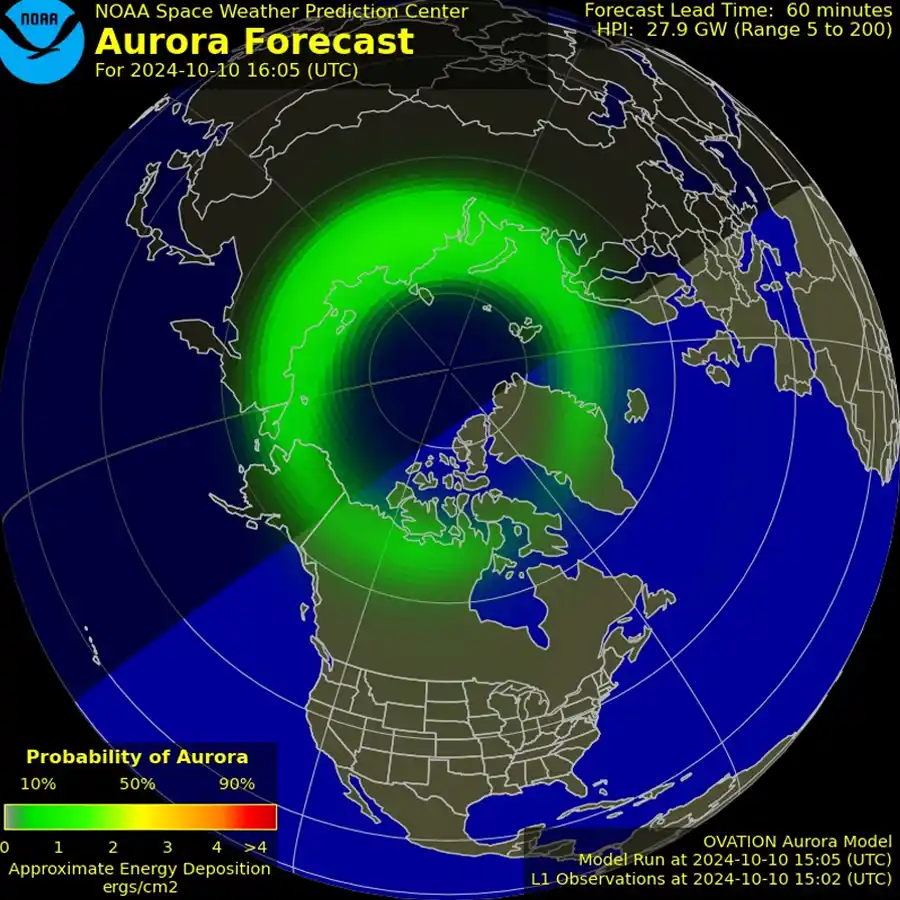
The National Oceanic and Atmospheric Administration (NOAA) has issued a geomagnetic storm alert/watch for October 10-11. The storm watch is a G4, which means severe. There will be no observing from the Nielsen Physics Building roof those evenings, so take this opportunity to drive away from campus and city lights to try to see, if they actually appear, the northern lights or aurora.

Some of you may have been fortunate to see the spectacular display that occurred in May. There are certainly no guarantees for this, but if you don’t take the opportunity to look, you most certainly won’t see anything. 

Use your cellphone to try to get pictures, even if you can’t see the northern lights with the naked eye. The camera in your cellphone is more sensitive to the red and green light we usually see when there are bright aurorae. Look northwest to northeast for the best chance to see aurora. During the May storm we were able to see aurora to the south as well. That is rare here. Start looking as soon as it’s dark for at least a couple of hours.

There are several state parks nearby you might consider driving to. Look up Tennessee State Parks for more info and directions.

Good luck!

October 10, 2024  |  Filed Under: Astronomy, Featured News, News

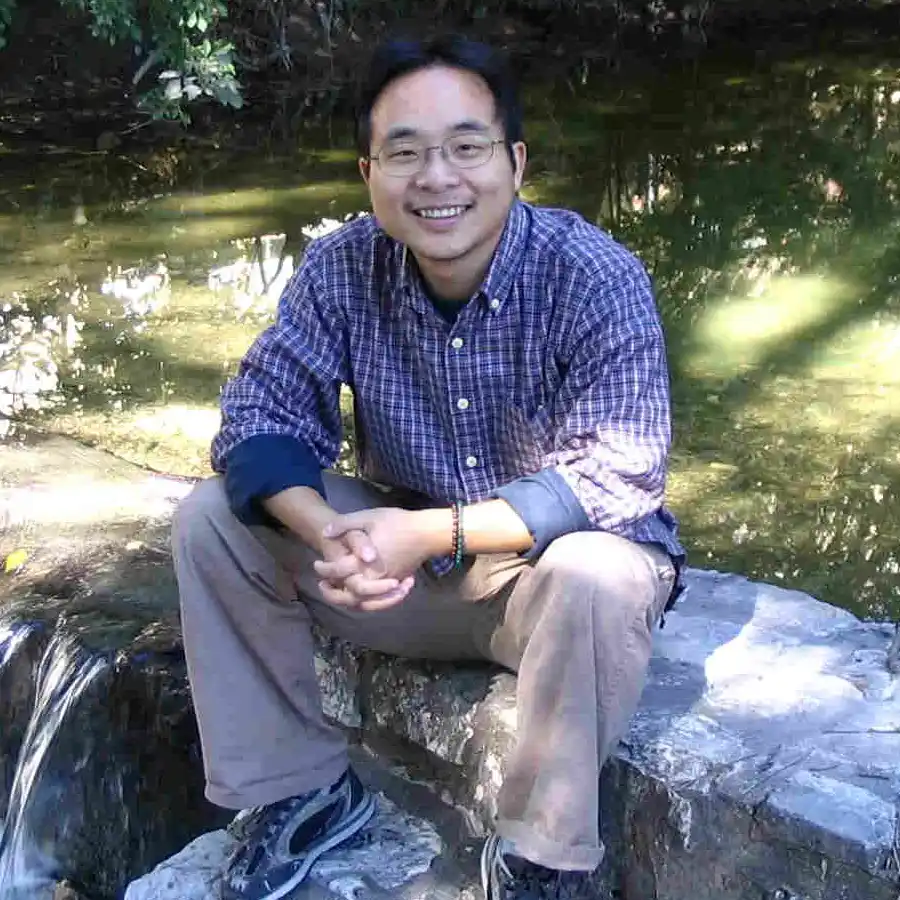
A photo of Haidong Zhou

Haidong Zhou Elected APS Fellow

October 9, 2024

A photo of Haidong Zhou

Haidong Zhou has a gift for navigating frustration, a skill that’s earned him election to the 2024 class of American Physical Society Fellows.

A Positive Spin on Frustrating Circumstances

Zhou, professor of physics, believes that technology’s future depends on the creation of new materials and the novel properties they offer. It’s an interest he developed as an undergraduate at the University of Science and Technology of China, where he worked with Professor Xiaoguang Li. That’s where he started studying manganites, materials that exhibit giant magnetoresistance—an effect that’s found a home in applications as varied as data storage, biosensors, and food safety. He continued those studies with his doctoral work at the University of Texas at Austin with Professor (and Nobel Laureate) John Goodenough.

It was his next stop, as a postdoc at the National High Magnetic Field Laboratory, where Zhou was introduced to geometrically frustrated magnets by his supervisor, Professor Chris Wiebe.

How can a magnet experience frustration? It has to do with electrons. Every electron has a spin. For materials whose atoms are arranged in a square lattice (kind of like a jungle gym), the electrons at each corner spin in alternating directions—up, down, up, down. That’s not the case for materials that have a lattice structure shaped like a triangle, where the electrons get frustrated because there’s always an odd spin out, so to speak.

“The idea is that in certain materials, the spins of the materials are arranged on a certain sublattice, such as three spins occupying a triangular lattice,” Zhou explained. “With such (a) lattice, the magnets tend to exhibit exotic magnetic properties related to strong spin fluctuations.”

Taking advantage of those exotic properties advances our understanding of how materials function, spurring the development of next-generation breakthroughs in fields like quantum computing.

Try, Fail, Succeed

Zhou, who joined the physics faculty in 2012, has been creating these magnets throughout his career. Atom by atom, he chooses the elements and grows the crystals that his colleagues study (at UT and elsewhere).

“We are extremely excited for Professor Zhou to receive this well-deserved honor from his peers,” said Adrian Del Maestro, professor and department head. “The groundbreaking quantum materials made in his lab are studied by researchers worldwide and could revolutionize future quantum technologies.”

In electing him a Fellow, the APS cited Zhou for his “outstanding contributions to the synthesis and understanding of frustrated magnetic materials.”

However, creating these magnets can itself be an exercise in frustration, even for an expert.

“The difficult part is the try and fail before you succeed,” Zhou said. “For each new sample, it takes time to get the right procedure to make it.”

Eventually, though, the payoff is worth it, even if the finished product is incredibly small.

“The best part of the work is to hold the crystals made in the lab, from millimeter size to centimeter size,” he said.

That dedication to research has won Zhou numerous honors. In 2014 he won a National Science Foundation Early Career Award and in 2017 UT’s College of Arts and Sciences presented him with an Award for Excellence in Research/Creative Achievement.

With this latest recognition, Zhou becomes the 11th APS Fellow on the current physics faculty and the department’s third elected APS Fellow in the past three years.

October 9, 2024  |  Filed Under: Condensed Matter, Featured News, News

Undergraduate physics major Lindsey Hessler

Managing Matter

October 8, 2024

Undergraduate physics major Lindsey Hessler

Imagination, quite literally, made Lindsey Hessler a Vol before she even started high school. Now a UT senior, she has won an assistantship from Jefferson Lab to support her research in nuclear physics.

It’s the Small Things in Life

Hessler said her interest in physics came about because she is “incredibly fascinated by the intricacies of the universe and understanding how the small things in life work.”

During COVID she spent hours on YouTube watching videos about stars, galaxies, energy—anything explaining the building blocks of our world and universe.

For nearly a year she’s been working with Professor Nadia Fomin and Assistant Professor Dien Nguyen as part of the nuclear physics research group. She was one of the department’s 2024 Summer Research Fellows and learned in August she had won a Jefferson Science Associates Minority/Female Undergraduate Research Assistantship.

The program supports minority or female undergraduates working on projects that are part of the Jefferson Lab research program or are directly related its scientific or engineering aspects. Situated in Virginia, this United States Department of Energy facility is a leader in accelerator science, dedicated to probing the particles and forces that comprise and govern the matter that makes up our world. With this award, Hessler will contribute to the lab’s scientific mission.

“This assistantship will cover a variety of projects,” she explained. “I will be working to collect data with a Helium-3 Polarization apparatus as well as developing a projection of runtime for upcoming experiments at CEBAF (the Continuous Electron Beam Accelerator Facility).”

Her physics studies are driven by a creative and curious worldview that began when she was still in middle school and ultimately brought her to Knoxville.

Solving Problems in the Lab and Industry

Hessler is from Germantown, Wisconsin, but early on her college die was cast in Tennessee orange.

“I chose UT because as a kid I was involved in a competition/club called Destination Imagination (DI),” she said. “The Global Finals were held at UT after the college semester ended, so I spent a week in the dorms at age 12 and fell in love with the campus, ambience, and culture in Knoxville. Ever since then I was determined to be a Volunteer.”

She explained that she began her UT studies as a management major but quickly discovered she had a knack for science.

“At this point I had a decent amount of business classes completed (so) I decided to add physics as a second major,” Hessler said. “I have loved learning two very different studies and have found that both educational paths teach me how to work through problems (and life) in very different but beneficial ways.”

Despite the demands of a double major in business administration (management) and physics, she’s on track academically and said that “ideally (she) will be graduating next December holding a diploma from the Haslam College of Business and UT’s College of Arts and Sciences.”

Her plans include going on to graduate school with a focus on nuclear physics, using the full advantage of her combined majors to design her career.

“I would love to work in the energy and/or defense industry and apply my physics degree as well as my BS in management to project management and operations,” she said.

From her first days as an imaginative kid visiting campus, Hessler has followed her passion and is headed for a promising next destination as a nuclear scientist.

October 8, 2024  |  Filed Under: Featured News, News, Nuclear

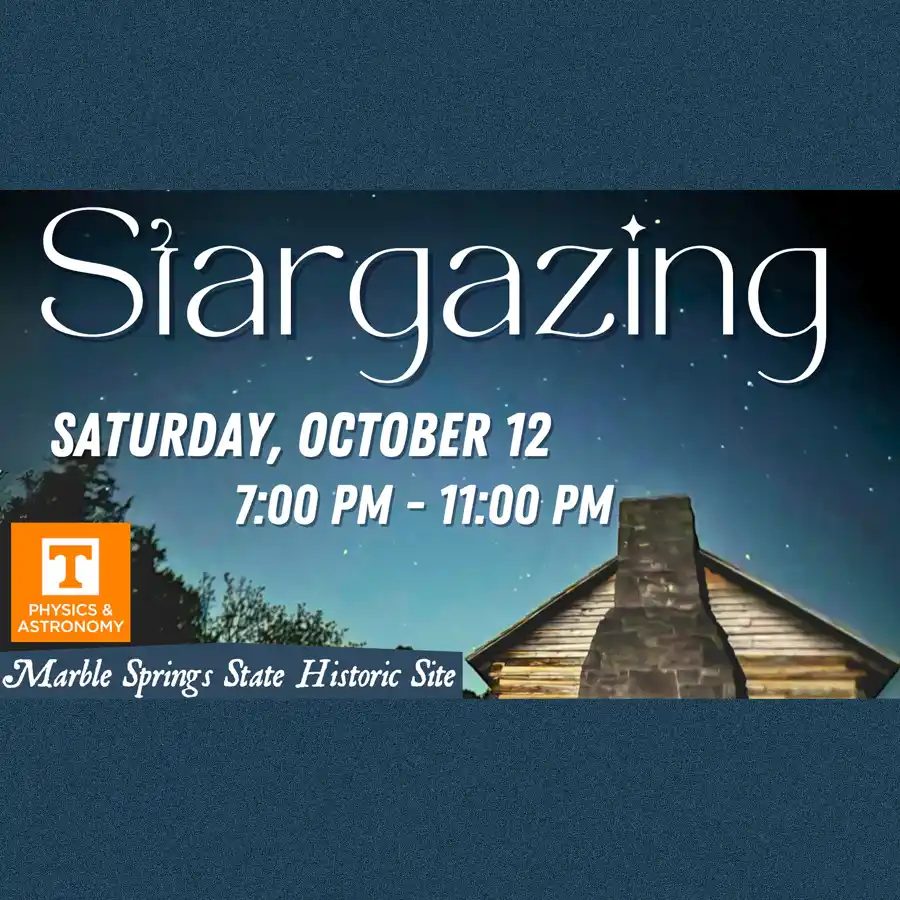
October 12 Stargazing at Marble Springs

Stargazing at Marble Springs

September 18, 2024

Join us on October 12th from 7:00 PM to 11:00 PM for a magical evening under the stars, hosted by our friends at the Marble Springs State Historic Site.

Come and explore the night sky through high-powered telescopes guided by UT’s expert astronomers. Discover constellations, planets, and other celestial wonders, and if we’re lucky, we might even catch a glimpse of a meteor shower!

Bring a blanket or lawn chair, your sense of wonder, and get ready for an evening of fun and learning. Whether you’re an astronomy buff or just curious, this event is the perfect way to connect with the universe.

This event is FREE and open to all ages. Don’t miss out on another chance to enjoy the stars at Marble Springs—see you there!

Event info: https://www.facebook.com/share/q1qAs93p3gRaHUdY/

September 18, 2024  |  Filed Under: Featured News, News, Uncategorized

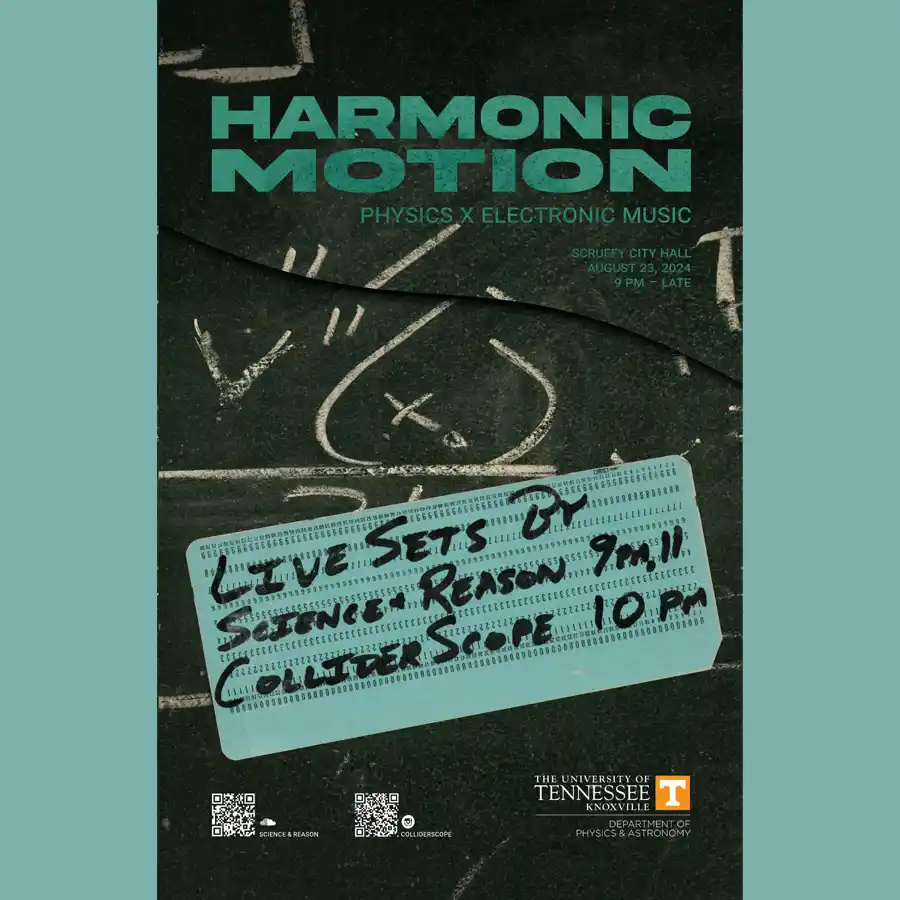
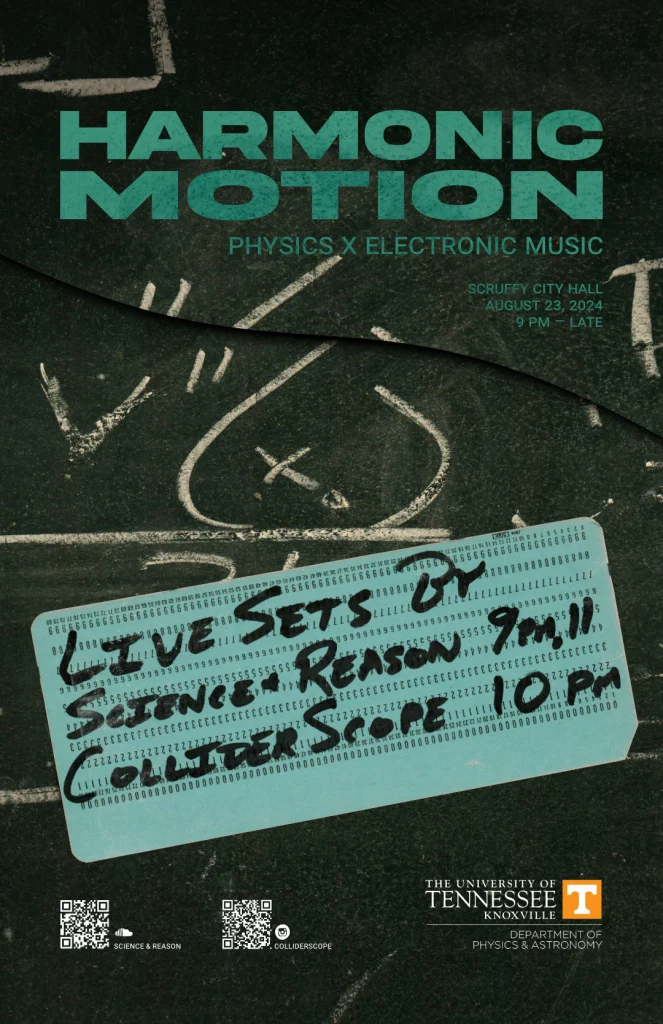
Event poster for Harmonic Motion Physic x Electronic Music

Harmonic Motion: Physics X Electronic Music

August 12, 2024

Event Poster for Harmonic Motion

If you’ve always wanted to dance in the glow of an oscilloscope, you’ll want to keep August 23 open! That’s when Assistant Professor Larry Lee and Bains Professor Steve Johnston bring their fusion of physics and electronic music to Scruffy City Hall.

Johnston kicks things off at 9 pm with his DJ mastery via Science & Reason, a mix of techno, dance, and house music sure to put everyone in motion. Lee picks up the beat at 10 pm with ColliderScope, where audio waveforms paint images from the scientific world of CERN and sound waves dance across oscilloscope screens. (These humble lab workhouses typically display electrical signals and fluctuations, but here they show off their fun side and illuminate the dance floor.) Johnston will wrap up this physics + music celebration with a second set beginning at 11 pm.

Scruffy City Hall is located at 32 Market Square in Downtown Knoxville and there are lots of parking options. Please note the venue is for patrons age 21 or older.

Johnston and Lee brought energy and motion to music last fall when Harmonic Motion played a starring role in Quantum Canvases, a celebration of arts, humanities, and physics and how they intersect.

Make plans now to catch this show!

August 12, 2024  |  Filed Under: Featured News, News

Graphic for Future Polarized Target Development Meeting at UT, August 2024

UT Future Polarized Target Development

July 15, 2024

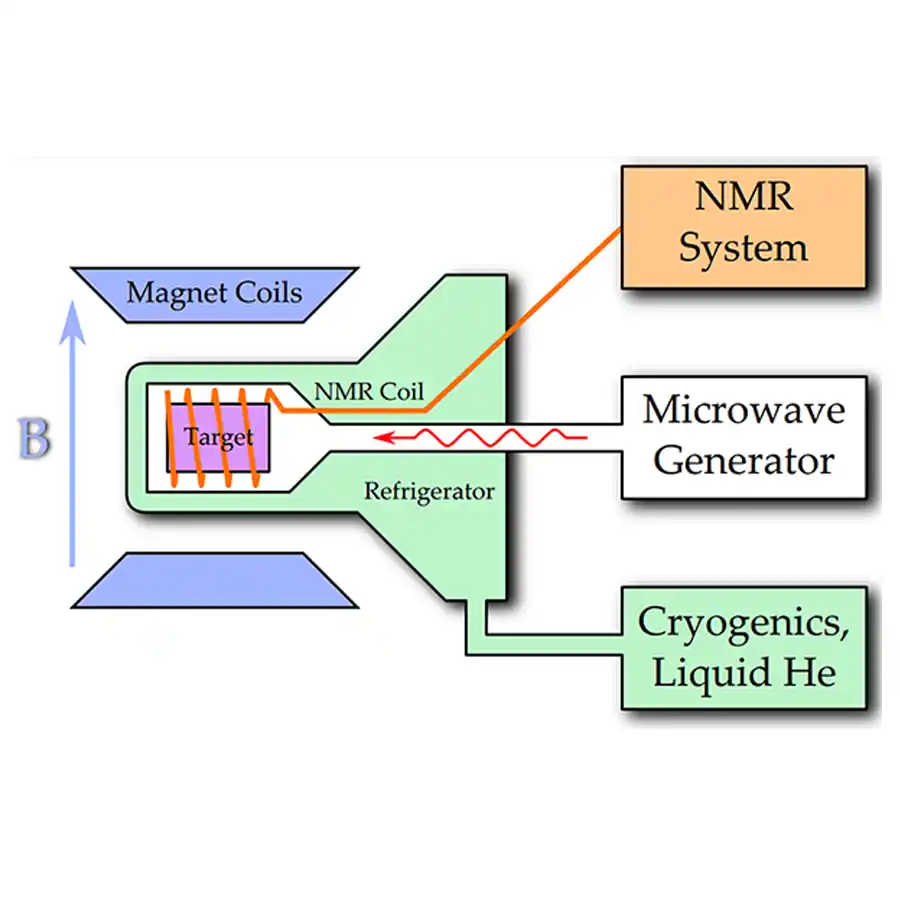
(UT/Jlab/ORNL Invited Meeting) | August 12-13, 2024 | Knoxville, Tennessee

Invited Speakers and Topics:

  • Josh Pierce (ORNL): Overview of Decomississioned ORNL System Capabilities
  • Mark Dalton (JLab): (E12-20-011) Measurement of the High-Energy Contribution to the GDH Sum
  • James Maxwell (JLab): Measuring Polarization using NMR
  • Chris Keith (JLab): DNP Spin Relaxation Studies at Low Temperature
  • Nadia Fomin (UT): UT DNP Future Development Efforts

Organized by N. Fomin

Graphic for Future Polarized Target Development Meeting at UT

July 15, 2024  |  Filed Under: Featured News, News, Nuclear

George Siopsis and Joon Sue Lee

Alumni Association Honors Lee and Siopsis for Teaching and Distinguished Service

July 12, 2024

Joon Sue Lee with Mike McKay and Brian Winbigler at UTAA Faculty Awards Ceremony
Joon Sue Lee (center) with Mike McKay (UTAA) and Brian Winbigler (UTAA Board of Governors)
George Siopsis with Mike McKay and Brian Winbigler at UTAA Faculty Awards Ceremony
George Siopsis (center) with Mike McKay (UTAA) and Brian Winbigler (UTAA Board of Governors)

Joon Sue Lee and George Siopsis joined UT nearly three decades apart, but their shared commitment to the university’s mission transcends generations. The University of Tennessee Alumni Association (UTAA) has honored that dedication by recognizing Lee with an Outstanding Teacher Award and Siopsis with a Distinguished Service Professorship.

“The department was delighted to learn about the well-deserved alumni recognitions for Assistant Professor Joon Sue Lee and Professor George Siopsis, who both exemplify our training and knowledge-creation mission,” said Adrian Del Maestro, professor and department head. “Their passion for teaching and research in quantum technologies has played a large role in UT’s growing national and international prominence in this exciting area crucial for U.S. competitiveness.” 

Developing Self-Reliant Thinkers

This is the second teaching honor this year for Lee, an assistant professor. UT’s College of Arts and Sciences presented him with an Excellence in Teaching Award at the annual faculty convocation. Since joining the physics faculty in 2020, Lee has taught undergraduates enrolled in Thermal Physics, Electricity and Magnetism, Electronics Lab, and Modern Physics Lab. His approach—especially to teaching labs—equips students with an understanding of physics fundamentals as well as the hands-on experience they need for careers in academe, technology, and industry.

“What has surprised me most about teaching is the impact that a collaborative and supportive learning environment can have on students’ engagement and development,” he said. “I have seen how nurturing critical thinking and fostering a dynamic partnership can transform the learning experience, and witnessing this has been greatly rewarding.”

Lee’s teaching isn’t limited to the classroom. His research centers on developing quantum materials and devices. Students in his group learn from and contribute to the work.

“What I like best about teaching is the opportunity to guide students as they navigate complex concepts and develop into self-reliant thinkers,” he said. “Mentoring students in my research lab and seeing them grow into independent researchers through the continuous exchange of ideas and collaborative processes is deeply fulfilling.” 

Because the UTAA awardees are selected by a committee comprising alumni, Student Alumni Associates, and prior honorees, Lee and Siopsis were chosen in part by their peers, which Lee said is profoundly meaningful.

“The acknowledgement from my fellow faculty members, who understand the complexities and challenges of teaching, affirms the dedication and effort I put into creating an effective learning environment,” he said. “Additionally, being chosen by UT graduates highlights the impact of my teaching, extending beyond the classroom and into the students’ lives as alumni.”

Nurturing the Next Generation

For Siopsis, the UTAA Distinguished Service Professorship has encouraged him to reflect on his many accomplishments while thinking about what comes next.

“Receiving this distinguished faculty award makes me feel deeply honored and appreciated,” he said. “It’s a mix of gratitude, validation, pride, humility, motivation, and a sense of responsibility. This recognition not only celebrates past achievements but also inspires me to continue making meaningful contributions to my field, the broader academic community, and the UT family.”

Siopsis came to UT Physics in 1991 and has balanced teaching, research, and service ever since. He’s taught courses from the fundamental (Elements of Physics) to the complex (Quantum Field Theory). He’s served as director of the Governor’s School for the Sciences and Engineering. A theoretical particle physicist, he specializes in quantum computing and networking, which heavily influences his current priorities. He’s built strong collaborations with partners from other universities, industry, and national laboratories with two aims in mind: developing quantum network applications and drawing on this emerging field to foster economic and technological growth in Appalachia.

Of all his endeavors, Siopsis said he is most proud of his leadership role in the Appalachian Quantum Initiative (AQI) and his work to bring UT to the forefront of emerging quantum technology. The AQI connects university researchers in the Southeast with industry partners to develop quantum software for scientific and engineering applications. This includes a quantum curriculum and workforce development component in partnership with other universities, industry, and national labs. In that vein, he and colleagues from the University of Georgia won $3M from the National Science Foundation to launch an interdisciplinary training program for graduate students. Siopsis develops and teaches classes and seminars in quantum technologies and is currently supervising or co-supervising the work of 11 graduate students.

This, he said, is part of his dedication to “nurturing the next generation of scientists in the emerging quantum field.”

Siopsis also draws on his expertise to lead a university-national laboratory project to develop a quantum regional network and pointed out that the Knoxville Chamber included the installation of a quantum network from Oak Ridge National Laboratory to UT as a goal in their 2030 Protocol plan.

Siopsis and Lee were recognized with their fellow awardees at a Faculty Awards Dinner on May 31. The UTAA presented 11 Outstanding Teacher Awards, two Public Service Awards, and six Distinguished Service Professorships this year, honoring outstanding faculty from across the University of Tennessee family. The association serves more than 445,000 graduates of the UT system through networking opportunities, legislative advocacy, career services, and alumni benefits, among other initiatives.

July 12, 2024  |  Filed Under: Condensed Matter, Featured News, News, Particle

A photo of UT Physics graduate student Ian Cox.

Knowledge (Gained from) Gaps

July 3, 2024

A persistent shell gap, an impressive instrumental performance, and important student contributions all lead to another PRL for UT’s nuclear physicists

A photo of UT Physics graduate student Ian Cox.
Ian Cox
A photo of Robert Grzywacz
Robert Grzywacz

Ian Cox is proof that you don’t always have to travel far to go a long way. He grew up in Knoxville, graduated from Hardin Valley Academy, and came to UT on a physics scholarship. Now he’s finishing a PhD in nuclear physics with Professor Robert Grzywacz and is first author on a Physical Review Letters publication detailing a new approach to understanding exotic nuclei.  

A Touch of Magic

Researchers from 13 universities and five national laboratories collaborated on this investigation at the Facility for Rare Isotope Beams (FRIB), a premiere research hub at Michigan State University. The nucleus is the heart of every atom, and since 2022 FRIB has produced hundreds of rare isotopes so that scientists can unearth how the most exotic nuclei hold together or decay. FRIB explores this unknown territory by creating extremely imbalanced and short-lived assemblies of protons and neutrons, helping physicists gain a deeper understanding of these quantum mechanical systems. The more complete that picture, the greater the likelihood scientists can predict how nuclei form, what their properties are, and how those properties can be of use. In this case, the starring isotope was chlorine-45. With 17 protons and 28 neutrons, it has a touch of what physicists categorize as magic.

Protons and neutrons in a nucleus are known collectively as nucleons and they’re arranged in shells. When they appear in certain numbers (2, 8, 20, 28, 50, 82, and 126), scientists call them “magic” because they fill complete shells and make the nucleus more stable (although that may be a lifetime of only a few milliseconds). Magic numbers are like sentinels in what’s known as the valley of stability. A proton or neutron count with a magic number (as in chlorine-45) resides at the border, where on one side you have nucleons bound strongly enough to hold the nucleus together and on the other their imbalance causes it to fall apart. This isn’t always straightforward, however. Magic numbers change for nuclei rich with neutrons, and scientists want to know how that alters the shell structure.

In this experiment the scientific team found that the beta decay of chlorine-45 converts one of its 28 neutrons to one of the 18 protons in argon-45. This lies outside the magic threshold of a 20-proton shell, creating a particularly unstable, unbound system. Grzywacz said “the experiment provided a unique method to study how the protons behave in a very neutron-rich nucleus. Understanding the persistence of nuclear shell gaps is crucial to describe the properties and formation of atomic nuclei.”

A Nuclear Symphony

A combined arrangement of innovative tools, talent, and effort made this work successful.

“This was an important experiment because we tried a lot of new things,” Grzywacz said.

His team was particularly pleased to use the full capabilities of the FRIB Decay Station Initiator (FDSi) for the first time. Grzywacz is the spokesperson for the FDSi, a years-long collaboration that designed, built, and implemented a modular combination of beta, neutron, and gamma-ray detectors to measure the decay of the most exotic nuclei produced at FRIB.

The FDSi played a crucial role in determining the complete decay pattern of chlorine-45. Cox identified the isotopes in this experiment as interesting candidates to show what the decay station could do. A key element was the two-focal plane detection system, which allows for simultaneous measurements and ultimately a combined and consistent data analysis that wouldn’t be possible with a single multi-detector system.

This is what Grzywacz called a scientific “symphony,” where “the instruments combined produce a different result than if played separately and individually.”

That metaphor extends to the scientists involved in the experiment.

Cox and Zhengyu Xu (a UT postdoctoral research associate) helped install FDSi at FRIB from the ground up. They’ve supported every FDSi experiment since, and led the analysis on the work published in PRL. Wei Jia Ong of Lawrence Livermore National Laboratory (LLNL) directed the measurement. Her interest was to measure decay of another isotope, calcium-54; this experiment was a prelude to the 2024 measurement.

Navigating multiple instruments and working with a large team were part of the learning experience for Cox.

“Working at FRIB on FDSi, I have learned a great deal about the complex nature of radioactive ion beam facilities and specifically the challenges which come with combining multiple different detector systems for a single experiment,” he said. “The varying types of detectors require a large collaboration of researchers, each with their own expertise to handle the individual detector systems, while also having to work together to ensure a successful experiment.”

Cox explained that frustrations could arise while everyone was trying to optimize their system in a limited amount of time. However, he found that having a sizable collaboration was helpful because in the end, working together, smaller groups could focus on individual detectors. Sharing the responsibility meant the science moved forward more seamlessly. This is the fourth publication based on FDSi findings and the third published in PRL.

To See the World, Stay Close to Home

Cox stayed in Tennessee for his education and ended up travelling far and wide. In addition to FRIB, he’s worked at the Radioactive Isotope Beam Factory at RIKEN in Japan and presented his research at conferences all over the world. He arrived on campus with a William Bugg Physics Scholarship and a spot in the Chancellor’s Honors Program. Over his undergraduate and graduate studies, he won the department’s Robert Talley Award for Outstanding Undergraduate Research, secured a Graduate Advancement and Training Education Fellowship from the UT-Oak Ridge Innovation Institute (UT-ORII), and won the department’s Paul Stelson Fellowship for Professional Promise in recognition of his outstanding research contributions as well as his departmental citizenship.

He plans to finish his PhD this summer and work in either the private sector or at a national laboratory. Whatever comes next, his time at UT has prepared him well, especially with the nuclear research group collaborating at laboratories in different states and countries.

“I have really enjoyed both travelling all over the world, for participating in experiments and presenting results, and the ability to meet many different researchers from all corners of the globe,” Cox said. “I believe this will greatly help me in my career, as I have been able to form many connections and establish myself as a young scientist.”

July 3, 2024  |  Filed Under: Featured News, News, Nuclear

Collage of graduate students who won national and university awards in spring 2024

Four UT Physics Students Win DOE SCGSR Support

June 27, 2024

Collage of graduate students who won national and university awards in spring 2024
James Christie, Love Christie, Andy Tanjaroon Ly, Jinu Thomas, Charles Bell, and Colter Richardson

UT’s campus may be a little quieter during summer, but that doesn’t mean science stops. With help from the US Department of Energy, our graduate students are exploring exotic behavior in materials, measuring why carbon doesn’t fly apart, and testing the limits of the Standard Model of Physics. James Christie, Love Christie, Andy Tanjaroon Ly, and Jinu Thomas are among 86 students who learned this spring their thesis research will be supported by the DOE Office of Science Graduate Student Research (SCGSR) program.

Teaming students with state-of-the-art facilities at national laboratories, the SCGSR effort develops a new generation of scientists to lead innovation and discovery critical to the agency’s mission. While the students’ research projects may differ, the overall goal is the same: to learn more about the how nature works at a fundamental level.

Tanjaroon Ly and Thomas are both working with Professor Steve Johnston to investigate the inner workings of materials.

Tanjaroon Ly will develop computational models to study exotic superconducting states, where electric current moves through a material without losing energy. Working at Oak Ridge National Laboratory (ORNL), he’ll use Monte Carlo simulations to carry out his research. Named for the famed casino, these calculations are a powerful tool using random sampling and probability to generate possible mathematical simulations for new states.

Thomas is working with quantum materials—those whose properties can’t be described by the classical laws of physics. He’s focusing on out-of-equilibrium systems that can drive novel phenomena, using time-resolved resonant inelastic X-ray scattering (tr-RIXS) to explore that behavior. Under Johnston’s supervision, Thomas will work with Dr. Mark Dean at Brookhaven National Laboratory.

While Tanjaroon Ly and Thomas deepen our understanding of materials, James and Love Christie are studying the carbon present in our cells and the model describing the building blocks of the universe.

Working with Assistant Professor Miguel Madurga at ORNL, James Christie is taking a closer look at the Hoyle state, the source of most of the carbon on Earth (including in humans). In this state, excited carbon can de-excite and turn into ground state carbon-12, which makes up nearly 99 percent of the carbon on our planet. His research focusses on measuring how often that transition happens instead of the excited carbon simply flying apart.

Love Christie will also be at ORNL, working with Professor Nadia Fomin on uncertainty studies for the Nab experiment. Using the Spallation Neutron Source’s powerful neutron beam, the experiment will provide precise testing of neutron decay parameters predicted by the Standard Model of Physics, the framework for the particles and forces foundational to our understanding of the universe.

The Road to Rocky Top

What brought these four students to Knoxville is in many ways a combination of UT’s strengths: the chance to be part of a strong research program at a large university that’s also close to home.

Tanjaroon Ly is from St. Petersburg, Florida, and earned his bachelor’s degree in physics and math at the University of Florida.

“I decided to attend UT based on the strength and diversity of the condensed matter research,” he said, noting the proximity of ORNL and the opportunity for collaborations there.

Thomas is originally from Kochi, Kerala, in southern India. He moved to the United States in 2009 and spent most of his time in Illinois, Indiana, and Wisconsin before moving to Knoxville for graduate school. After graduating from the University of Illinois at Urbana-Champaign with a degree in engineering physics, he said “visiting UT gave me the ‘big’ school feel I had as an undergrad. Having been away from physics for four years, the program here felt better suited to help me learn. Plus, it’s beautiful here in East Tennessee.”

For James Christie and Love Christie, who hail from Campbellsville and Richmond Kentucky, respectively, family made the difference. Both graduated from Eastern Kentucky University (James in physics with minors in chemistry and math; Love with a dual degree in physics and math).

Coming to UT meant “I stayed close to home, which is really nice,” James Christie said. “My family’s really important to me, so being close to home is good.”

Love Christie saw twin benefits in UT’s graduate physics program.

“It was the best option for following my passion and staying close to my family simultaneously,” she said.

Success Begets Success

Since 2016, 13 UT physics students have won SCGSR funding to help them untangle scientific questions as they work toward their graduate degrees. These latest awards are among multiple honors the department’s students won this spring, including a prestigious National Science Foundation Graduate Research Fellowship for Charles Bell, who finished an undergraduate degree in May and will begin graduate studies at the University of Michigan this fall. A US Navy veteran, he worked with Assistant Professor Larry Lee in the Compact Muon Solenoid research group, where he helped create a visualization for a possible muon collider detector. The artwork made the cover of Science Magazine.

Graduate Student Colter Richardson also won support through the UT-Oak Ridge Innovation Institute Graduate Advancement, Training and Education (GATE) fellowship program. He’ll work with Professor Anthony Mezzacappa on Bridging Data Analysis and Physical Modeling of Core-Collapse Supernovae. He’s the eighth physics graduate student since 2020 to secure GATE funding.

Learn more about our graduate program in physics.

June 27, 2024  |  Filed Under: Featured News, News, Uncategorized

  • « Previous Page
  • 1
  • …
  • 5
  • 6
  • 7
  • 8
  • 9
  • …
  • 11
  • Next Page »

Recent Posts

  • Public Lecture on Quantum Mechanics
  • Brandi Skipworth Wins GATE Fellowship
  • Research Rock Stars: Thomas Papenbrock Explores the Forces at the Core of Matter
  • Rules for Nuclear Couples
  • Reconciling Fundamental Physics

Physics & Astronomy

College of Arts and Sciences

401 Nielsen Physics Building
1408 Circle Drive
Knoxville TN 37996-1200
Phone: 865-974-3342
Email: physics@utk.edu

Facebook Icon    X Icon

The University of Tennessee, Knoxville
Knoxville, Tennessee 37996
865-974-1000

The flagship campus of the University of Tennessee System and partner in the Tennessee Transfer Pathway.

ADA Privacy Safety Title IX