• Request Info
  • Visit
  • Apply
  • Give
  • Request Info
  • Visit
  • Apply
  • Give

Search

A-Z Index Map

Physics & Astronomy

  • About
    • Honors
    • Administration
    • Faculty Resources
    • Nielsen Spaces
  • Research
    • Research Partners & Facilities
    • Condensed Matter
    • Particle / HEP
    • Biophysics / Soft Matter
    • Nuclear / Astrophysics
    • Quantum Information
  • People
    • Faculty
    • Staff
    • Joint Research & Adjunct Faculty
    • Post Docs
    • Graduate Students
  • Undergraduate
    • Why Physics
    • What Our Grads Do
    • Career Resources
    • Degree Programs
    • Research
    • Scholarships
    • Student Organizations
  • Graduate
    • Join Our Program
    • FAQs
    • Fellowships & Assistantships
    • Bains Fellowship
    • Where Our Grads Go
    • Research
    • Resources
  • News & Events
    • Newsletters
    • News
    • Colloquia Series
    • Events
    • In the Media
  • Outreach
    • Astronomy Outreach
    • Cool Things in the Sky this Month
    • Physics Outreach & High School Lecture Series
  • Alumni
    • Distinguished Alumni Award
    • Giving Opportunities
    • Share Your News
A banner showing a model of an atom and elementary particles

News

Nuclear

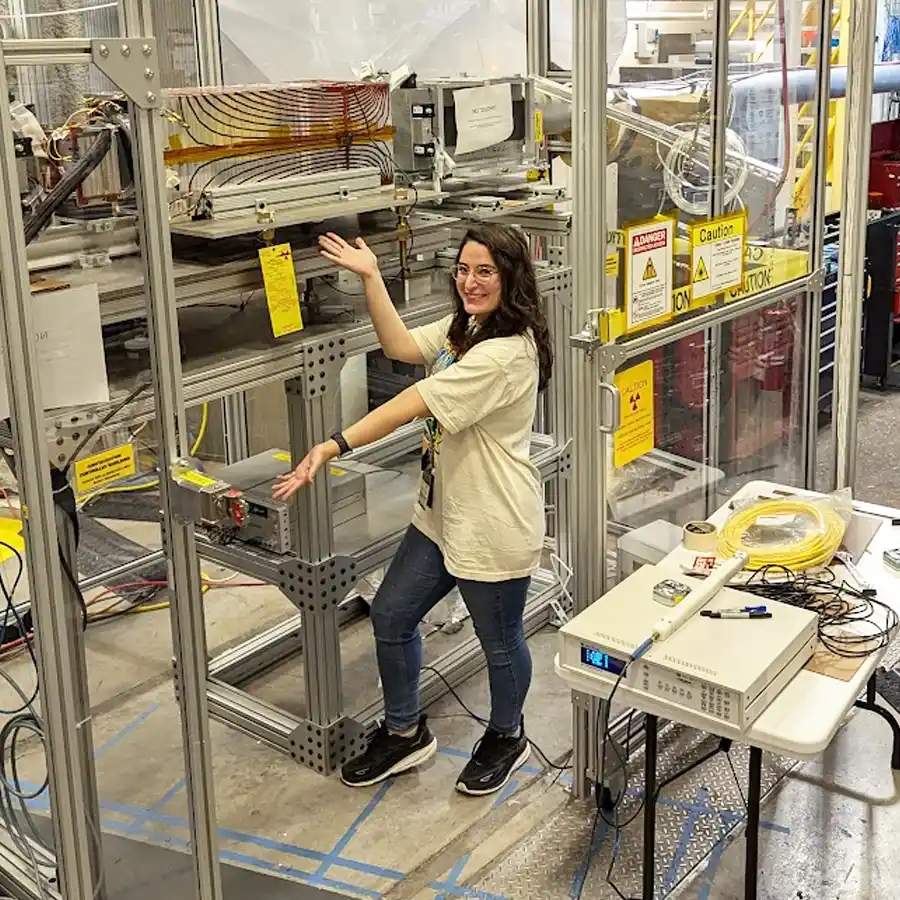
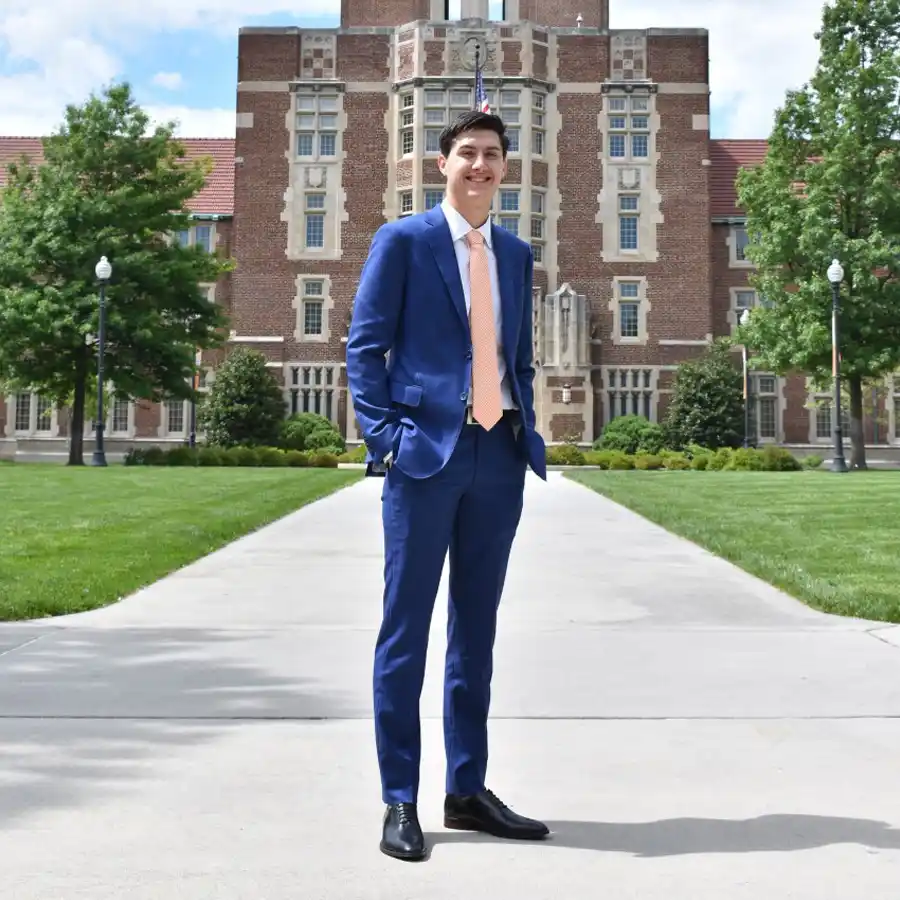
Undergraduate physics major Lindsey Hessler

Managing Matter

October 8, 2024

Undergraduate physics major Lindsey Hessler

Imagination, quite literally, made Lindsey Hessler a Vol before she even started high school. Now a UT senior, she has won an assistantship from Jefferson Lab to support her research in nuclear physics.

It’s the Small Things in Life

Hessler said her interest in physics came about because she is “incredibly fascinated by the intricacies of the universe and understanding how the small things in life work.”

During COVID she spent hours on YouTube watching videos about stars, galaxies, energy—anything explaining the building blocks of our world and universe.

For nearly a year she’s been working with Professor Nadia Fomin and Assistant Professor Dien Nguyen as part of the nuclear physics research group. She was one of the department’s 2024 Summer Research Fellows and learned in August she had won a Jefferson Science Associates Minority/Female Undergraduate Research Assistantship.

The program supports minority or female undergraduates working on projects that are part of the Jefferson Lab research program or are directly related its scientific or engineering aspects. Situated in Virginia, this United States Department of Energy facility is a leader in accelerator science, dedicated to probing the particles and forces that comprise and govern the matter that makes up our world. With this award, Hessler will contribute to the lab’s scientific mission.

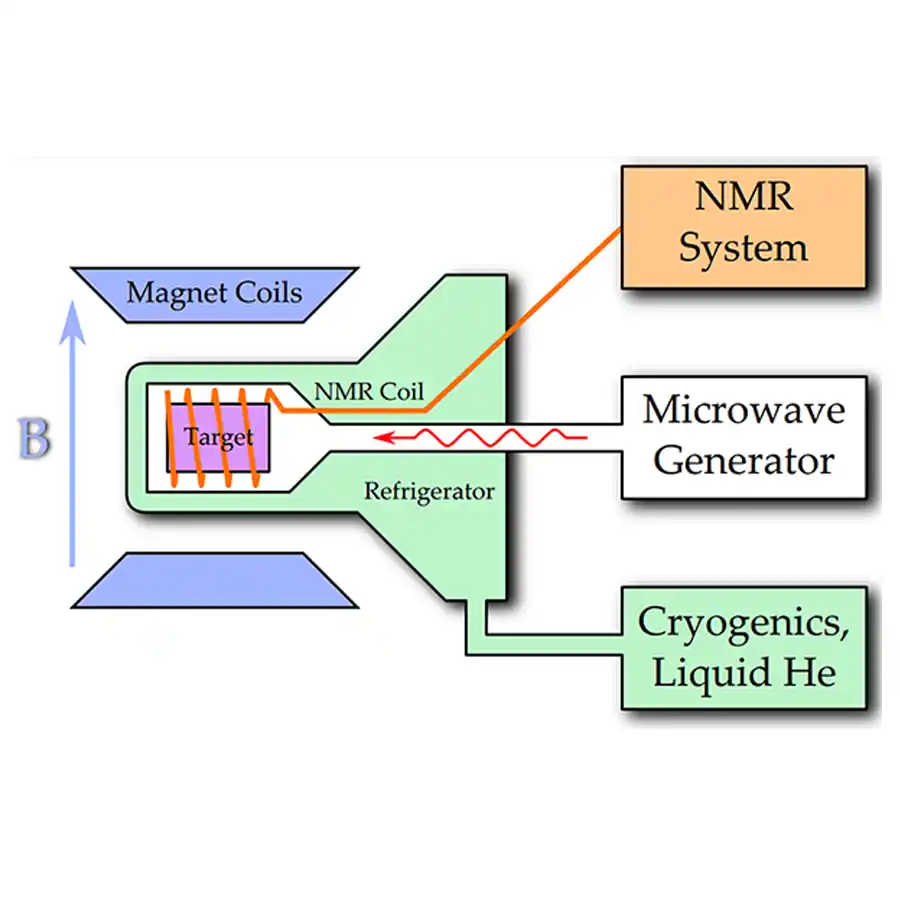
“This assistantship will cover a variety of projects,” she explained. “I will be working to collect data with a Helium-3 Polarization apparatus as well as developing a projection of runtime for upcoming experiments at CEBAF (the Continuous Electron Beam Accelerator Facility).”

Her physics studies are driven by a creative and curious worldview that began when she was still in middle school and ultimately brought her to Knoxville.

Solving Problems in the Lab and Industry

Hessler is from Germantown, Wisconsin, but early on her college die was cast in Tennessee orange.

“I chose UT because as a kid I was involved in a competition/club called Destination Imagination (DI),” she said. “The Global Finals were held at UT after the college semester ended, so I spent a week in the dorms at age 12 and fell in love with the campus, ambience, and culture in Knoxville. Ever since then I was determined to be a Volunteer.”

She explained that she began her UT studies as a management major but quickly discovered she had a knack for science.

“At this point I had a decent amount of business classes completed (so) I decided to add physics as a second major,” Hessler said. “I have loved learning two very different studies and have found that both educational paths teach me how to work through problems (and life) in very different but beneficial ways.”

Despite the demands of a double major in business administration (management) and physics, she’s on track academically and said that “ideally (she) will be graduating next December holding a diploma from the Haslam College of Business and UT’s College of Arts and Sciences.”

Her plans include going on to graduate school with a focus on nuclear physics, using the full advantage of her combined majors to design her career.

“I would love to work in the energy and/or defense industry and apply my physics degree as well as my BS in management to project management and operations,” she said.

From her first days as an imaginative kid visiting campus, Hessler has followed her passion and is headed for a promising next destination as a nuclear scientist.

October 8, 2024  |  Filed Under: Featured News, News, Nuclear

Graphic for Future Polarized Target Development Meeting at UT, August 2024

UT Future Polarized Target Development

July 15, 2024

(UT/Jlab/ORNL Invited Meeting) | August 12-13, 2024 | Knoxville, Tennessee

Invited Speakers and Topics:

  • Josh Pierce (ORNL): Overview of Decomississioned ORNL System Capabilities
  • Mark Dalton (JLab): (E12-20-011) Measurement of the High-Energy Contribution to the GDH Sum
  • James Maxwell (JLab): Measuring Polarization using NMR
  • Chris Keith (JLab): DNP Spin Relaxation Studies at Low Temperature
  • Nadia Fomin (UT): UT DNP Future Development Efforts

Organized by N. Fomin

Graphic for Future Polarized Target Development Meeting at UT

July 15, 2024  |  Filed Under: Featured News, News, Nuclear

A photo of UT Physics graduate student Ian Cox.

Knowledge (Gained from) Gaps

July 3, 2024

A persistent shell gap, an impressive instrumental performance, and important student contributions all lead to another PRL for UT’s nuclear physicists

A photo of UT Physics graduate student Ian Cox.
Ian Cox
A photo of Robert Grzywacz
Robert Grzywacz

Ian Cox is proof that you don’t always have to travel far to go a long way. He grew up in Knoxville, graduated from Hardin Valley Academy, and came to UT on a physics scholarship. Now he’s finishing a PhD in nuclear physics with Professor Robert Grzywacz and is first author on a Physical Review Letters publication detailing a new approach to understanding exotic nuclei.  

A Touch of Magic

Researchers from 13 universities and five national laboratories collaborated on this investigation at the Facility for Rare Isotope Beams (FRIB), a premiere research hub at Michigan State University. The nucleus is the heart of every atom, and since 2022 FRIB has produced hundreds of rare isotopes so that scientists can unearth how the most exotic nuclei hold together or decay. FRIB explores this unknown territory by creating extremely imbalanced and short-lived assemblies of protons and neutrons, helping physicists gain a deeper understanding of these quantum mechanical systems. The more complete that picture, the greater the likelihood scientists can predict how nuclei form, what their properties are, and how those properties can be of use. In this case, the starring isotope was chlorine-45. With 17 protons and 28 neutrons, it has a touch of what physicists categorize as magic.

Protons and neutrons in a nucleus are known collectively as nucleons and they’re arranged in shells. When they appear in certain numbers (2, 8, 20, 28, 50, 82, and 126), scientists call them “magic” because they fill complete shells and make the nucleus more stable (although that may be a lifetime of only a few milliseconds). Magic numbers are like sentinels in what’s known as the valley of stability. A proton or neutron count with a magic number (as in chlorine-45) resides at the border, where on one side you have nucleons bound strongly enough to hold the nucleus together and on the other their imbalance causes it to fall apart. This isn’t always straightforward, however. Magic numbers change for nuclei rich with neutrons, and scientists want to know how that alters the shell structure.

In this experiment the scientific team found that the beta decay of chlorine-45 converts one of its 28 neutrons to one of the 18 protons in argon-45. This lies outside the magic threshold of a 20-proton shell, creating a particularly unstable, unbound system. Grzywacz said “the experiment provided a unique method to study how the protons behave in a very neutron-rich nucleus. Understanding the persistence of nuclear shell gaps is crucial to describe the properties and formation of atomic nuclei.”

A Nuclear Symphony

A combined arrangement of innovative tools, talent, and effort made this work successful.

“This was an important experiment because we tried a lot of new things,” Grzywacz said.

His team was particularly pleased to use the full capabilities of the FRIB Decay Station Initiator (FDSi) for the first time. Grzywacz is the spokesperson for the FDSi, a years-long collaboration that designed, built, and implemented a modular combination of beta, neutron, and gamma-ray detectors to measure the decay of the most exotic nuclei produced at FRIB.

The FDSi played a crucial role in determining the complete decay pattern of chlorine-45. Cox identified the isotopes in this experiment as interesting candidates to show what the decay station could do. A key element was the two-focal plane detection system, which allows for simultaneous measurements and ultimately a combined and consistent data analysis that wouldn’t be possible with a single multi-detector system.

This is what Grzywacz called a scientific “symphony,” where “the instruments combined produce a different result than if played separately and individually.”

That metaphor extends to the scientists involved in the experiment.

Cox and Zhengyu Xu (a UT postdoctoral research associate) helped install FDSi at FRIB from the ground up. They’ve supported every FDSi experiment since, and led the analysis on the work published in PRL. Wei Jia Ong of Lawrence Livermore National Laboratory (LLNL) directed the measurement. Her interest was to measure decay of another isotope, calcium-54; this experiment was a prelude to the 2024 measurement.

Navigating multiple instruments and working with a large team were part of the learning experience for Cox.

“Working at FRIB on FDSi, I have learned a great deal about the complex nature of radioactive ion beam facilities and specifically the challenges which come with combining multiple different detector systems for a single experiment,” he said. “The varying types of detectors require a large collaboration of researchers, each with their own expertise to handle the individual detector systems, while also having to work together to ensure a successful experiment.”

Cox explained that frustrations could arise while everyone was trying to optimize their system in a limited amount of time. However, he found that having a sizable collaboration was helpful because in the end, working together, smaller groups could focus on individual detectors. Sharing the responsibility meant the science moved forward more seamlessly. This is the fourth publication based on FDSi findings and the third published in PRL.

To See the World, Stay Close to Home

Cox stayed in Tennessee for his education and ended up travelling far and wide. In addition to FRIB, he’s worked at the Radioactive Isotope Beam Factory at RIKEN in Japan and presented his research at conferences all over the world. He arrived on campus with a William Bugg Physics Scholarship and a spot in the Chancellor’s Honors Program. Over his undergraduate and graduate studies, he won the department’s Robert Talley Award for Outstanding Undergraduate Research, secured a Graduate Advancement and Training Education Fellowship from the UT-Oak Ridge Innovation Institute (UT-ORII), and won the department’s Paul Stelson Fellowship for Professional Promise in recognition of his outstanding research contributions as well as his departmental citizenship.

He plans to finish his PhD this summer and work in either the private sector or at a national laboratory. Whatever comes next, his time at UT has prepared him well, especially with the nuclear research group collaborating at laboratories in different states and countries.

“I have really enjoyed both travelling all over the world, for participating in experiments and presenting results, and the ability to meet many different researchers from all corners of the globe,” Cox said. “I believe this will greatly help me in my career, as I have been able to form many connections and establish myself as a young scientist.”

July 3, 2024  |  Filed Under: Featured News, News, Nuclear

A photo of Anthony Mezzacappa

Anthony Mezzacappa Elected AAAS Fellow

April 19, 2024

A photo of Anthony Mezzacappa
Mezzacappa

Mother Nature keeps moving the goalposts for Anthony Mezzacappa and he wouldn’t have it any other way. His years of dedication to computational and theoretical astrophysics research, even as the landscape shifts, have earned him election as a Fellow of the American Association for the Advancement of Science (AAAS).

The AAAS Council bestows this honor on members whose “efforts on behalf of the advancement of science, or its applications, are scientifically or socially distinguished.”

Mezzacappa is the Newton W. and Wilma C. Thomas Chair in Theoretical and Computational Astrophysics and a College of Arts and Sciences Excellence Professor. He develops sophisticated models of supernovae through roles in UT’s Physics Department (since 1994) and at Oak Ridge National Laboratory (since 1996). It’s the foundation for his AAAS Fellowship, where he was cited “for distinguished contributions to the field of computational and theoretical astrophysics, particularly for developing theoretical frameworks and computational methods to model core collapse supernovae.”

“The AAAS Fellowship is about the advancement of science writ large,” Mezzacappa said. “This Fellowship really is special in that sense. I’ve spent a lot of time doing things for the field and for computational science. It’s really nice to receive a recognition of that.”

From Upstart to Leadership

Early in his career Mezzacappa was the principal investigator for the first large-scale, multi-investigator, multi-institutional computational astrophysics effort in the country to focus on core collapse supernovae. That was the beginning of a long list of professional accomplishments in astrophysics.

“When you first start out, there are more senior people who are leaders in the field and you’re a young upstart,” he said. “I was glad to get the vote of confidence by senior people to lead that effort.”

He said he knew after directing a program of that size there was no going back to smaller initiatives where he’d be the lone PI on a single project. He also noticed that over time, he and his contemporaries evolved from upstarts just beginning in the field to leaders who were guiding it.

“That changes the whole responsibility,” Mezzacappa said. “It changes how you think about yourself and your field. One of your jobs is to usher the science forward, which implicitly means with integrity and scientific accuracy.”

For him, it also means cultivating a network of fellow scientists to dive into the mysteries of astrophysics.

“Over time, you wind up contributing where you can, where your strengths are,” he said. “One of the things I know how to do is build and manage projects and programs. I created the largest core collapse supernova theory group in the world here between (ORNL) and the university.”

That gift for organizing expertise and assets has certainly benefited the research and teaching environment at UT.

“Professor Mezzacappa is the definition of a fearless scientist who chases after the solutions to some of the most challenging and interesting problems underlying how the universe functions,” said Adrian Del Maestro, professor of physics and head of the department­. “The recognition by the AAAS for his dedication to discovery in computational astrophysics is well deserved, and the department (and especially his students and postdocs) are extremely lucky to have Professor Mezzacappa at the University of Tennessee.” 

Moving the Goalposts

When a gigantic star can no longer support its own weight, gravity will eventually cause it to collapse on itself in some of the Universe’s most spectacular fireworks. When Mezzacappa and his colleagues were first developing models for core-collapse supernovae, they began with spherical symmetry, though they knew the physics would eventually lead them to more complex models.

“We always knew that we had a long way to go,” he said.

As they accumulate a deeper knowledge base and their tools (supercomputers) get bigger and faster, Mezzacappa said astrophysicists can now create beautiful three-dimensional supernovae models. As amazing as they are, however, those models still don’t answer all their questions.

“The thing that’s really changed is that Mother Nature is moving the goalposts,” he said.

“When you start out you think it’s a fixed target, because you have limited knowledge,” he went on to explain. “As you learn more and move forward, you realize the problem is even harder than you imagined to begin with. As the models have gotten more sophisticated, we’ve discovered the physics of supernovae is richer, and some of that richness is very challenging to model.”

To Mezzacappa, that’s part of the what makes fundamental science so meaningful.

“As humans, we always want to find the answers,” he explained. “As I’ve grown, one of the things that’s changed is that I kind of enjoy the mystery more now. I think knowing everything would be quite boring.”

Back to the Beginning, and the Future

Mezzacappa was in high school when he first learned about Einstein’s theories and decided what he wanted to study for the rest of his life.

“Relativity is what pulled me into physics from the get-go,” he said.

Decades later, his work keeps him close to the spark that ignited his imagination. He explained that core-collapse supernovae are one of the primary sources of gravitational waves and the only known source from which they’ve yet to be detected.

“We are in a position now, because we are a leading group and we have some of the leading models, to make predictions for what the gravitational waves for the supernovae look like,” he said. “I feel like I’m really contributing—not just to astrophysics but to relativity, which is special for me.”

The Most Important Impact

The AAAS Fellowship is one of many honors Mezzacappa has earned over a distinguished career. In the past year he’s been named a College of Arts and Science Excellence Professor, won the College’s Senior Award for Excellence in Research & Creative Achievement, and been recognized with the university’s Alexander Prize. He was elected a Fellow of the American Physical Society in 2004 and a UT-Battelle Corporate Fellow in 2005 in recognition of his supernova research and his broader role in the development of computational science in the United States.

“They all mean a lot,” Mezzacappa said of his honors, but “your most important impact is the impact you have for others, not for yourself.”

Professor Mezzacappa becomes the fourth member of the current physics faculty elected to AAAS Fellowship, joining Professors Elbio Dagotto, Adriana Moreo, and Hanno Weitering.

April 19, 2024  |  Filed Under: Featured News, News, Nuclear

A photo of Abhyuday Sharda

In Search of the Beautiful and Unexpected

December 4, 2023

Abhyuday Sharda Wins JLab Fellowship

Abhyuday Sharda likes an open question. For him, that’s where the real beauty of science lies. His search for answers will be supported this academic year with a new graduate fellowship from the U.S. Department of Energy’s Thomas Jefferson National Accelerator Facility, commonly known as JLab.

Sharda is a graduate student who’s been working with Professor Nadia Fomin since 2022.

Abhyuday Sharda
Abhyuday Sharda

“What I am working on in JLab is studying the structure of the atomic nucleus,” he explained. “The nucleus is more than 99 percent of the visible universe by mass but it is not completely understood. My research is an attempt to understand how protons and neutrons (and their underlying quark distributions) change when inside the nucleus as compared to a free proton or a neutron. We do this by scattering energetic electrons off of nuclei. The way they scatter allows us to infer information about the nucleus.”

With his experimental component complete, Sharda said he’s now analyzing data, the results of which he said are anticipated by the hadronic physics community in general. The JLab graduate fellowship (one of nine granted this year) will support this work, which Fomin pointed out has been rated as high-priority and high-impact by JLab’s Program Advisory Committee.

Going Beyond the Familiar

Sharda’s hometown is Delhi, India, and he traveled across the globe to UT to earn a master’s degree in physics. He said he had such a positive grad school experience he decided to stay on for a PhD. Nuclear physics in particular speaks to his wide-open view of science, and the world in general.

“What I find interesting about it is that the atomic nucleus can be called the building block of the matter in the universe, yet we don’t completely understand it,” he said. “Any open question in physics often leads to beautiful and unexpected discoveries.”

This willingness to embrace the unknown underlies Sharda’s personal philosophy about what science can achieve, summed up nicely by one of his favorite quotes (from Physicist Lisa Randall):

“In the history of physics, every time we’ve looked beyond the scales and energies we were familiar with, we’ve found things that we wouldn’t have thought were there. You look inside the atom and eventually you discover quarks. Who would have thought that? It’s hubris to think that the way we see things is everything there is.”

December 4, 2023  |  Filed Under: Featured News, News, Nuclear

A photo of Raph Hix

Raph Hix Elected APS Fellow

October 19, 2023

A photo of Raph Hix
Hix

Star-Stuff, Indeed

We are made of star-stuff, Carl Sagan said in the Cosmos TV series.

William Raphael (Raph) Hix knew that quote. As a high school kid in Maryland he’d taken advanced physics and chemistry. He’d watched Cosmos and heard Sagan talk about stars and elements. But something changed when he encountered this concept in one of his college astronomy textbooks. It took on a gravitas that has captivated him ever since, leading him to climb inside stars (theoretically) to see how the stuff that makes us—carbon, iron, etc.—came to be.

For his “contributions to understanding explosive thermonuclear burning and nucleosynthesis, particularly in contexts like supernovae,” Hix, a UT-Oak Ridge National Laboratory joint faculty professor, has been elected a Fellow of the American Physical Society. This honor is bestowed on only one half of one percent of the Society’s membership each year. Hix is one of 153 Fellows in the 2023 cohort and the second UT physicist elected in the past two years.

Adrian Del Maestro, UT Physics Professor and Department Head, had high praise for the department’s newest APS Fellow.

“Dr. Hix is exemplary of the unique and visionary researchers that bridge the University of Tennessee and Oak Ridge National Lab as joint faculty,” he said. “He is a driving force behind our astrophysics program and is a sought-after mentor and teacher, involving both graduate and undergraduate students in his cutting-edge research on stellar evolution.”

Late Bloomers

Hix is interested in how the chemical elements are made, or nucleosynthesis. The Big Bang gave us hydrogen, helium, and lithium. Since then, nuclear reactions accompanying the life and death of stars have created most of the other elements. As it turns out, stars are late bloomers.

“Most of the elements get made at the end of a star’s life,” he said.

Stars run on the fusion of hydrogen into helium for most of their lives. Hix explained that as a star begins to run out of fuel, temperatures go up and conditions become more extreme. That’s when the heavier elements, like carbon and iron, are made. Once the fuel is exhausted, an ordinary star (like our Sun) violently expels its outer layers, including elements made late in its life, and becomes a white dwarf. For more massive stars, like Betelgeuse, Rigel and Antares, the exhaustion of fuel leads to a supernova—sending those recently made elements into the cosmos—while the stellar core collapses, leaving a neutron star or a black hole.

With colleagues at ORNL and UT, Hix develops sophisticated models to understand how all this works. He leads ORNL’s Theoretical and Computational Physics group, utilizing some of the national lab’s powerful tools, like Summit and Frontier.

“We use the biggest supercomputer we can to model as much physics as possible within the intricate workings inside a star that we (then) blow up,” he said.

The results become part of a chain of handing off data—ultimately going to scientists who use telescopes to see if the model holds up to observation. Hix explained this is how they prove their models are accurate.

“It’s a way to climb inside a star and see the parts that are ordinarily hidden from view,” he said.

When Everything Was Cool and New

Hix finished undergraduate studies at the University of Maryland at College Park, where he re-discovered Sagan’s quote and graduated with bachelor’s degrees in physics and astronomy as well as math. He earned AM and PhD degrees in astronomy at Harvard University. Following a postdoctoral appointment at the University of Texas, he came to UT in Knoxville. He began as a postdoc, became a research professor, and then in 2004 moved (without moving) to ORNL. In 2010, he rejoined the UT faculty with a joint faculty appointment.

In his case, he explained, being joint faculty means that he’s an ORNL astrophysicist and the university subcontracts half of his time to teach courses (like Honors Introductory Astronomy) and supervise students. Hix said he really enjoys working with undergraduates. He loves seeing how excited they are when they come to the national lab and have an office for the summer. He likes being reminded, he said, “of that time in my career when everything was cool and new and interesting.”

About APS Fellows

The APS Fellowship Program was created to recognize members who may have made advances in physics through original research and publication, or made significant innovative contributions in the application of physics to science and technology. They may also have made significant contributions to the teaching of physics or service and participation in the activities of the Society.

Raph Hix is the 10th APS Fellow on UT’s current faculty.

October 19, 2023  |  Filed Under: Featured News, News, Nuclear

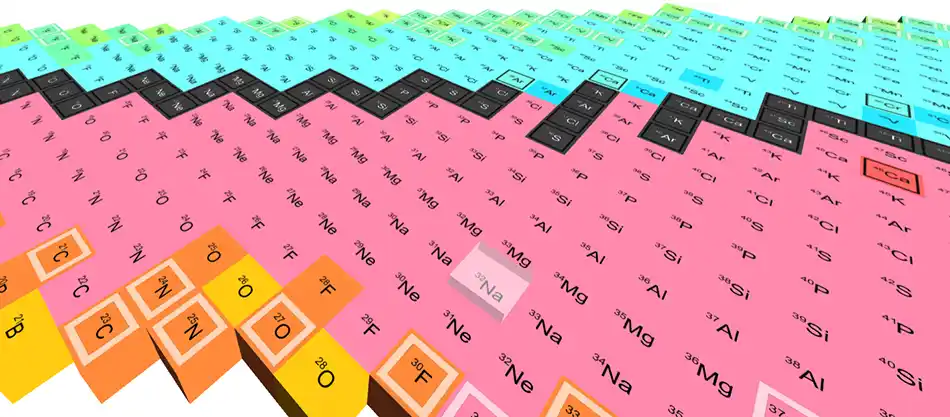
A snapshot of the Chart of the Nuclides with sodium-32 highlighted (Credit: Ed Simpson, Australian National University Research School of Physics.)

Shape-Shifting Nuclei

August 22, 2023

A snapshot of the Chart of the Nuclides with sodium-32 highlighted (Credit: Ed Simpson, Australian National University Research School of Physics.)
A snapshot of the Chart of the Nuclides with sodium-32 highlighted (Credit: Ed Simpson, Australian National University Research School of Physics.)

What determines the shape of a nucleus? UT’s physicists played a key role in recently-reported findings that shed new light on that mystery. Their dedicated work to develop and deploy a sophisticated yet nimble detection system was central to an Oak Ridge National Laboratory-led study of how nuclear shapes evolve. The unexpected results could point to a deeper understanding of how nuclei stay together and how elements form.

Shape Shifters

Nuclei typically appear as spherical or deformed (football-like). Some can shift their shape depending on their energy level— deformed at higher energy (excited state) and spherical at low energy (ground state). The reverse (deformed at low energy; spherical at high energy) has been harder to pin down, especially in regions of the nuclear landscape where little experimental data is available.

In this work, scientists found that a sodium-32 nucleus has an exceptionally long-lived excited state, also known as an isomer. This nucleus sits at the heart of the “island of inversion,” where previous experiments have documented spherical-to-deformed shape reversal. Isomers can help probe nuclear structure, and the one observed in sodium-32 is a rare microsecond isomer in this particular area of the nuclide chart. It can provide a window into the underlying conditions where the spherical-to-deformed transition begins.

The analysis is based on data collected from the very first experiment at the Facility for Rare Isotope Beams (FRIB)—specifically the FRIB Decay Station Initiator (FDSi). This is Professor Robert Grzywacz’s home office, so to speak, as he and his group have invested years in this sensitive, modular detector system, starting with the plans on paper and now actually “catching” the fragments of a rare isotopes created by FRIB’s powerful linear accelerator and measuring their decay.

“We poured an enormous amount of work into this experiment,” he said. “It had to succeed.”

Getting an Early Start

While the observation of the sodium-32 isomer is new, the premise is not. As a graduate student Grzywacz was a lead author on papers outlining a novel method suited to scanning large swaths of the nuclear chart in search of new isomers. His work eventually led him to Tennessee, where in 1998 he became a postdoctoral fellow at UT and in 2003 joined the faculty.

Since then he’s built a talented nuclear physics team of fellow faculty, students, and staff. These latest findings are outlined in Physical Review Letters and UT Physics co-authors include Grzywacz as well as Miguel Madurga (assistant professor); Zhengyu Xu and Kevin Siegl (postdoctoral research associates), Noritaka Kitamura (postdoctoral research associate, now assistant professor at University of Tokyo); Joseph Heideman, Shree Neupane, and Maninder Singh (PhD alumni); Ian Cox and James Christie (graduate students); Harrison Huegen and Amanda Nowicki (undergraduates); and Jason Chan (Electronics Shop Supervisor).

Learn more about the results at Oak Ridge National Laboratory’s website.

With thanks to Dawn Levy of Oak Ridge National Laboratory.

August 22, 2023  |  Filed Under: Featured News, News, Nuclear

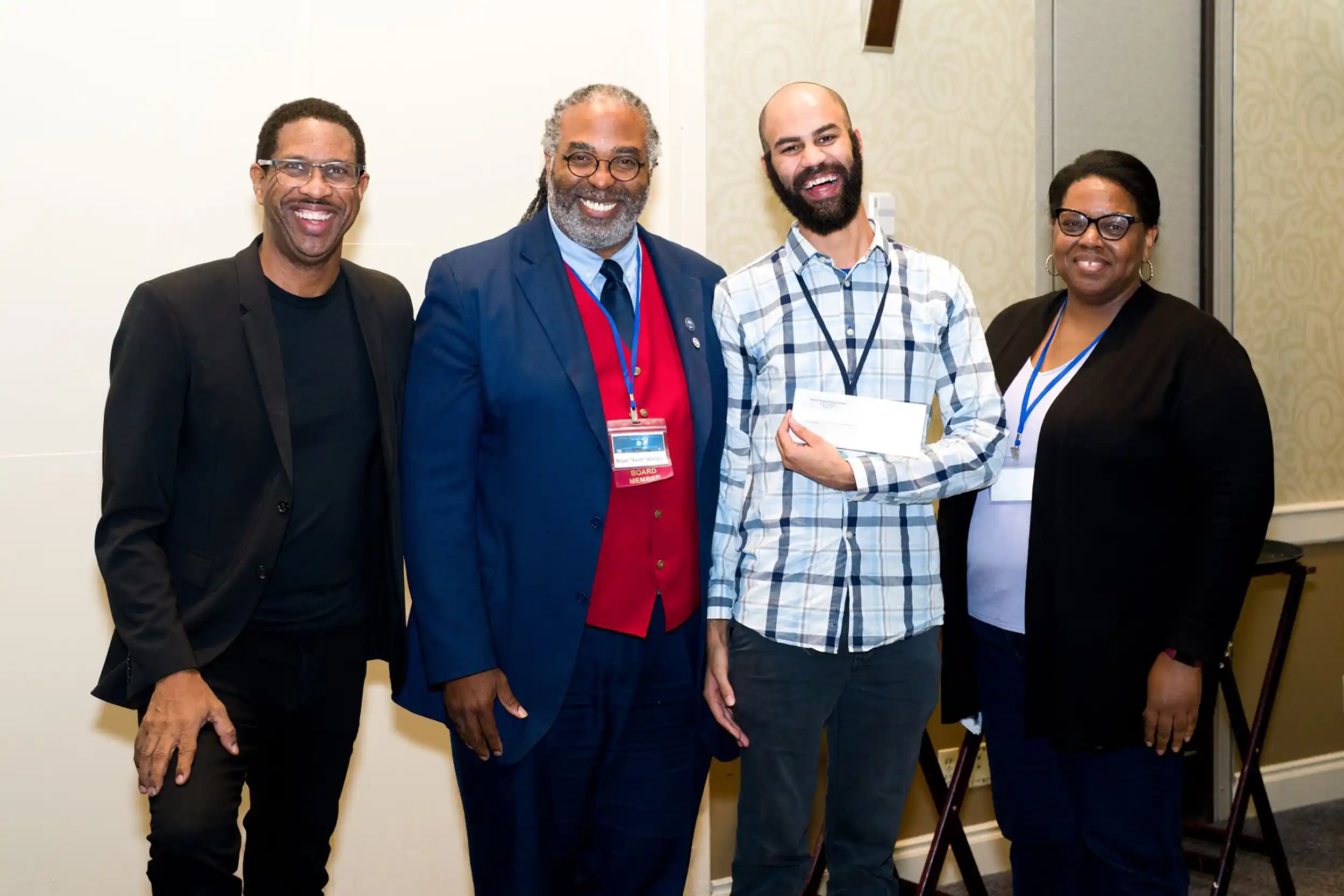
Hakeem Oluseyi, NSBP President; Bryan Kent Wallace, NSBP Treasurer; Awardee Jesse Harris; and Elaine Lalanne, NSBP Past-Treasurer. (Photo credit: National Society of Black Physicists)

Explaining Physics Beyond the Textbooks

December 7, 2022

Hakeem Oluseyi, NSBP President; Bryan Kent Wallace, NSBP Treasurer; Awardee Jesse Harris; and Elaine Lalanne, NSBP Past-Treasurer. (Photo credit: National Society of Black Physicists)
Presenting the honors: Hakeem Oluseyi, NSBP President; Bryan Kent Wallace, NSBP Treasurer; Awardee Jesse Harris; and Elaine Lalanne, NSBP Past-Treasurer. (Photo credit: National Society of Black Physicists)

Graduate Student Jesse Harris wins presentation prize at the 2022 NSBP conference

Graduate Student Jesse Harris knows how to explain the search for new physics. That talent was much appreciated at the National Society of Black Physicists (NSBP) conference last month, where he won the award for Best Oral Presentation in the field of Nuclear and Particle Physics.

Harris, who works with Professor Stefan Spanier in UT’s Compact Muon Solenoid (CMS) group, presented his work searching for certain rare Higgs decays, a strategy to probe physics beyond the standard model, or, as Spanier describes it, “physics beyond the textbooks.”

They’re looking for glimmers of small, rare differences in how the Higgs boson shows up in experiment versus what present theory predicts. Harris uses machine learning to improve sensitivity in the search and his preliminary findings have shown improvement by a factor of two.

A native of Big Stone Gap, Virginia, Harris earned a bachelor’s degree at the University of Virginia’s College at Wise before joining UT’s graduate program in physics. His work in both research and teaching labs has been recognized before. In 2020 he won a research stipend from the UT Office of Research and Engagement and in 2021 he was selected for the department’s Outstanding Graduate Teaching Assistant Award. The NSBP award was sponsored by the Facility for Rare Isotope Beams (FRIB) and the National Science Foundation.

Harris was one of eight UT physics students attending the NSBP conference, along with Associate Professor Lucas Platter. Graduate students were Idris Abijo, Victor Ale, Olesson Cesalien, Harris, and Olugbenga Olunloyo. The undergraduate cohort comprised Carson Broughton, Cordney Nash, and Cora Thomas. (Nash, another of Spanier’s students, presented his on-campus research on silicon pixel detectors for the High-Luminosity Large Hadron Collider.)

The NSBP conference is the largest academic meeting of minority physicists in the United States. The meeting provides mentorship opportunities, access to recruiters, and networking opportunities while informing the broader physics community on best practices. UT Physics has sent delegations of students every year since 2016, typically led by Associate Professor Christine Nattrass. UT was a gold sponsor of the 2022 meeting, held November 6- 9, 2022, in Charlottesville, Virginia, and will co-host the 2023 conference with Oak Ridge National Laboratory. This year’s gathering provided a welcome return to the in-person experience after two years of virtual meetings.

“The pandemic has just been brutal on all of our students but in particular on students who also come from marginalized groups,” Nattrass said. “I think our students needed this.”

December 7, 2022  |  Filed Under: Featured News, News, Nuclear, Particle

Mitch Allmond, left, with Robert Grzywacz at the Facility for Rare Isotope Beams. Credit: Robert Grzywacz/ORNL, U.S. Dept. of Energy

Where Instability is a Good Thing

November 14, 2022

A photo of Robert Grzywacz
Grzywacz
A photo of Kate Jones
Batista

FRIB just published the first paper from its first experiment. UT’s physicists built the tools that made it possible.

The email came with a simple subject line: “Now with ribbon.”

Professor Robert Grzywacz was at Michigan State University sending photos as dignitaries cut a giant green ribbon to open the Facility for Rare Isotope Beams (FRIB). For him and his colleagues it was more than christening a powerful research facility. It was a new chapter in a story of scientific creativity, and community, and turning drawbacks into opportunities.

Things Fall Apart

Grzywacz, like Professor Kate Jones and Assistant Professor Miguel Madurga, dwells in the land of low-energy nuclear physics. They’re interested in how a nucleus is structured, how stable it is, and the way its components interact. Rare isotopes are an ideal vehicle to find out.

FRIB creates these exotic nuclei by stripping electrons from stable atoms and guiding the resulting ions into a linear accelerator where they travel faster than half the speed of light. When the beam hits a target, nuclei lose protons or neutrons, creating unstable, short-lived rare isotopes. FRIB can stop and re-accelerate the beam, filtering out isotopes so that researchers get the ones they want.

Studying isotopes as they fall apart gives scientists a window into a nucleus’s innermost mysteries, knowledge that moves science forward and also meets practical needs.

“There are applications from medical imaging and therapy to energy,” Jones explained.

In June FRIB completed its first experiment. Scientists slammed a stable beam of calcium-48 into a beryllium target. The fragments from that collision gave them a bunch of exotic isotopes to study. Observing their decay, which takes less than a second, led to the first reported measurements of half-lives for five exotic isotopes of phosphorous, silicon, aluminum, and magnesium. The findings were published in Physical Review Letters as the first paper from FRIB’s first experiment.

“This result builds on a lot of our past work,” Grzywacz said.

Making those measurements required sophisticated instrumentation called the FRIB Decay Station initiator (FDSi), a system he knows well.

Finding a Silver Lining

The FDSi didn’t come out of nowhere. It’s descended from generations of detectors designed before FRIB was born. Grzywacz has been part of this effort since 1998, when he started proposing experiments at FRIB’s predecessor, the National Semiconductor Cyclotron Laboratory (NSCL).

The facility was nearly 20 years old and “the nuclear physics community was in the process of discussing what and where the new generation facility (would) be,” he said.

At the time, he and Jones were deeply integrated at the Holifield Radioactive Ion Beam Facility (HRIBF) at Oak Ridge National Laboratory (ORNL). Grzywacz’s group built and contributed to new instruments to study radioactive, neutron-rich isotopes. They were the first to use digital signal processing broadly for nuclear spectroscopy experiments for low-energy nuclear physics. They partnered with industry to develop a digital data acquisition system (which eventually made its way to FRIB).

Among their key accomplishments was building a suite of instruments to detect and measure decay patterns. Krzysztof Rykaczewski led an ORNL-centered program with buy-in from other universities (Georgia Tech, Louisiana State, Mississippi State, and Vanderbilt) through the University Radioactive Ion Beam Consortium (UNIRIB) and the Joint Institute of Nuclear Physics and Applications (JINPA).

“The decay program at HRIBF was strong and unique,” Grzywacz said.

In 2008, the U.S. Department of Energy decided the future was with FRIB and in 2011 HRIBF was closed. Despite their disappointment, Grzywacz and his colleagues found a silver lining.

“The scientific strength of the research program at HRIBF and available instrumentation encouraged us to engage in the construction of one of the key FRIB projects: the FRIB Decay Station,” he said.

Use What You Have

The FRIB Decay Station (FDS) focuses on four strategic areas: nuclear structure, nuclear astrophysics, tests of fundamental symmetries, and applications of isotopes for society.

In 2016 some 60 scientists gathered at JINPA and established the FDS collaboration, with Grzywacz as spokesperson. The FDS would be a new instrument: an efficient, modular system of multiple detectors under one infrastructure that would provide parallel and simultaneous measurements. It came with a hefty price tag, so in the interim researchers formed the FDS Initiator (FDSi) group.

“This project aimed to realize the FDS vision but using existing instrumentation,” Grzywacz said. “The FDSi was to provide a unified framework for the variety of instrumentation provided by the community. The essential elements of the FDS were to be realized by existing detectors.”

In August 2021 FDSi went into production with a talented, collaborative cast.

ORNL staff led by James Allmond designed the elements and led construction. Machinists from UT Physics made precision parts for the frame. UT’s low-energy nuclear physics group built new detectors, making sure they could be integrated in FRIB’s digital data acquisition framework. Grzywacz came up with the idea of using two focal planes for easy switching between two sets of apparatus, as well as the designs for the implantation detectors. These are necessary to stop the nuclei and measure the charged particle decays.

While this was happening the FRIB Program Advisory Committee announced the first approved experiments. Of 34 accepted proposals, eight included the FDSi.

By February 2022 FDSi installation began at Michigan State. In June the system was ready for the calcium fragments that came its way, as were Grzywacz and Madurga; graduate students Ian Cox and James Christie; and postdocs Noritaka Kitamura, Kevin Siegl, and Zhengyu Xu, all of whom worked on FRIB’s inaugural experiment.

Twelve Neutrons from Stability

After years of work to get FRIB up and running, scientists can now reap the benefits. The FDSi is one of multiple instruments along the beam, giving them lots of options to explore nuclei.

Jones will use a high-resolution spectrograph and gamma-ray energy tracking array in an experiment on the structure of light tin isotopes, slated to run this December.

“Tin is magic,” she explained. “It has 50 protons, which forms a closed nuclear shell.”

The isotopes Tin-100 (50 neutrons) and Tin-132 (82 neutrons) are “doubly-magic.”

“Doubly-magic nuclei are cornerstones of the nuclear shell model,” Jones said. “Knowing the single-particle states outside of these nuclei allows theorists to calculate the properties of more complex nuclei.”

Tin-112 is the element’s last stable isotope. This makes Tin-100, at 12 neutrons from stability, particularly difficult to reach.

“The further from stability, the harder isotopes are to produce,” Jones said. “Hence, FRIB.”

By knocking out a neutron from Tin-104, her group will get a look at the states in Tin-103. They expect the ground and first excited states to have the same nature as Tin-105 and Tin-107. Ultimately, as they get closer to Tin-101 (which can be reached when FRIB reaches full power) they anticipate those states will be flipped.

This kind of research—learning about the structure of key exotic nuclei—is in line with FRIB’s aspiration to be the world’s leading laboratory in rare isotope science.

The Nuclear Family

A premier research facility needs a community with a shared purpose. Grzywacz and Jones’s nuclear connections span decades and continents. Grzywacz still works with colleagues from his alma mater, the University of Warsaw. Jones can trace her nuclear family’s roots to her undergraduate days at the University of Surrey and follow them through postdoc appointments across Germany and France, where she and Grzywacz met. FRIB is home to scientists they’ve met along the way as well as former students and postdocs they’ve mentored. And, of course, there’s Witek Nazarewicz, a longtime professor of physics at UT before he signed on as FRIB’s chief scientist.

“There is a scientific community around FRIB that we are integrated in,” Jones said. “There are people who are critical links in making FRIB happen, such as those who develop the rare ion beams, who we met back in Europe or here in East Tennessee.”

This community is essential for FRIB, and nuclear science, to thrive.

“The future of low-energy nuclear physics in the U.S. depends to a large extent on the success of FRIB,” Jones said. “Without building new facilities it would be difficult for the U.S. to stay ahead in our field.”

She and Grzywacz met some of their colleagues long before they celebrated the ribbon-cutting at FRIB’s opening. The importance of those early (and continuing) ties can’t be overstated.

“There are decades of knowledge that are passed between researchers, not only in papers, but working together in labs, at workshops and conferences, and teaching in classrooms and professors’ offices,” Jones said. “If you break the chain, it’s hard to rebuild.”

Mitch Allmond, left, with Robert Grzywacz at the Facility for Rare Isotope Beams. Credit: Robert Grzywacz/ORNL, U.S. Dept. of Energy

November 14, 2022  |  Filed Under: Featured News, News, Nuclear

A photo of Thomas Papenbrock

Getting Under the (Neutron) Skin

October 20, 2022

A photo of Thomas Papenbrock
Papenbrock

Every atomic nucleus, miniscule or massive, is governed by a basic law of nature: the strong force holding it together. The more we know about the complex workings of nuclei the better we understand different kinds of matter, including elements produced in cosmic collisions (like the gold in our jewelry boxes). In Nature Physics, UT’s physicists and their colleagues at Chalmers University of Technology present a groundbreaking model to calculate the properties of a lead nucleus with a method that can be used across the nuclear landscape—all the way to neutron stars.

The Story of Stars in a Single Nucleus

Scientists use computational models to get the most complete picture of a nucleus. Heavier nuclei typically don’t fit well in those models. They may be unstable and fall apart quickly. They might have so many protons and neutrons that it’s difficult to keep track of all the interactions between them. Nuclei with lots of neutrons present a particular challenge. The new approach turns that obstacle into an asset.

When neutrons outnumber protons, equal numbers of each gather in the nucleus’s center while the surplus neutrons collect on its surface, forming a skin. Lead (Pb-208) is a good example. With 126 neutrons and 82 protons, it’s a heavy (yet stable) nucleus covered in a neutron skin. This outer layer is sensitive to the strong force, which holds its protons and neutrons together.

Professor Thomas Papenbrock described how he and his colleagues connected this single, simple nucleus to massive neutron stars, a teaspoon of which would weigh 4 billion tons on Earth.

Combining advanced methods, statistical tools, and computational modeling, they were able to calculate the neutron skin in lead. This informs scientists about the “nuclear equation of state,” which describes matter under various conditions like pressure, volume, or temperature. That equation in turn links neutron skin thickness to the structure and size of neutron stars. Further, the model can be adapted across the nuclear landscape to predict properties of other heavy nuclei that have eluded models in the past.

The work also shows that a heavy nucleus can be computed with tools theorists routinely use: Hamiltonians (functions that describe a dynamic system) rooted in the theory describing the strong force (quantum chromodynamics, or QCD). These tools have well-understood parameters that help quantify uncertainties, making predictions more precise.

The Physics in Your Jewelry Box

Papenbrock outlined multiple reasons why understanding nuclear structure and properties is important. First, there’s understanding the complexity arising from the strong force, one of nature’s four basic interactions (along with the weak, electromagnetic, and gravitational forces).

“Second,” he said, “is understanding the production of elements in the early universe and in stellar processes such as neutron-star mergers and supernovae explosions.”

(Helium and hydrogen were born in the early seconds of our universe, while gold and platinum trace their beginnings to merging neutron stars.)

“This require us to understand very neutron-rich nuclei that cannot all be produced and studied in laboratories,” Papenbrock said. “So, we have to compute them.”

Understanding the nucleus not only helps us understand what happened eons ago or what goes on in far-away objects. It also helps scientists shape future discoveries.

“Searches for physics beyond the Standard Model of elementary particles almost all involve hypothetical reactions of such particles with or inside atomic nuclei,” he explained.

An image of Gaute Hagen
Hagen

James Bond and Nuclear Physics

Papenbrock pursues nuclear studies through a joint faculty appointment with Oak Ridge National Laboratory. He worked with ORNL’s Zhonghao Sun (former UT postdoc) and Gaute Hagen (an adjunct professor with UT Physics) to calculate lead’s neutron skin, a feat made possible by ORNL’s Summit supercomputer.

“Computing has been a game changer over the last two-to-three decades,” Papenbrock said. “Moore’s law states that computing power doubles roughly every 16 months. Our phones can do things today that seemed science fiction (or James Bond) just a few decades ago.

“This has forced nuclear physicists to collaborate with computer scientists to really use all these technologies,” he continued. “We had to make so many changes to our codes over the years to adapt to this evolution of computing.”

Using collaborative strengths and computing power for nuclear physics is familiar territory for Papenbrock and Hagen. They’re part of the NUCLEI (the NUclear Computational Low Energy Initiative) collaboration that recently won $13 million in funding through SciDAC, the U.S. Department of Energy’s Scientific Discovery Through Advanced Computing program (part of the Office of Science). Papenbrock became the group’s principal investigator this year.

Comprising five national laboratories and seven universities, NUCLEI aims to advance the computations of atomic nuclei and processes. The Nature Physics paper was a result of the collaboration’s research, earning a News and Views article in the journal for its significance. This work, the review explains, “has allowed practitioners to reach for the stars.”

October 20, 2022  |  Filed Under: Featured News, News, Nuclear

  • « Previous Page
  • 1
  • 2
  • 3
  • Next Page »

Recent Posts

  • Public Lecture on Quantum Mechanics
  • Brandi Skipworth Wins GATE Fellowship
  • Research Rock Stars: Thomas Papenbrock Explores the Forces at the Core of Matter
  • Rules for Nuclear Couples
  • Reconciling Fundamental Physics

Physics & Astronomy

College of Arts and Sciences

401 Nielsen Physics Building
1408 Circle Drive
Knoxville TN 37996-1200
Phone: 865-974-3342
Email: physics@utk.edu

Facebook Icon    X Icon

The University of Tennessee, Knoxville
Knoxville, Tennessee 37996
865-974-1000

The flagship campus of the University of Tennessee System and partner in the Tennessee Transfer Pathway.

ADA Privacy Safety Title IX